You see OK everywhere — in texts, emails, social media comments, and even face-to-face conversations. It is one of the most used words in the world, yet its meaning can change depending on tone, context, and situation. Understanding the OK definition meaning helps you avoid confusion, misinterpretation, and awkward moments, especially in digital communication.
This article explains what OK really means, where it comes from, how it is used in texting and chat, and why such a simple word can sometimes feel confusing or even passive-aggressive.
What Does OK Mean
Definition of OK
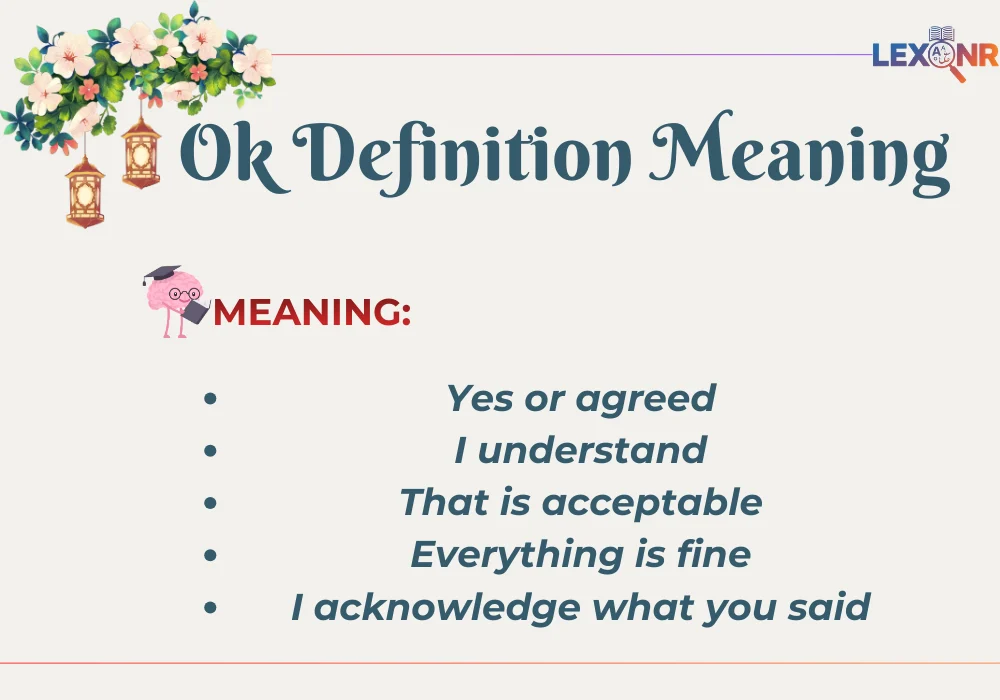
OK is a short expression used to show agreement, acceptance, understanding, or confirmation. At its core, it means that something is acceptable, correct, or approved.
Depending on context, OK can mean
- Yes or agreed
- I understand
- That is acceptable
- Everything is fine
- I acknowledge what you said
Although it looks simple, the meaning of OK often depends on how and where it is used.
Origin of OK
The word OK originated as a humorous abbreviation and later became one of the most widely recognized expressions in the English language. Over time, it evolved into a universal response used across cultures, platforms, and communication styles.
Today, OK is used globally in both spoken and written communication, making it one of the most versatile words ever created.
How OK Is Used in Texting or Chat
Common Contexts for OK
In digital communication, OK is used across
- Text messages
- Messaging apps
- Social media comments
- Online forums
- Emails
Because text lacks tone and facial expression, OK can sometimes be interpreted differently than intended.
Different Meanings of OK in Texting
Neutral agreement
OK simply means yes or agreed
Example: Meet at 7
Reply: OK
Understanding or acknowledgment
Used to show you have read and understood a message
Example: I will send the file tonight
Reply: OK
Ending a conversation
Sometimes used to close a discussion
Example: I will handle it
Reply: OK
Emotional distance
A short OK can feel cold or uninterested
Example: I thought you would care
Reply: OK
This is why context and relationship matter when using OK in texts.
Examples of OK in Conversations
Texting example
Person one: I might be late
Person two: OK
Work chat example
Please update the document
Reply: OK, I will do it shortly
Casual chat example
Do you want pizza or burgers
Reply: OK with pizza
Awkward moment example
I am really upset today
Reply: OK
The same word creates different emotional reactions depending on the situation.
Common Mistakes or Misunderstandings With OK
Thinking OK Always Sounds Positive
While OK can mean agreement, it can also sound uninterested if used alone. Adding a few extra words can make it feel warmer.
Better: OK, got it
Risky: OK
Overusing OK
Replying with OK too often may make conversations feel dry or dismissive.
Using OK in Emotional Conversations
In emotional situations, OK may feel cold or uncaring even if that is not the intention.
Similar Slangs and Expressions to OK
| Expression | Meaning | Common Usage |
|---|---|---|
| Alright | Agreement or acceptance | Casual speech |
| Got it | Understanding | Texting, work chats |
| Sure | Willing agreement | Informal conversation |
| Yep | Casual yes | Texting |
| Fine | Acceptance, sometimes reluctant | Spoken and written |
| K | Very short OK, often cold | Texting |
| Understood | Clear acknowledgment | Professional chats |
Each alternative carries a slightly different tone compared to OK.
FAQs:
What does OK mean in texting
In texting, OK usually means agreement or understanding, but it can also feel neutral or emotionally distant depending on context.
Is OK rude in messages
Not always, but a short OK can feel rude if the conversation is emotional or serious.
What is the difference between OK and K
K is shorter and often sounds colder or more dismissive than OK.
Can OK end a conversation
Yes, many people use OK to signal that a conversation is finished or no further response is needed.
Is OK formal or informal
OK works in both casual and semi-formal situations, but tone matters more in texting.
Conclusion:
The OK definition meaning goes far beyond simple agreement. While it generally signals acceptance or understanding, its emotional impact depends on timing, tone, and context. In casual chats, OK is harmless and convenient. In emotional or serious conversations, it may feel distant or dismissive if not expanded.
Being aware of how OK is perceived helps you communicate more clearly and avoid misunderstandings. Sometimes adding just one extra word can turn a cold reply into a friendly one.
Have a word or abbreviation you see used differently in texts
Share it in the comments and let us break it down together

I am John, a dedicated writer and language enthusiast with a strong interest in words and their meanings. I focus on creating clear, accurate, and easy-to-understand content to help readers strengthen their vocabulary and language skills.
Through Lexonr, my aim is to make word meanings accessible for students, learners, and language enthusiasts from all backgrounds. I believe that understanding language plays a key role in effective communication and continuous learning.
I am committed to delivering helpful, reliable, and high-quality content while contributing to the ongoing growth and improvement of Lexonr.