If you have ever come across the word referendum in the news, social media, or political discussions and wondered what it actually means, you are not alone. Many people see this term during major national decisions but are unsure how it works or why it matters.
Understanding the referendum meaning is important because it directly relates to how people can influence decisions in a country. Unlike everyday voting for leaders, a referendum allows citizens to vote on specific issues, laws, or policies. Knowing how it works helps you stay informed and better understand global and local political conversations.
What Does Referendum Mean
Definition of Referendum
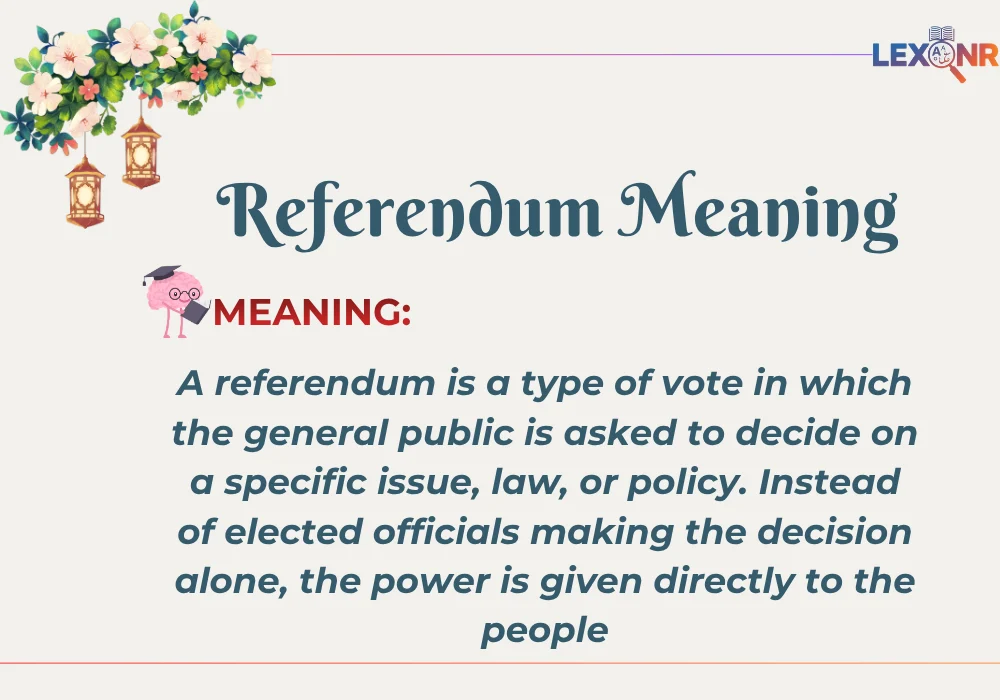
A referendum is a type of vote in which the general public is asked to decide on a specific issue, law, or policy. Instead of elected officials making the decision alone, the power is given directly to the people.
In simple terms, a referendum is
- A public vote on an important issue
- A way for citizens to say yes or no to a proposal
- A form of direct democracy
Origin of the Word Referendum
The word referendum comes from Latin and means something that must be brought back to the people. Historically, it reflects the idea that certain decisions should not be made only by governments but should be approved by the public.
Over time, referendums became an important part of democratic systems in many countries.
How a Referendum Works
Basic Process
A referendum usually follows a simple process
- A proposal or issue is introduced
- The government or authority decides to hold a public vote
- Citizens vote yes or no
- The result determines whether the proposal is accepted or rejected
Types of Referendums
There are different types of referendums depending on how they are used
Mandatory referendum
Required by law for certain major decisions, such as constitutional changes
Optional referendum
Held when requested by citizens or lawmakers
Binding referendum
The result must be followed by the government
Non-binding referendum
The result is advisory and may guide decisions but is not final
How to Use Referendum in Conversations
Everyday Usage
You might hear or use the word referendum in discussions about politics or national decisions.
Examples
- The country held a referendum on a new law
- People voted in a referendum about independence
- The government announced a referendum on tax changes
Where You Will Commonly See It
The term referendum is often used in
- News reports
- Political debates
- Social media discussions
- Educational content
- International events
Examples of Referendum in Real Situations
Example 1
The government held a referendum to decide whether to change the constitution
Example 2
Citizens voted in a referendum on whether their region should become independent
Example 3
A referendum was conducted to approve a new environmental policy
Example 4
People used social media to discuss the results of the referendum
These examples show how referendums are used to make major decisions that affect large groups of people.
Common Mistakes or Misunderstandings
Confusing Referendum with Elections
An election is used to choose leaders, while a referendum is used to decide on a specific issue.
Thinking It Is Always Binding
Not all referendums are legally binding. Some are only used to understand public opinion.
Assuming It Happens Frequently
Referendums are usually held only for major or important decisions, not everyday matters.
Similar Terms Related to Referendum
| Term | Meaning | Common Usage |
|---|---|---|
| Election | Choosing leaders through voting | National and local politics |
| Plebiscite | Public vote similar to referendum | Political decisions |
| Ballot | The voting process or paper | Elections and referendums |
| Poll | A survey of public opinion | Media and research |
| Initiative | Citizens propose laws for voting | Democratic systems |
| Recall | Vote to remove an official | Government accountability |
| Voting | General act of casting a vote | Elections and decisions |
These terms are often used alongside referendum in political discussions.
FAQs:
What is a referendum in simple words
A referendum is a public vote where people decide on an issue or law directly.
What is the difference between a referendum and an election
An election chooses leaders, while a referendum decides on a specific issue or policy.
Is a referendum legally binding
Sometimes yes and sometimes no, depending on the type of referendum and the country.
Why are referendums important
They allow people to have a direct say in major decisions that affect their lives.
Where are referendums commonly used
They are used in many countries around the world, especially for major political or constitutional decisions.
Conclusion:
The referendum meaning is simple yet powerful. It represents a system where people can directly vote on important issues instead of leaving all decisions to politicians. This makes it a key part of democratic participation in many countries.
Understanding how referendums work helps you follow political events more clearly and take part in informed discussions. Whether you see the term in the news or hear it in conversations, you now know exactly what it means and why it matters.
If you have come across other political terms that confuse you, share them and keep learning more about how decision-making works in the world.

I am John, a dedicated writer and language enthusiast with a strong interest in words and their meanings. I focus on creating clear, accurate, and easy-to-understand content to help readers strengthen their vocabulary and language skills.
Through Lexonr, my aim is to make word meanings accessible for students, learners, and language enthusiasts from all backgrounds. I believe that understanding language plays a key role in effective communication and continuous learning.
I am committed to delivering helpful, reliable, and high-quality content while contributing to the ongoing growth and improvement of Lexonr.