If you’ve come across the term forbearance student loan while managing your education debt, you might be wondering what it actually means and whether it is something you should consider. Student loan terms can feel confusing, especially when financial pressure is already high.
Understanding the forbearance student loan meaning is important because it directly affects your monthly payments, interest, and long-term financial health. This guide explains everything in simple terms so you can make smarter decisions about your loans and avoid costly mistakes.
What Does Forbearance Student Loan Mean
Definition of Forbearance Student Loan
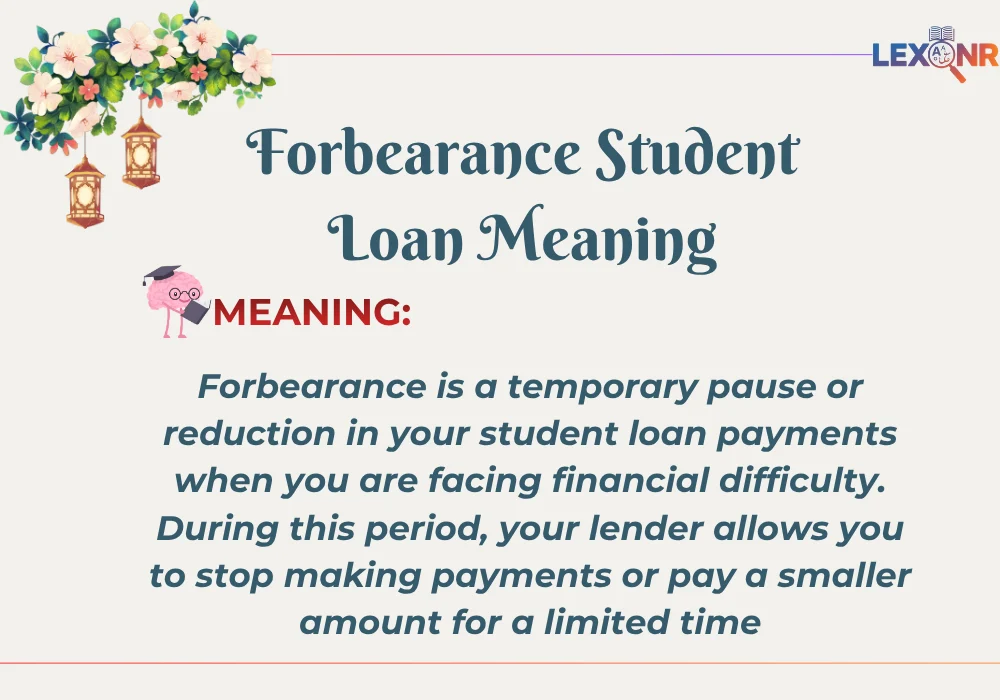
Forbearance is a temporary pause or reduction in your student loan payments when you are facing financial difficulty. During this period, your lender allows you to stop making payments or pay a smaller amount for a limited time.
In simple terms
Forbearance means you get breathing room on your loan, but the loan does not disappear.
How Forbearance Works
When your loan enters forbearance
- Your monthly payments are paused or reduced
- Interest usually continues to grow
- The total amount you owe may increase over time
This means while you are not paying right now, you may pay more later.
Types of Student Loan Forbearance
There are generally two main types
General forbearance
- Requested by the borrower
- Approved at the lender’s discretion
- Used for financial hardship or unexpected expenses
Mandatory forbearance
- Must be granted if you meet specific conditions
- Examples include medical residency or national service
How to Use Forbearance for Student Loans
When People Choose Forbearance
Borrowers typically apply for forbearance when they are dealing with
- Job loss or reduced income
- Medical emergencies
- Temporary financial hardship
- Unexpected life events
It is meant to be a short-term solution, not a long-term strategy.
Steps to Apply for Forbearance
- Contact your loan servicer
- Explain your financial situation
- Submit any required documents
- Wait for approval
- Confirm the terms before stopping payments
Always get confirmation before you stop paying to avoid penalties.
Where Forbearance Is Commonly Discussed
You will often see discussions about forbearance student loans on
- Financial forums
- Student communities
- Budgeting apps
- Social media discussions
People share experiences, advice, and warnings about using forbearance.
Examples of Forbearance in Real Life
Example 1
You lose your job and cannot afford monthly payments. You apply for forbearance and pause payments for a few months while you find new work.
Example 2
You face a medical emergency and need to focus on recovery. Forbearance allows you to temporarily stop payments without defaulting on your loan.
Example 3
Your income drops due to reduced working hours. You request a reduced payment under forbearance until your finances stabilize.
Common Mistakes or Misunderstandings
Thinking Forbearance Is Free
Many people assume forbearance means no cost. In reality, interest continues to grow, increasing your total loan balance.
Using Forbearance Too Often
Repeated use of forbearance can significantly increase the amount you owe over time.
Not Exploring Other Options
Alternatives like income-driven repayment plans may be better for long-term relief.
Stopping Payments Without Approval
Never stop payments before your forbearance is officially approved. This can damage your credit.
Similar Financial Terms to Forbearance
| Term | Meaning | When It Is Used |
|---|---|---|
| Deferment | Temporary pause where interest may not grow on some loans | Students or specific conditions |
| Grace period | Time after graduation before payments start | New graduates |
| Loan consolidation | Combining multiple loans into one | Simplifying payments |
| Refinancing | Replacing a loan with a new one at different terms | Lower interest rates |
| Income-driven repayment | Payments based on your income | Long-term affordability |
| Loan forgiveness | Canceling part or all of a loan | Specific programs |
| Default | Failure to repay a loan | Missed payments over time |
FAQs:
What is forbearance in student loans
Forbearance is a temporary pause or reduction in student loan payments due to financial hardship.
Does interest grow during forbearance
Yes, in most cases interest continues to accumulate, increasing your total loan balance.
How long can forbearance last
It usually lasts up to 12 months at a time, but it can sometimes be extended depending on your situation.
Is forbearance better than deferment
It depends. Deferment may be better if you qualify because interest may not grow on certain loans.
Does forbearance affect your credit score
No, if approved properly, it does not negatively impact your credit score.
Conclusion:
The forbearance student loan meaning is simple but important. It gives you temporary relief from payments during difficult times, helping you avoid default and manage financial stress. However, it is not a long-term solution because interest continues to build.
Before choosing forbearance, always consider your options and understand the long-term impact. Used wisely, it can be a helpful tool during tough periods. Used too often, it can increase your debt burden.
Have questions about student loans or financial terms
Share them and keep the conversation going

I am John, a dedicated writer and language enthusiast with a strong interest in words and their meanings. I focus on creating clear, accurate, and easy-to-understand content to help readers strengthen their vocabulary and language skills.
Through Lexonr, my aim is to make word meanings accessible for students, learners, and language enthusiasts from all backgrounds. I believe that understanding language plays a key role in effective communication and continuous learning.
I am committed to delivering helpful, reliable, and high-quality content while contributing to the ongoing growth and improvement of Lexonr.