When someone uses the word condolence, it usually refers to expressing sympathy for someone’s loss or misfortune. Understanding condolence meaning is important because it helps you communicate appropriately during sensitive moments, whether in text messages, social media, or casual conversations. Using it correctly shows empathy, respect, and awareness of social etiquette.
This article explains the meaning, how to use condolence properly, common mistakes, related terms, and answers frequently asked questions so you can handle sensitive communications with confidence.
What Does Condolence Mean
Definition of Condolence
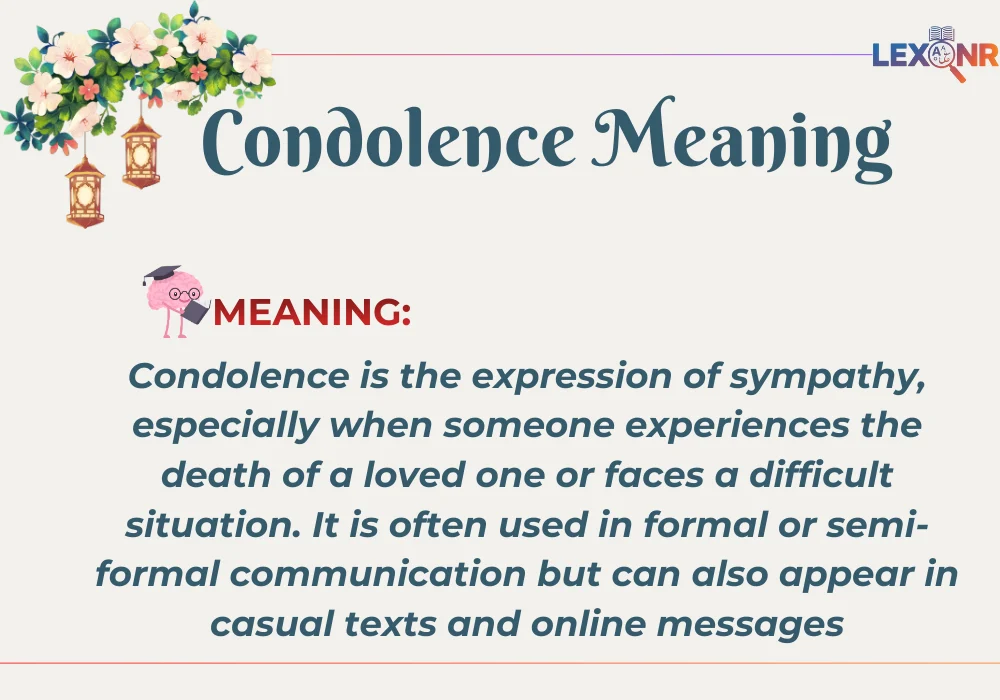
Condolence is the expression of sympathy, especially when someone experiences the death of a loved one or faces a difficult situation. It is often used in formal or semi-formal communication but can also appear in casual texts and online messages.
Key points:
- Shows empathy and care
- Often accompanied by kind words or gestures
- Used to comfort someone during tough times
Origin of Condolence
The word condolence comes from the Latin condolere, meaning to suffer with. Over time, it became the standard term for expressing sympathy and support to someone in distress, particularly in cases of grief or loss.
How to Use Condolence in Texts or Chat
When Condolence Is Appropriate
You can use condolence in situations such as:
- Texting someone after they experience a loss
- Posting a comment on social media to offer support
- Sending an email to express sympathy
It is generally considered inappropriate to use in casual joking or humorous contexts.
Common Ways to Express Condolence
Simple message
I am so sorry for your loss. My heartfelt condolences to you and your family.
Adding personal touch
Thinking of you during this difficult time. Condolences to your loved ones.
Short text version
Sending my condolences
Using condolence in any of these forms shows care and respect while remaining concise and meaningful.
Examples of Condolence in Conversations
Text message example
I heard about your grandfather passing away. My deepest condolences.
Social media comment example
Condolences to the family during this tough time.
Email example
Please accept my sincere condolences on your loss. If there is anything I can do to help, let me know.
These examples illustrate how condolence can be applied in different contexts with sensitivity and respect.
Common Mistakes or Misunderstandings
Using Condolence in Jokes
❌ Avoid using condolence humorously or sarcastically. It can appear disrespectful.
Overly Casual Messages
Sorry about your loss, condolence lol
✔️ Better: My condolences to you and your family
Confusing Condolence with Condemnation
Condolence expresses sympathy, while condemn expresses disapproval. They are not interchangeable.
Similar Words and Phrases to Condolence
| Term | Meaning | Common Usage |
|---|---|---|
| Sympathy | Sharing feelings of sorrow | Texts, emails, conversations |
| Compassion | Understanding and caring for someone | Casual or formal messages |
| Solace | Comfort during grief | Supportive letters or messages |
| Support | Offering help or presence | Texts, chats, social media |
| Empathy | Understanding someone’s feelings | Everyday conversation |
These related words can help you vary your expressions while maintaining sensitivity and respect.
FAQs:
What does condolence mean in texting
In texting, condolence is a message expressing sympathy or support for someone facing loss or difficulty.
Can I say condolence to a friend
Yes. Using condolence is appropriate when expressing sympathy to a friend or family member.
Is condolence formal or informal
It is usually formal or semi-formal but can be used in casual texts if done respectfully.
Can condolence be used for non-death situations
Yes. It can be used for any situation where someone is suffering or experiencing a difficult time.
How do I write a condolence message
Start with expressing your sympathy, acknowledge their loss or difficulty, and offer support if possible.
Conclusion:
The condolence meaning revolves around showing empathy, care, and support to someone going through a tough time. Using it properly in texts, chats, emails, or social media helps convey sincerity and respect.
Being aware of context, tone, and relationship is essential to ensure your message is received as intended.
Have you ever received or sent a meaningful condolence message? Share your experiences in the comments and let us learn together.

I am John, a dedicated writer and language enthusiast with a strong interest in words and their meanings. I focus on creating clear, accurate, and easy-to-understand content to help readers strengthen their vocabulary and language skills.
Through Lexonr, my aim is to make word meanings accessible for students, learners, and language enthusiasts from all backgrounds. I believe that understanding language plays a key role in effective communication and continuous learning.
I am committed to delivering helpful, reliable, and high-quality content while contributing to the ongoing growth and improvement of Lexonr.