If you have ever read or heard someone use the word condone in a conversation and wondered what it really means, you are not alone. Understanding the condone meaning is important because it helps you interpret messages, discussions, and debates correctly. Using or misinterpreting this word can completely change the tone of a conversation.
This article breaks down exactly what condone means, how it is used in everyday language, common mistakes, and related expressions so you can confidently use it in texts, discussions, and online chats.
What Does Condone Mean
Definition of Condone
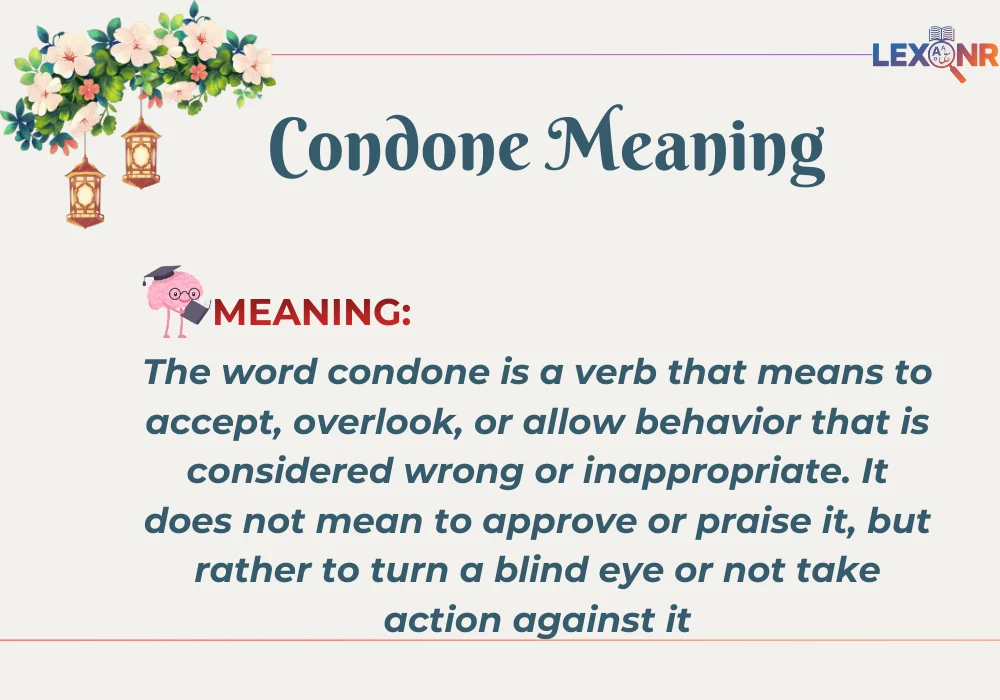
The word condone is a verb that means to accept, overlook, or allow behavior that is considered wrong or inappropriate. It does not mean to approve or praise it, but rather to ignore or not take action against it.
Key points:
- Condone involves tolerance rather than agreement.
- It often appears in discussions about ethics, behavior, or rules.
- It can be applied in personal, professional, or social contexts.
Example:
The teacher said she would not condone cheating in her class.
Origin of Condone
The term comes from Latin roots: con meaning “together” and donare meaning “to give.” Over time, it evolved into English to mean giving allowance or overlooking something that is considered wrong.
In modern language, condone is widely used in formal writing, debates, and even casual conversations where someone wants to indicate tolerance or leniency.
How to Use Condone in Texts or Conversation
When Condone Is Appropriate
The word condone is more formal than slang. It works best in:
- Serious discussions about behavior or ethics
- Academic or professional writing
- Thoughtful online discussions
- Casual conversations if used carefully
Common Ways to Use Condone
Pointing out tolerance
I do not condone lying, even in small matters.
In legal or professional contexts
The manager will not condone any form of harassment at the workplace.
In casual discussion for emphasis
You might not like it, but some people condone breaking minor rules.
Examples of Condone in Conversations
Texting example
Friend: He cheated on the test
You: I cannot condone that
Social media example
Many people do not condone violence in any form
Group discussion example
The team decided they would condone small mistakes but not repeated errors
Common Mistakes or Misunderstandings
Confusing Condone with Approve
Condone does not mean approval or endorsement. Saying someone condones something simply means they allow it or do not stop it.
Correct:
I do not condone cheating
Incorrect:
I condone cheating (if you mean you approve it)
Using Condone Too Casually
Because it is formal, overusing it in casual texting can sound awkward. Stick to serious discussions or explanations when using it.
Assuming Everyone Knows Its Meaning
Not everyone is familiar with the word. Sometimes simpler alternatives like allow, overlook, tolerate are better for casual conversations.
Similar Words and Expressions
| Word or Phrase | Meaning | Common Usage |
|---|---|---|
| Overlook | To ignore or not notice a mistake | Casual and professional |
| Tolerate | To accept behavior without approving it | Everyday or formal |
| Ignore | To pay no attention | Casual conversation |
| Excuse | To allow behavior despite disapproval | Formal and informal |
| Accept | To acknowledge without stopping | General usage |
FAQs:
What does condone mean in simple words
It means to allow or overlook something wrong without actively approving it.
Is condone positive or negative
It is neutral but often carries a negative connotation because it involves overlooking something wrong.
Can condone be used in casual conversation
Yes, but it sounds formal, so it works best in thoughtful discussions or serious messages.
Is condone the same as approve
No. Condone means you overlook it, approve means you agree with or support it.
Can you use condone in professional settings
Absolutely. It is commonly used in workplaces, legal writing, and professional discussions.
Conclusion:
The condone meaning is all about tolerance or allowing behavior without directly approving it. It is a useful word for expressing disapproval or neutrality in serious discussions, professional contexts, and ethical conversations.
When using condone, remember it is formal and carries subtle weight — it signals that you notice the behavior but choose not to act against it.
Have you come across situations where someone condoned something surprising
Share your experiences in the comments and let’s discuss how it applies in real life

I am John, a dedicated writer and language enthusiast with a strong interest in words and their meanings. I focus on creating clear, accurate, and easy-to-understand content to help readers strengthen their vocabulary and language skills.
Through Lexonr, my aim is to make word meanings accessible for students, learners, and language enthusiasts from all backgrounds. I believe that understanding language plays a key role in effective communication and continuous learning.
I am committed to delivering helpful, reliable, and high-quality content while contributing to the ongoing growth and improvement of Lexonr.