You have probably seen or heard the word criticize used in conversations, comments, reviews, or even arguments. Sometimes it sounds helpful, other times it feels negative or harsh. Understanding the criticize meaning clearly is important because this word is often misunderstood and misused in daily communication.
This article explains what criticize really means, how it is used in real life, and how to use it correctly without sounding rude or unfair. Everything is explained in a clear, human way so you can confidently understand and use the word in both spoken and written English.
What Does Criticize Mean
Definition of Criticize
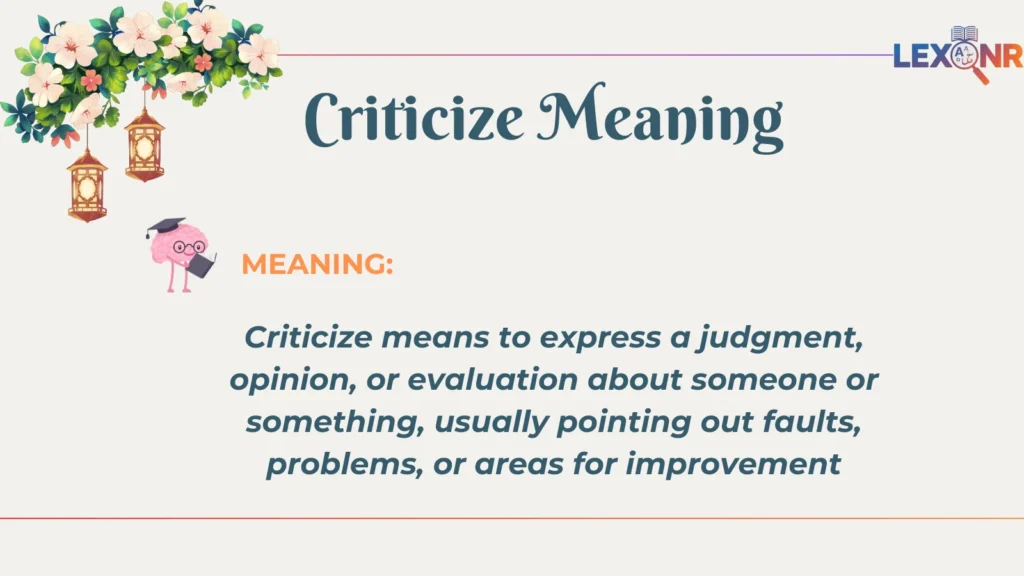
Criticize means to express a judgment, opinion, or evaluation about someone or something, usually pointing out faults, problems, or areas for improvement.
In simple terms, to criticize is
- To point out mistakes
- To say what you think is wrong
- To evaluate something negatively or constructively
Criticism can be negative, neutral, or constructive, depending on how it is delivered.
Origin of the Word Criticize
The word criticize comes from the idea of judging or evaluating something carefully. Originally, it was connected to analyzing literature, art, or ideas rather than attacking people.
Over time, the meaning expanded and is now commonly used in everyday language to describe feedback, opinions, and sometimes complaints.
How to Use Criticize Correctly
When Criticize Is Appropriate
You can use criticize in many everyday situations, such as
- Giving feedback at work or school
- Reviewing a product, movie, or service
- Discussing ideas or opinions
- Talking about public decisions or actions
The key is how you criticize, not just what you criticize.
Common Ways Criticize Is Used
Constructive criticism
This is helpful feedback meant to improve something
Example: The teacher criticized the essay and suggested clearer arguments
Negative criticism
This focuses only on faults without offering help
Example: He criticized her work without explaining how to fix it
Self-criticism
Talking negatively about your own actions
Example: I criticize myself too much when I make small mistakes
Examples of Criticize in Sentences
Everyday conversation
She criticized the restaurant for slow service
Workplace example
The manager criticized the report but gave useful suggestions
Social media example
People often criticize influencers without knowing the full story
Self-reflection example
I tend to criticize myself more than others
These examples show that criticize is not always bad, but tone and intention matter.
Common Mistakes or Misunderstandings
Thinking Criticize Always Means Insult
One common mistake is assuming criticize always means to insult or attack someone. In reality, criticism can be respectful and helpful when done properly.
Better approach
She criticized the plan and offered improvements
Wrong assumption
She criticized the plan because she hated it
Confusing Criticize With Judge
Criticizing focuses on actions, ideas, or results, while judging often targets the person themselves. Mixing the two can cause misunderstandings.
Overusing Criticism
Constantly criticizing others or yourself can sound negative and discouraging. Balance is important.
How to Criticize Without Sounding Rude
If you want to criticize effectively, follow these tips
- Focus on the issue, not the person
- Use calm and respectful language
- Offer solutions when possible
- Avoid emotional or harsh words
Example
Instead of saying This is terrible
Say This part could be improved by adding more detail
Similar Words and Slangs Related to Criticize
| Word or Slang | Meaning | Usage Context |
|---|---|---|
| Critique | Analyze and evaluate carefully | Formal or academic |
| Call out | Publicly point out a problem | Social media |
| Roast | Tease or mock humorously | Casual slang |
| Bash | Harshly criticize | Informal |
| Nitpick | Focus on small faults | Everyday speech |
| Drag | Strong public criticism | Online slang |
| Feedback | Opinion meant to help | Work or learning |
These words share similar meanings but differ in tone and intent.
Criticize vs Constructive Criticism
Not all criticism is the same. Understanding this difference helps communication.
Criticize
- Points out problems
- Can be neutral or negative
Constructive criticism
- Points out problems
- Includes solutions or guidance
- Aims to improve, not hurt
Knowing this difference makes your criticism more effective and respectful.
FAQs:
What is the simple meaning of criticize
To criticize means to point out faults or problems in someone or something.
Is criticize always negative
No. Criticism can be helpful and constructive when done respectfully.
Can criticize be used in a positive way
Yes. When criticism includes suggestions and support, it is considered constructive.
Is it okay to criticize someone
It depends on tone and intention. Criticizing actions or ideas politely is usually acceptable.
What is the difference between criticize and insult
Criticize focuses on improvement or evaluation, while an insult attacks a person personally.
Conclusion:
The criticize meaning goes beyond simply pointing out what is wrong. It is a powerful word that can either help people grow or make them feel discouraged, depending on how it is used.
When criticism is respectful, clear, and solution-focused, it becomes a valuable tool for improvement. Understanding how and when to criticize properly can improve communication, relationships, and personal growth.
Have a word you often hear but want explained clearly
Share it in the comments and let us break it down together

I am John, a dedicated writer and language enthusiast with a strong interest in words and their meanings. I focus on creating clear, accurate, and easy-to-understand content to help readers strengthen their vocabulary and language skills.
Through Lexonr, my aim is to make word meanings accessible for students, learners, and language enthusiasts from all backgrounds. I believe that understanding language plays a key role in effective communication and continuous learning.
I am committed to delivering helpful, reliable, and high-quality content while contributing to the ongoing growth and improvement of Lexonr.