If you have seen someone reply with dgaf in a text, comment, or online chat and wondered what attitude they were trying to express, you are not alone. Short abbreviations like this are everywhere in modern digital conversations, and missing their meaning can completely change how a message feels.
Understanding the dgaf meaning helps you read tone correctly, avoid miscommunication, and use the term confidently when the situation calls for it. This guide explains what dgaf means in slang, where it comes from, how people actually use it, and when you should or should not say it yourself.
What Does Dgaf Mean in Slang
Definition of Dgaf in Texting
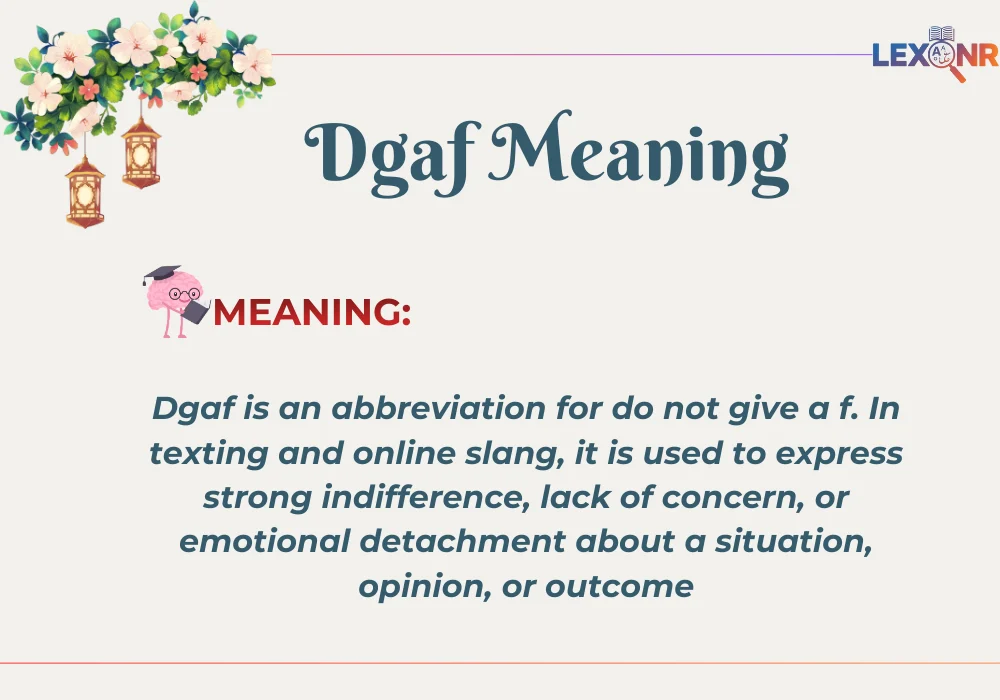
Dgaf is an abbreviation for do not give a f. In texting and online slang, it is used to express strong indifference, lack of concern, or emotional detachment about a situation, opinion, or outcome.
When someone uses dgaf, they are usually saying
- They do not care at all
- Other opinions do not matter to them
- They are emotionally checked out
- They are done worrying about something
It is a blunt expression and often carries a confident, rebellious, or fed-up tone.
Origin of Dgaf
Dgaf comes from shortening a longer phrase commonly used in spoken language. As texting and social media encouraged faster communication, people began removing vowels and full words to save time.
Over time, dgaf became popular because it
- Feels direct and emotionally strong
- Saves typing
- Fits perfectly in casual, expressive online conversations
It is especially common in spaces where people value honesty, sarcasm, or emotional boundaries.
How to Use Dgaf in Texts or Chat
When Dgaf Is Commonly Used
Dgaf is mostly used in casual, informal settings such as
- Text messages between friends
- Social media captions and comments
- Group chats
- Online forums
- Meme culture
It is not appropriate for professional or polite conversations.
Common Ways People Use Dgaf
Expressing indifference
Used when someone truly does not care
Example: They can talk all they want, I dgaf
Setting boundaries
Used to show emotional distance
Example: I used to stress about it, now I dgaf
Confident or rebellious tone
Often used to sound bold or unapologetic
Example: People will judge anyway, dgaf
Emotional burnout
Used when someone is mentally done
Example: After everything that happened, I dgaf anymore
Examples of Dgaf in Conversations
Texting example
Friend: What if they get mad
Reply: Honestly, dgaf
Social media example
Doing what makes me happy and dgaf about opinions
Group chat example
I tried explaining myself for years, now I dgaf
Casual chat example
They unfollowed me
Dgaf, life goes on
These examples show how dgaf usually signals emotional closure or confidence rather than anger.
Tone and Meaning Behind Dgaf
Although short, dgaf carries strong emotional weight. The tone can change depending on context.
It can feel
- Confident and self-assured
- Tired and emotionally drained
- Sarcastic or dismissive
- Defensive or protective
Understanding tone helps avoid misreading the message as aggressive when it may simply be honest.
Common Mistakes or Misunderstandings
Using Dgaf in the Wrong Setting
Dgaf is not suitable for professional environments, serious discussions, or conversations that require empathy.
Using it in formal situations can make you appear rude or careless.
Sounding Ruder Than Intended
Because dgaf includes implied profanity, it can sound harsh even if you mean it casually. Some people may take it personally.
If the situation is sensitive, softer wording is often better.
Using It Without Emotional Context
Dropping dgaf suddenly can feel cold or dismissive if the other person is emotionally invested. It works best when the tone of the conversation already supports it.
Similar Slangs to Dgaf
| Slang Term | Meaning | Common Usage |
|---|---|---|
| IDC | I do not care | Texting, casual chat |
| Whatever | Indifference or dismissal | Everyday conversation |
| Unbothered | Calm and unaffected | Social media captions |
| I am over it | Emotionally done | Texting, chats |
| Meh | Mild indifference | Casual replies |
| Not my problem | Refusing responsibility | Casual conversation |
| Zero cares | No concern at all | Informal texting |
These slang terms share the same emotional space as dgaf, though dgaf is one of the strongest versions.
When You Should and Should Not Use Dgaf
Good Times to Use Dgaf
- With close friends
- When joking or being sarcastic
- When expressing emotional boundaries
- In casual online spaces
Times to Avoid Dgaf
- At work or school
- In serious or emotional conversations
- With people you do not know well
- When you want to sound respectful
Choosing the right moment matters more than the word itself.
FAQs:
What does dgaf mean in texting
In texting, dgaf means do not give a f and is used to show strong indifference or lack of concern.
Is dgaf rude
It can sound rude depending on context. Among friends it is often casual, but in serious conversations it may feel dismissive.
Is dgaf a bad word
It contains implied profanity, so it is considered informal and not appropriate for professional settings.
Can dgaf be used jokingly
Yes, many people use dgaf jokingly or sarcastically to exaggerate how little they care.
Is dgaf the same as idc
Both express not caring, but dgaf is much stronger and more emotional than idc.
Conclusion:
The dgaf meaning in texting and online slang is all about expressing strong indifference, emotional detachment, or confidence. It is short, powerful, and often used when someone is done explaining themselves or worrying about opinions.
Like most slang, dgaf works best when used with the right people and in the right context. When used casually, it can sound confident and relatable. When used carelessly, it can feel harsh or dismissive.
Have a slang word or abbreviation you keep seeing online and want explained
Share it in the comments and let us break it down together

I am John, a dedicated writer and language enthusiast with a strong interest in words and their meanings. I focus on creating clear, accurate, and easy-to-understand content to help readers strengthen their vocabulary and language skills.
Through Lexonr, my aim is to make word meanings accessible for students, learners, and language enthusiasts from all backgrounds. I believe that understanding language plays a key role in effective communication and continuous learning.
I am committed to delivering helpful, reliable, and high-quality content while contributing to the ongoing growth and improvement of Lexonr.