You may have seen the phrase fear mongering used in news headlines, social media debates, or online discussions and wondered what it actually means. It is a powerful term that often appears when people talk about media, politics, marketing, or viral content. Understanding the fear mongering meaning helps you recognize when fear is being used to influence opinions, emotions, or behavior.
This article explains what fear mongering means, where it comes from, how it is used in real life, and how to spot it easily. Everything is written in clear, simple language so it is easy to understand and apply.
What Does Fear Mongering Mean
Definition of Fear Mongering
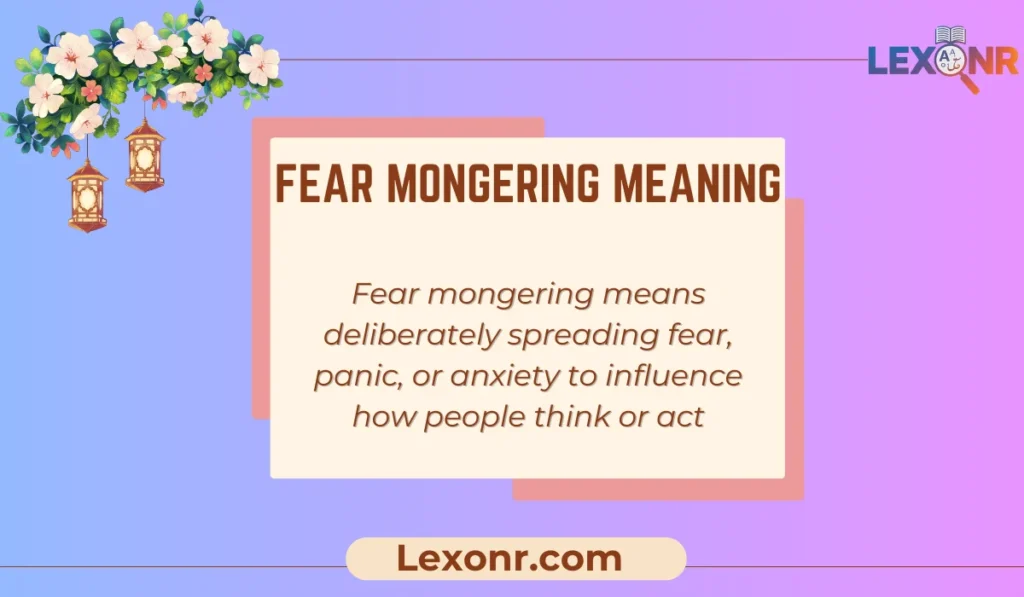
Fear mongering means deliberately spreading fear, panic, or anxiety to influence how people think or act. It usually involves exaggerating dangers, focusing only on worst-case scenarios, or presenting information in a way that makes situations seem more threatening than they really are.
In simple terms, fear mongering is about using fear as a tool to control attention, decisions, or behavior.
Fear mongering is commonly used in
- News and media headlines
- Politics and campaigns
- Social media posts
- Advertising and marketing
- Online rumors and misinformation
Origin of the Term Fear Mongering
The word comes from combining fear with mongering, which means spreading or promoting something widely. Historically, mongering was used to describe selling goods, but over time it also came to mean spreading ideas or emotions.
When combined, fear mongering literally means spreading fear on purpose, often to gain power, attention, or profit.
How Fear Mongering Is Used in Real Life
Common Situations Where Fear Mongering Appears
Fear mongering can show up in many everyday situations, such as
- Headlines designed to shock or scare readers
- Political messages warning of extreme consequences
- Viral social media posts predicting disasters
- Ads that make you afraid of missing out or being unsafe
The goal is usually the same: trigger an emotional reaction instead of logical thinking.
How Fear Mongering Works
Fear mongering often follows a pattern
- Highlight a threat or danger
- Exaggerate the risk or consequences
- Reduce nuance or facts
- Push a specific reaction or belief
When people feel scared, they are more likely to react quickly without checking facts.
Examples of Fear Mongering
Example in News Media
This new trend could destroy society as we know it
This kind of language creates panic without offering balanced information.
Example on Social Media
If you do not share this, something bad will happen
This uses fear to encourage engagement rather than truth.
Example in Politics
If the other side wins, the country will collapse
This is a classic fear mongering tactic to influence voters.
Example in Marketing
You are at serious risk if you do not buy this product
This creates anxiety to push sales instead of providing real value.
Common Mistakes or Misunderstandings
Thinking Fear Mongering Is Always Fake
Fear mongering does not always mean the threat is completely made up. Sometimes real issues are exaggerated or presented without context to make them seem scarier than they are.
Confusing Fear Mongering With Awareness
Raising awareness is about informing people with facts and solutions. Fear mongering focuses on panic and emotional reaction without balance or clarity.
Assuming Only Media Uses Fear Mongering
Fear mongering can be used by individuals, influencers, brands, or even friends sharing unverified information.
Similar Terms Related to Fear Mongering
| Term | Meaning | How It Is Used |
|---|---|---|
| Scare tactics | Using fear to pressure decisions | Politics, sales |
| Propaganda | Biased information to influence views | Media, politics |
| Sensationalism | Exaggerating facts for attention | News, headlines |
| Alarmism | Overstating threats or dangers | Commentary, debates |
| Panic spreading | Creating widespread fear | Social media |
| Misinformation | False or misleading information | Online platforms |
| Clickbait | Shocking content to gain clicks | Articles, videos |
These terms are often connected to fear mongering, though each has its own nuance.
FAQs:
What is fear mongering in simple words
Fear mongering means trying to scare people on purpose to influence how they think or behave.
Is fear mongering always intentional
Not always. Sometimes people spread fear unknowingly by sharing exaggerated or misleading information.
Is fear mongering bad
Fear mongering is generally harmful because it promotes panic, confusion, and emotional decision-making instead of facts and reasoning.
How can you spot fear mongering
Look for exaggerated language, extreme predictions, lack of evidence, and emotional pressure rather than balanced facts.
What is the opposite of fear mongering
The opposite would be balanced communication that focuses on facts, context, and realistic solutions rather than panic.
Conclusion:
The fear mongering meaning centers on the intentional spread of fear to influence opinions or actions. It relies on emotional reactions rather than clear facts and often exaggerates risks to gain attention, control, or profit.
By understanding how fear mongering works, you can become a more critical reader and avoid being manipulated by scary headlines or viral posts. Staying informed, checking sources, and slowing down emotional reactions are the best ways to counter fear-based messaging

I am John, a dedicated writer and language enthusiast with a strong interest in words and their meanings. I focus on creating clear, accurate, and easy-to-understand content to help readers strengthen their vocabulary and language skills.
Through Lexonr, my aim is to make word meanings accessible for students, learners, and language enthusiasts from all backgrounds. I believe that understanding language plays a key role in effective communication and continuous learning.
I am committed to delivering helpful, reliable, and high-quality content while contributing to the ongoing growth and improvement of Lexonr.