You may have seen or heard the word implication in conversations, articles, exams, or online discussions and wondered what it really means. Even though it sounds like a formal word, implication is actually very common in everyday language. Understanding the implication meaning helps you read between the lines, grasp hidden messages, and understand what someone is suggesting without saying it directly.
This article explains the meaning of implication in clear, simple language, shows how it is used in real life, and helps you avoid common misunderstandings.
What Does Implication Mean
Definition of Implication
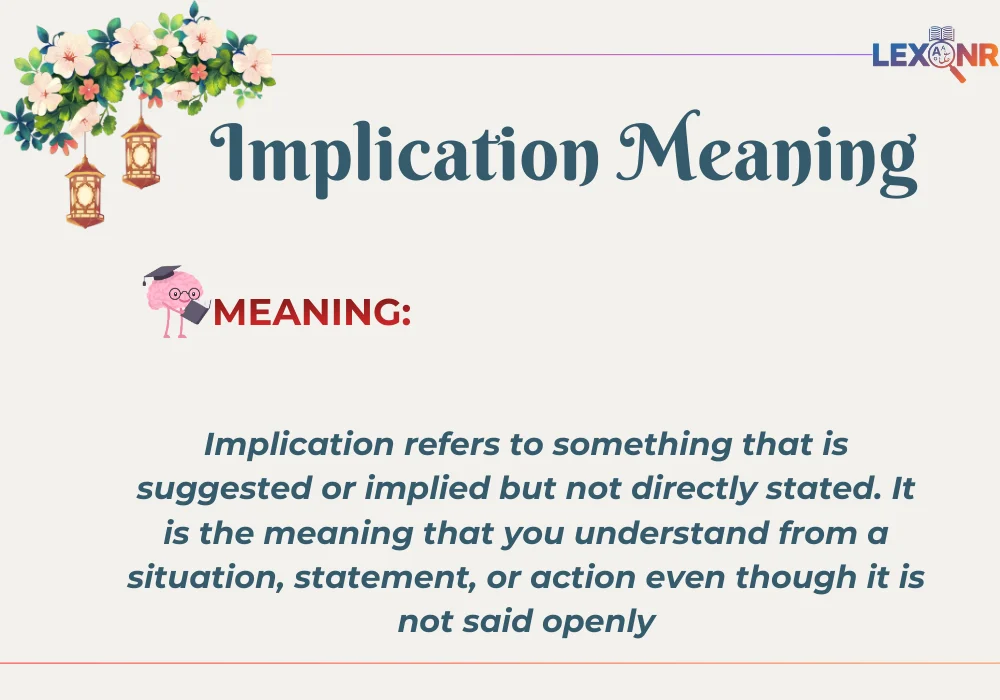
Implication refers to something that is suggested or implied but not directly stated. It is the meaning that you understand from a situation, statement, or action even though it is not said openly.
In simple words, an implication is
- A hidden meaning
- An indirect message
- A conclusion you draw without it being clearly spoken
For example, if someone says
It is getting late
The implication might be that it is time to leave.
Origin of the Word Implication
The word implication comes from Latin roots meaning to involve or entwine. Over time, it came to describe ideas or meanings that are involved in a statement without being directly expressed.
Today, implication is widely used in
- Everyday conversation
- Writing and reading comprehension
- Legal and academic contexts
- News and opinion pieces
How Implication Is Used in Language
Direct Meaning vs Implication
Understanding implication often means looking beyond literal words.
Direct meaning is what is said clearly.
Implication is what is meant indirectly.
Example
She did not say yes
Direct meaning: She did not agree
Implication: She might be unsure or unwilling
Common Situations Where Implication Is Used
Implication appears frequently in
- Conversations where people avoid being blunt
- Polite refusals or criticism
- Storytelling and literature
- Arguments and debates
People often rely on implication to sound polite, avoid conflict, or leave room for interpretation.
Examples of Implication in Real Life
Everyday conversation
Statement: I have a lot of work tomorrow
Implication: I cannot stay out late
Workplace example
Statement: This report could use a bit more detail
Implication: The report is not good enough yet
Social situation
Statement: I am not really into spicy food
Implication: I do not want to eat this dish
Online discussion
Statement: Interesting take
Implication: I disagree or find the opinion questionable
These examples show how implication depends heavily on tone and context.
Common Mistakes or Misunderstandings
Taking Everything Literally
One common mistake is assuming people always say exactly what they mean. Many messages rely on implication rather than direct wording.
Overthinking the Implication
Sometimes people read too much into simple statements. Not every sentence has a hidden meaning.
Missing Cultural Differences
Implications can vary across cultures. What is implied politely in one culture may not be understood the same way in another.
Similar Words Related to Implication
| Word | Meaning | How It Relates |
|---|---|---|
| Suggestion | An indirect idea or proposal | Often carries implication |
| Inference | A conclusion drawn from evidence | Based on implication |
| Hint | A subtle clue | A type of implication |
| Assumption | Something taken for granted | Can come from implication |
| Allusion | An indirect reference | Uses implication |
These words are closely connected and often appear alongside implication in reading and writing.
FAQs:
What is the simple meaning of implication
Implication means something that is suggested or understood without being said directly.
Is implication always intentional
Not always. Sometimes people imply things without realizing it, and others interpret meaning based on context.
What is the difference between implication and inference
Implication is what is suggested by the speaker, while inference is what the listener understands or concludes.
Can implication be misunderstood
Yes. Because it is indirect, implication can easily be misinterpreted, especially in text or online communication.
Is implication used in formal writing
Yes. It is commonly used in academic writing, legal language, and analytical discussions.
Conclusion:
The implication meaning goes beyond the surface of words. It refers to the ideas and messages that are suggested rather than clearly stated. Understanding implication helps you communicate more effectively, understand others better, and avoid confusion in both spoken and written language.
By paying attention to tone, context, and situation, you can better recognize implications and respond more thoughtfully. Whether in daily conversations, reading, or professional settings, knowing how implication works is a valuable communication skill.

I am John, a dedicated writer and language enthusiast with a strong interest in words and their meanings. I focus on creating clear, accurate, and easy-to-understand content to help readers strengthen their vocabulary and language skills.
Through Lexonr, my aim is to make word meanings accessible for students, learners, and language enthusiasts from all backgrounds. I believe that understanding language plays a key role in effective communication and continuous learning.
I am committed to delivering helpful, reliable, and high-quality content while contributing to the ongoing growth and improvement of Lexonr.