If you’ve ever seen someone type JW in a text, comment, or chat and wondered what it meant, you’re not alone. Acronyms and abbreviations are everywhere in online conversations, and JW meaning in text is one of those small phrases that can make a big difference in understanding the message.
Knowing what JW stands for helps you avoid confusion, respond appropriately, and stay fluent in modern texting language. This guide breaks down the meaning, usage, examples, and related abbreviations so you can use it naturally in your chats.
What Does JW Mean in Texting
Definition of JW
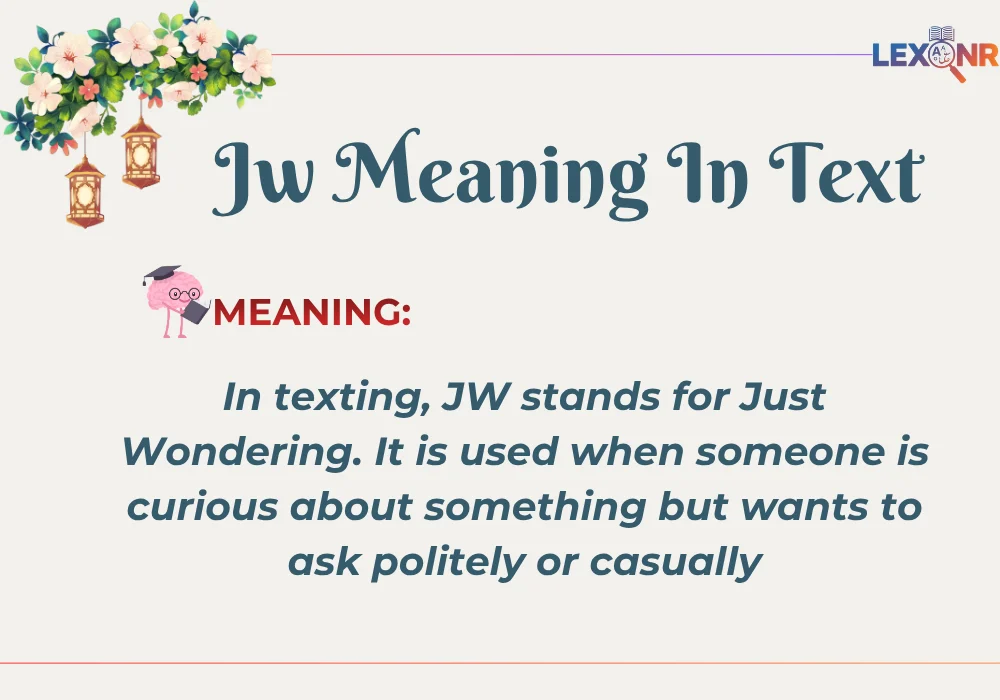
In texting, JW stands for Just Wondering. It is used when someone is curious about something but wants to ask politely or casually.
For example:
JW if you are free to hang out later
It’s a shorthand way of showing curiosity or seeking information without being too formal or direct.
Origin of JW as Slang
The abbreviation comes from everyday English, taking the first letters of Just Wondering. Over time, it became common in text messages, chat apps, and social media because it saves typing and adds a casual tone.
JW is now widely recognized in texting culture as a friendly, informal way to ask a question or express curiosity.
How to Use JW in Texts or Chat
When JW Is Appropriate
JW works best in informal or semi-casual conversations, such as:
- Texting friends or family
- Messaging someone on social media
- Online forums or group chats
It’s generally not used in professional emails or formal communication, where full words are preferred.
Common Ways People Use JW
1. Checking on Plans
JW if you’re still coming to the party tonight
2. Asking for Information Casually
JW what movie everyone is watching
3. Softening a Question
JW if it’s okay to borrow your notes
Using JW makes the question feel lighthearted and less demanding.
Examples of JW in Conversations
Texting a Friend
JW if you want to meet for lunch
Social Media DM
JW how everyone is liking the new game
Group Chat
JW who’s joining the call later
These examples show how JW adds casual curiosity without sounding pushy or formal.
Common Mistakes or Misunderstandings
Using JW in Formal Communication
It’s best to avoid JW in professional emails or serious messages. Spelling out “Just Wondering” is more appropriate in those contexts.
Misinterpreting Tone
Because it’s short, some may misread JW as indifferent or abrupt. Adding context or an emoji can help clarify tone.
Overusing JW
Too many uses of JW can make messages feel repetitive. Mix it with full phrases or other casual expressions to keep conversations natural.
Similar Slangs to JW
| Slang Term | Meaning | Common Usage |
|---|---|---|
| FYI | For your information | Sharing info casually |
| IMO | In my opinion | Expressing opinions online |
| BRB | Be right back | Quick chat pause |
| TBD | To be decided | Discussing plans or options |
| TMI | Too much information | Reacting to oversharing |
| LOL | Laughing out loud | Showing amusement |
| IDK | I don’t know | Expressing uncertainty |
These abbreviations, like JW, help make texting faster, lighter, and more casual.
FAQs:
What does JW mean in text
JW means Just Wondering and is used to ask a question casually or politely.
Is JW formal or informal
It is informal and best used in texting, chats, and casual online conversations.
Can I use JW with anyone
It’s safest with friends, family, or peers; avoid using it in professional contexts.
Is JW used internationally
Yes, it is widely understood in English-speaking texting communities worldwide.
Can I use JW in group chats
Absolutely, it works well in group chats to ask questions without sounding demanding.
Conclusion:
The JW meaning in text is simple but useful. It stands for Just Wondering and is a polite, casual way to express curiosity or ask questions in messaging and online chats.
Using JW correctly helps your messages feel friendly, light, and modern. Pair it with context or emojis to avoid misunderstandings and keep your conversations smooth.
Have a favorite text abbreviation you see often
Share it in the comments and let’s explore it together

I am John, a dedicated writer and language enthusiast with a strong interest in words and their meanings. I focus on creating clear, accurate, and easy-to-understand content to help readers strengthen their vocabulary and language skills.
Through Lexonr, my aim is to make word meanings accessible for students, learners, and language enthusiasts from all backgrounds. I believe that understanding language plays a key role in effective communication and continuous learning.
I am committed to delivering helpful, reliable, and high-quality content while contributing to the ongoing growth and improvement of Lexonr.