Understanding kinesthetic meaning might not seem like a priority at first, but it plays a huge role in how we communicate, learn, and interact. Whether in text, online discussions, or everyday conversations, knowing what kinesthetic refers to helps you better understand yourself and others. This guide explains the term in simple, clear language, how it is used in real life, and practical examples.
What Does Kinesthetic Mean
Definition of Kinesthetic
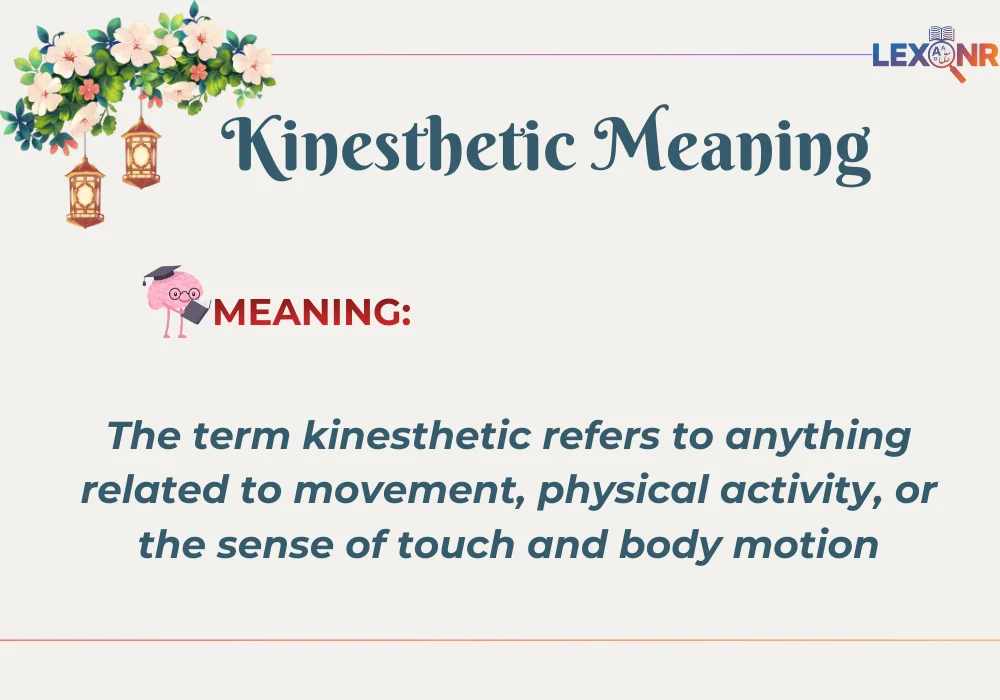
The term kinesthetic refers to anything related to movement, physical activity, or the sense of touch and body motion. It often appears in learning and communication contexts. For example:
- Kinesthetic learning: Learning by doing, moving, or using your hands rather than just reading or listening.
- Kinesthetic sense: The ability to sense your body’s position and movement.
In short, kinesthetic meaning is all about understanding and experiencing through movement.
Origin of Kinesthetic
The word comes from the Greek words “kinesis” meaning movement and “aisthesis” meaning sensation. It was first used in psychology and education to describe learners or individuals who grasp concepts best through action rather than passive observation.
Today, it is widely used not only in learning contexts but also in fitness, therapy, and even texting when describing movement-related experiences.
How to Use Kinesthetic in Texts or Chat
Appropriate Contexts
Kinesthetic is usually used in educational, fitness, or psychological contexts. However, it can also appear in casual texts, social media posts, or group chats, especially when describing experiences or learning styles.
Common platforms:
- Text messages
- Online forums
- Social media discussions
- Educational group chats
Common Ways to Use Kinesthetic
Describing Learning Style
Example: I’m a kinesthetic learner, so I remember best when I actually try it myself.
Explaining Physical Experiences
Example: The dance class was amazing, so kinesthetic!
Self-Awareness and Growth
Example: Practicing yoga really helps me improve my kinesthetic sense.
Using kinesthetic in these ways shows understanding of movement and physical engagement in everyday life.
Examples of Kinesthetic in Conversations
Texting Example
Friend one: How do you learn new skills so fast?
Friend two: I’m kinesthetic, I need to practice to remember.
Social Media Example
Just tried rock climbing for the first time, total kinesthetic experience!
Group Chat Example
Kinesthetic learning is honestly the only way I can remember science experiments.
Common Mistakes or Misunderstandings
Misusing Kinesthetic
Some people use kinesthetic to describe general activity or energy without referring to learning or movement.
Better: I learn best by practicing, that’s kinesthetic learning
Risky: I ran around all day, so I’m totally kinesthetic
Using Kinesthetic in Formal Situations
While educational and professional contexts are fine, using it casually in unrelated professional emails can feel out of place.
Assuming Everyone Understands
Not everyone is familiar with kinesthetic. Adding context or explanation ensures clarity.
Similar Slangs and Related Terms
| Term | Meaning | Common Usage |
|---|---|---|
| Hands-on | Learning or doing physically | Education, work |
| Tactile | Related to touch | Therapy, crafts |
| Active learning | Learning through action | School, workshops |
| Physical learner | Learner who benefits from movement | Education |
| Movement-based | Involving body movement | Fitness, therapy |
| Experiential | Learning through experience | Work, training |
| Muscle memory | Learning through repeated physical activity | Sports, fitness |
FAQs:
What does kinesthetic mean in learning
It refers to learning by doing or using physical activity rather than just reading or listening.
Can kinesthetic describe a person
Yes, it describes people who learn best through movement or hands-on experiences.
Is kinesthetic only about education
No, it also applies to physical experiences, fitness, therapy, and self-awareness.
How do I improve my kinesthetic sense
Practice activities that involve movement, like sports, dance, yoga, or hands-on projects.
Is kinesthetic safe to use in casual conversations
Yes, especially when talking about learning styles, experiences, or physical activities.
Conclusion:
The kinesthetic meaning revolves around movement, physical experience, and learning through doing. It is an important concept for understanding how people interact with the world, retain knowledge, and engage with their environment.
Used correctly, the term can describe learning styles, physical experiences, and even self-awareness in everyday life. Remember, context matters, and explaining it clearly can help others understand your perspective.
Have a favorite learning style or term you use all the time?
Share it in the comments and let’s discuss how we all experience the world differently.

I am John, a dedicated writer and language enthusiast with a strong interest in words and their meanings. I focus on creating clear, accurate, and easy-to-understand content to help readers strengthen their vocabulary and language skills.
Through Lexonr, my aim is to make word meanings accessible for students, learners, and language enthusiasts from all backgrounds. I believe that understanding language plays a key role in effective communication and continuous learning.
I am committed to delivering helpful, reliable, and high-quality content while contributing to the ongoing growth and improvement of Lexonr.