If you have ever seen someone say mangia in a text message, comment, or caption and wondered what it actually means, you are not alone. The word shows up frequently online, especially around food posts, family conversations, and casual chats with an Italian vibe. Understanding the mangia meaning helps you catch the tone, emotion, and cultural context behind the word instead of taking it literally.
This article explains what mangia means, where it comes from, how people use it in everyday conversations and texting, and how you can use it naturally without sounding forced or confused.
What Does Mangia Mean
Mangia Meaning Explained Simply
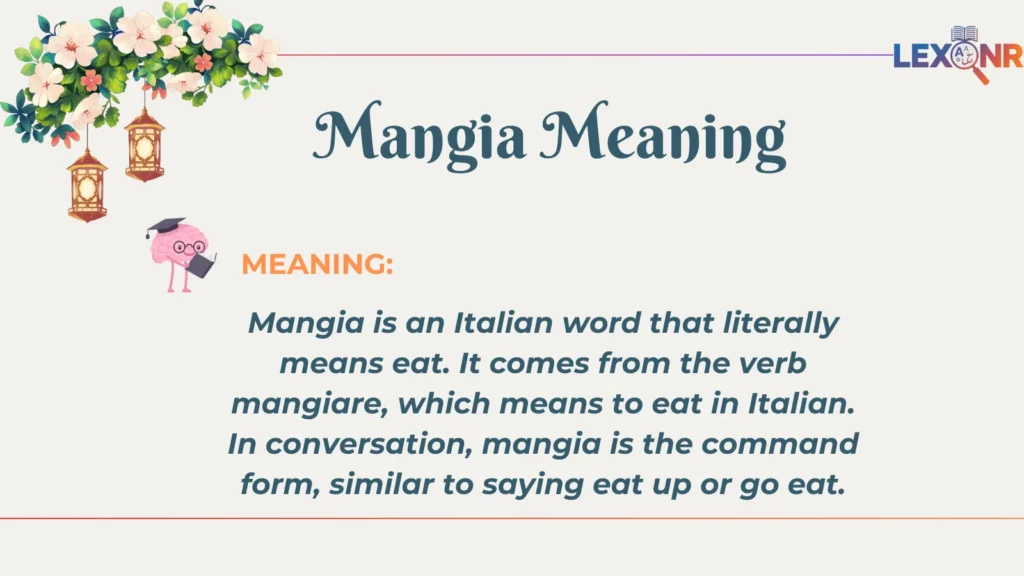
Mangia is an Italian word that literally means eat. It comes from the verb mangiare, which means to eat in Italian. In conversation, mangia is the command form, similar to saying eat up or go eat in English.
However, in texting and modern usage, mangia often carries more emotion than just eat. It can express
- Encouragement to eat
- Hospitality and care
- Affection, especially from elders
- Playful pressure to enjoy food
So when someone says mangia, they are usually not just talking about food. They are expressing warmth, concern, or tradition.
Origin of Mangia
The word mangia has deep roots in Italian culture. In Italian households, food is closely tied to love, family, and care. Saying mangia is often a way of saying
I care about you
You look hungry
Enjoy this food I made
Because of Italian immigration and pop culture influence, mangia made its way into English conversations, especially in food-related contexts, family jokes, and social media captions.
How Mangia Is Used in Texts and Chats
Common Contexts Where Mangia Appears
You will most often see mangia used in
- Text messages between family or friends
- Food-related social media posts
- Comments on cooking videos or recipes
- Playful or affectionate chats
- Italian themed jokes or captions
It is especially common when talking about meals, cooking, or feeding someone.
Popular Ways People Use Mangia
Encouraging someone to eat
Used when someone is not eating enough or needs energy
Example: You barely touched your food, mangia
Showing affection or care
Often used by parents, grandparents, or jokingly by friends
Example: You look tired, mangia and rest
Food celebration or excitement
Used in captions or comments
Example: Homemade pasta tonight, mangia
Playful pressure
Used jokingly when someone refuses food
Example: No excuses, mangia already
Examples of Mangia in Real Conversations
Text Message Example
Person one: I am not that hungry
Person two: You worked all day, mangia
Family Group Chat Example
Dinner is ready, mangia before it gets cold
Social Media Caption Example
Sunday dinner with family, mangia and be happy
Comment on a Food Post
This looks amazing, mangia and enjoy every bite
These examples show how mangia is often warm, caring, and food-centered rather than aggressive or demanding.
Mangia Meaning Beyond Literal Eating
Although mangia literally means eat, its emotional meaning is what makes it popular online.
In many cases, mangia really means
- Take care of yourself
- Enjoy the moment
- Appreciate the food
- You are welcome here
That emotional layer is why the word feels comforting rather than commanding.
Common Mistakes or Misunderstandings
Thinking Mangia Is Rude
Some people assume mangia sounds bossy because it is a command. In reality, it is almost always affectionate or encouraging, especially in cultural contexts tied to food.
Using Mangia in Serious or Formal Situations
Mangia is casual and cultural. It does not fit professional messages, business emails, or formal writing.
Using Mangia Without Food Context
While playful use exists, mangia almost always works best when food is involved. Using it randomly can confuse people.
Similar Slangs and Expressions to Mangia
| Term | Meaning | Common Usage |
|---|---|---|
| Eat up | Encouragement to eat | Casual conversation |
| Dig in | Start eating | Group meals |
| Bon appétit | Enjoy your meal | Food captions |
| Chow down | Eat enthusiastically | Informal speech |
| Feast | Enjoy a large meal | Food posts |
| Comfort food | Food tied to emotion | Social media |
| Food coma | Feeling full after eating | Casual slang |
These expressions share a similar tone of enjoyment, encouragement, or food-centered emotion like mangia.
FAQs:
What does mangia mean in texting
In texting, mangia usually means eat or eat up, often used in a caring or playful way.
Is mangia only an Italian word
Yes, it comes from Italian, but it is commonly used in English conversations, especially around food and family.
Is mangia rude to say
No. It is generally affectionate and friendly, especially when used in food-related situations.
Can non-Italians use mangia
Yes. Many people use mangia casually without being Italian, especially in food posts or friendly chats.
Is mangia slang or a real word
It is a real Italian word that is often used casually or playfully in modern conversations.
Conclusion:
The mangia meaning goes far beyond simply telling someone to eat. It reflects warmth, care, hospitality, and appreciation for food and togetherness. Whether used in a text, a family chat, or a social media caption, mangia adds a cultural and emotional touch that plain words often lack.
As long as it is used in a food-related and friendly context, mangia feels natural and welcoming. If you want to sound warm, playful, or culturally aware when talking about food, this word fits perfectly.
Have a favorite food-related word or expression you see online
Share it in the comments and let us explain its meaning next

I am John, a dedicated writer and language enthusiast with a strong interest in words and their meanings. I focus on creating clear, accurate, and easy-to-understand content to help readers strengthen their vocabulary and language skills.
Through Lexonr, my aim is to make word meanings accessible for students, learners, and language enthusiasts from all backgrounds. I believe that understanding language plays a key role in effective communication and continuous learning.
I am committed to delivering helpful, reliable, and high-quality content while contributing to the ongoing growth and improvement of Lexonr.