Halloween is one of the most popular and widely celebrated events around the world, but many people still wonder about the true meaning of Halloween. For some, it is all about costumes, candy, and spooky decorations. For others, it has deeper historical and cultural roots. Understanding what Halloween really means helps you appreciate why it is celebrated and how it evolved into the modern holiday we know today.
This article explains the meaning of Halloween, its origins, traditions, symbols, and how it is celebrated today, all in a clear and easy-to-understand way.
What Is the Meaning of Halloween
Definition of Halloween
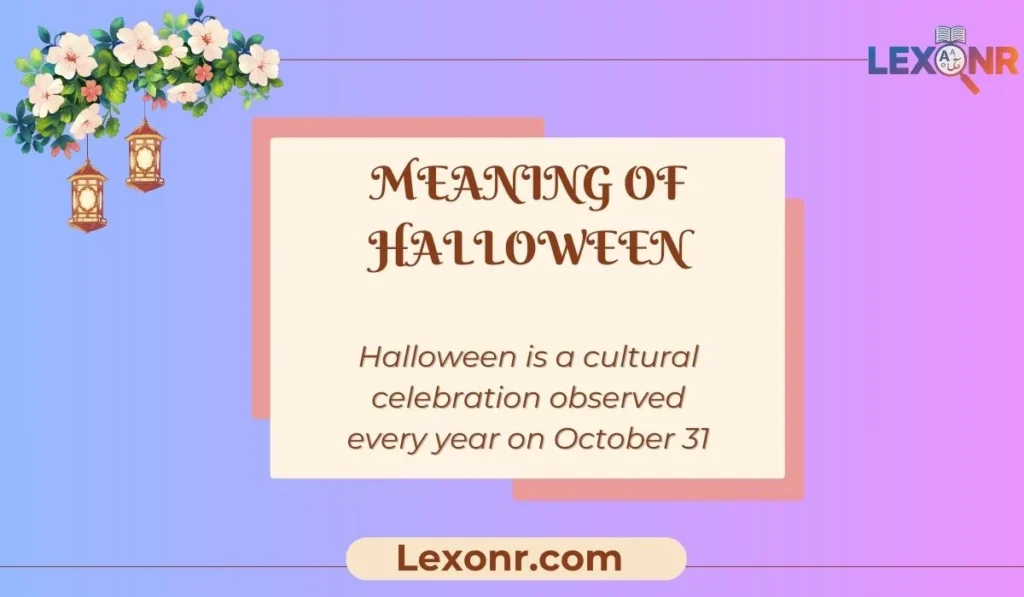
Halloween is a cultural celebration observed every year on October 31. It is traditionally associated with themes of the supernatural, including ghosts, spirits, witches, and the boundary between the living and the dead.
At its core, the meaning of Halloween is connected to the idea that this night represents a time when the line between the physical world and the spirit world is believed to be thinner.
Origin of the Word Halloween
The word Halloween comes from All Hallows Eve.
- Hallow means holy or saint
- Eve means evening
Halloween was originally the evening before All Saints Day, which is observed on November 1. Over time, the phrase All Hallows Eve was shortened to Halloween.
Historical Meaning of Halloween
Ancient Celtic Roots
Halloween has its origins in the ancient Celtic festival called Samhain. The Celts believed that Samhain marked the end of the harvest season and the beginning of winter, a time associated with death and darkness.
They believed that on this night, spirits of the dead could return to the living world. People lit bonfires and wore disguises to protect themselves from harmful spirits.
Influence of Christianity
As Christianity spread, many pagan traditions were adapted into Christian holidays. Samhain blended with All Saints Day, and Halloween became a night of remembrance for the dead rather than fear of spirits alone.
This blending is a major reason Halloween carries both spooky and reflective meanings.
How Halloween Is Celebrated Today
Modern Meaning of Halloween
In modern times, the meaning of Halloween has shifted toward fun, creativity, and community. While it still includes spooky themes, it is mostly seen as a lighthearted celebration.
Today, Halloween represents
- Dressing up as fictional or spooky characters
- Social bonding through parties and events
- Childhood fun through trick or treating
- Creative self-expression
Common Halloween Traditions
Some of the most popular Halloween activities include
- Wearing costumes
- Trick or treating
- Carving pumpkins into jack o lanterns
- Decorating homes with spooky themes
- Attending costume parties
These traditions keep the holiday playful rather than frightening.
Symbols and Their Meanings in Halloween
Pumpkins and Jack o Lanterns
Pumpkins symbolize protection and guidance. The carved faces are believed to scare away evil spirits and light the way for friendly ones.
Costumes
Costumes originally served as disguises to confuse spirits. Today, they represent creativity, fun, and sometimes humor or pop culture references.
Ghosts and Spirits
Ghosts represent the connection between life and death, which is one of the oldest meanings of Halloween.
Similar Festivals to Halloween
| Festival Name | Region | Meaning |
|---|---|---|
| Samhain | Celtic regions | End of harvest, honoring the dead |
| Day of the Dead | Mexico | Celebrating and remembering deceased loved ones |
| All Saints Day | Christian traditions | Honoring saints and martyrs |
| Obon | Japan | Remembering ancestral spirits |
| Guy Fawkes Night | United Kingdom | Historical remembrance with bonfires |
These festivals share similar themes of remembrance, transition, and reflection.
FAQs:
What is the true meaning of Halloween
The true meaning of Halloween comes from ancient beliefs about honoring the dead and recognizing the transition between seasons, especially the shift from harvest to winter.
Is Halloween a religious holiday
Halloween has both pagan and Christian roots. Today, it is mostly celebrated as a cultural and social event rather than a religious one.
Why is Halloween associated with scary things
Halloween is linked to old beliefs that spirits could cross into the human world on this night, which led to spooky symbols and stories.
Why do people wear costumes on Halloween
Originally, costumes were worn to disguise people from spirits. Now, they are worn for fun, creativity, and entertainment.
Is Halloween only celebrated in one country
No. Halloween is celebrated in many countries, especially in North America, Europe, and parts of Asia, though traditions vary.
Conclusion:
The meaning of Halloween has evolved over time from ancient spiritual beliefs to a modern celebration focused on fun, creativity, and community. While its roots are tied to honoring the dead and seasonal change, today Halloween is mostly about enjoyment and expression.
Understanding where Halloween comes from adds depth to the celebration and helps explain why spooky themes remain such an important part of the holiday.

I am John, a dedicated writer and language enthusiast with a strong interest in words and their meanings. I focus on creating clear, accurate, and easy-to-understand content to help readers strengthen their vocabulary and language skills.
Through Lexonr, my aim is to make word meanings accessible for students, learners, and language enthusiasts from all backgrounds. I believe that understanding language plays a key role in effective communication and continuous learning.
I am committed to delivering helpful, reliable, and high-quality content while contributing to the ongoing growth and improvement of Lexonr.