If you have ever heard the word nicotine in conversations about smoking, vaping, or addiction and wondered what it actually means, you are not alone. Many people recognize the term but do not fully understand what nicotine is, how it works, or why it is so commonly discussed. Knowing the nicotine meaning is important because it helps you make informed decisions about products like cigarettes, vapes, and nicotine gums.
This article explains nicotine meaning in clear, simple language. You will learn what nicotine is, where it comes from, how people use it, common misunderstandings, and how it is talked about in everyday conversations.
What Does Nicotine Mean
Definition of Nicotine
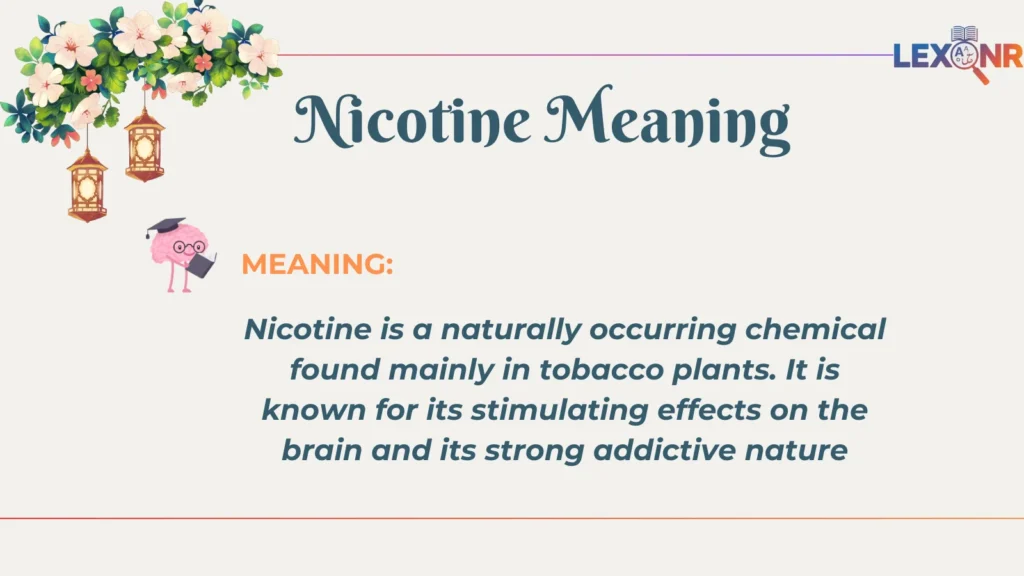
Nicotine is a naturally occurring chemical found mainly in tobacco plants. It is known for its stimulating effects on the brain and its strong addictive nature. When people smoke, vape, or use tobacco products, nicotine is the substance that causes cravings and dependence.
In simple terms, nicotine is the chemical that keeps people wanting more cigarettes or vape hits.
Origin of the Word Nicotine
The word nicotine comes from the tobacco plant Nicotiana tabacum. The plant itself was named after Jean Nicot, a French diplomat who introduced tobacco to Europe. Over time, scientists identified nicotine as the main active compound in tobacco, and the name became widely used in medicine, science, and everyday language.
How Nicotine Works in the Body
What Happens When Nicotine Enters the Body
When nicotine enters the body through smoking, vaping, or other methods, it quickly reaches the brain. This usually happens within seconds.
Nicotine then
- Triggers the release of dopamine
- Creates a feeling of pleasure or alertness
- Reduces stress or anxiety temporarily
These effects are short-lived, which is why people often feel the urge to use nicotine again.
Why Nicotine Is Addictive
Nicotine is addictive because it trains the brain to crave repeated exposure. Over time, the brain starts depending on nicotine to feel normal.
This can lead to
- Strong cravings
- Irritability without nicotine
- Difficulty quitting
- Habitual use
This addictive nature is why nicotine is such a major topic in health discussions.
How People Use Nicotine
Common Forms of Nicotine Use
Nicotine is consumed in several different ways, including
- Cigarettes
- Vapes or e-cigarettes
- Cigars
- Chewing tobacco
- Nicotine gum or patches
Each method delivers nicotine differently, but the core effect remains the same.
Nicotine in Modern Conversations
Today, nicotine is not only discussed in medical or health contexts. It also appears frequently in everyday conversations, especially online.
Examples include
- Talking about quitting smoking
- Discussing vape habits
- Joking about nicotine addiction
- Sharing experiences with nicotine withdrawal
The nicotine meaning has expanded beyond science and is now part of common language.
Examples of Nicotine in Everyday Use
Casual conversation example
I am trying to quit caffeine and nicotine at the same time, and it is rough
Social media example
That first coffee and nicotine hit in the morning feels illegal
Health-related discussion
Nicotine itself is addictive, but it is not the only harmful thing in cigarettes
These examples show how the word nicotine is used naturally in daily life.
Common Misunderstandings About Nicotine
Nicotine Is the Same as Smoking
A common myth is that nicotine itself is the same as smoking. In reality, nicotine is just one part of tobacco products. Smoking involves inhaling smoke that contains many harmful chemicals, not just nicotine.
Nicotine Causes Cancer Directly
Nicotine is addictive, but it is not the primary cause of cancer. The cancer risk comes mainly from the toxic substances produced by burning tobacco. However, nicotine still has health effects and should not be considered harmless.
Vaping Has No Nicotine
Many people believe vaping does not contain nicotine. In fact, most vapes do contain nicotine, sometimes in very high amounts. Always checking product labels is important.
Similar Terms Related to Nicotine
| Term | Meaning | Common Context |
|---|---|---|
| Tobacco | Plant containing nicotine | Smoking discussions |
| Addiction | Dependence on a substance | Health conversations |
| Withdrawal | Symptoms after stopping use | Quitting nicotine |
| Cravings | Strong desire to use | Recovery talks |
| Stimulant | Substance that increases alertness | Medical explanations |
| Vape | Device delivering nicotine vapor | Modern usage |
| Cigarette | Tobacco product containing nicotine | Everyday speech |
These terms often appear alongside nicotine in both health-related and casual conversations.
Why Nicotine Is Talked About So Much
Nicotine is widely discussed because it affects millions of people worldwide. It plays a major role in smoking habits, vaping trends, and public health debates.
People talk about nicotine when
- Trying to quit smoking
- Comparing cigarettes and vapes
- Discussing addiction
- Sharing personal experiences
Understanding the nicotine meaning helps people engage in these conversations with clarity.
FAQs:
What is nicotine in simple words
Nicotine is a chemical found in tobacco that causes addiction and cravings.
Is nicotine harmful by itself
Nicotine is addictive and can affect the heart and brain, but most serious health damage comes from smoking-related chemicals.
Does nicotine help with stress
Nicotine may feel calming at first, but it actually increases stress over time by creating dependence.
Is nicotine found only in cigarettes
No, nicotine is also found in vapes, cigars, chewing tobacco, and nicotine replacement products.
Why is nicotine hard to quit
Nicotine changes how the brain works, making the body crave it and causing withdrawal symptoms when stopped.
Conclusion:
The nicotine meaning goes beyond just smoking. Nicotine is a powerful, addictive substance that affects the brain and body, shaping habits and daily routines for many people. While it can create short-term feelings of focus or relaxation, it also leads to dependence and cravings.
Understanding what nicotine is, how it works, and how it is commonly used helps you make better choices and better understand conversations around smoking, vaping, and health. Whether you are curious, trying to quit, or just want clear information, knowing the true meaning of nicotine gives you a strong foundation.
If there is another word or term you want explained in simple language, feel free to share it and keep the learning going.

I am Malik, a dedicated writer and language enthusiast with a strong passion for words and their meanings. I focus on creating clear, accurate, and easy-to-understand content to help readers improve their vocabulary and language skills.
Through Lexonr, my goal is to make word meanings accessible for students, learners, and language lovers from all backgrounds. I believe that understanding words is the foundation of effective communication and lifelong learning.
I am committed to providing helpful and reliable content while continuously improving the quality and usefulness of Lexonr.