If you have ever seen someone type no pasa nada in a message, comment, or online conversation and wondered what it means, you are not alone. Many Spanish phrases have become popular in texting and internet culture, and no pasa nada is one of the most commonly used expressions people encounter online.
Understanding the no pasa nada meaning helps you better follow conversations with Spanish speakers and recognize how this phrase is used in casual chats, social media, and everyday communication. Even if you do not speak Spanish fluently, knowing this phrase can help you respond appropriately and understand the tone of the message.
This guide explains what no pasa nada means, where it comes from, and how people use it naturally in conversations.
What Does No Pasa Nada Mean
Definition of No Pasa Nada
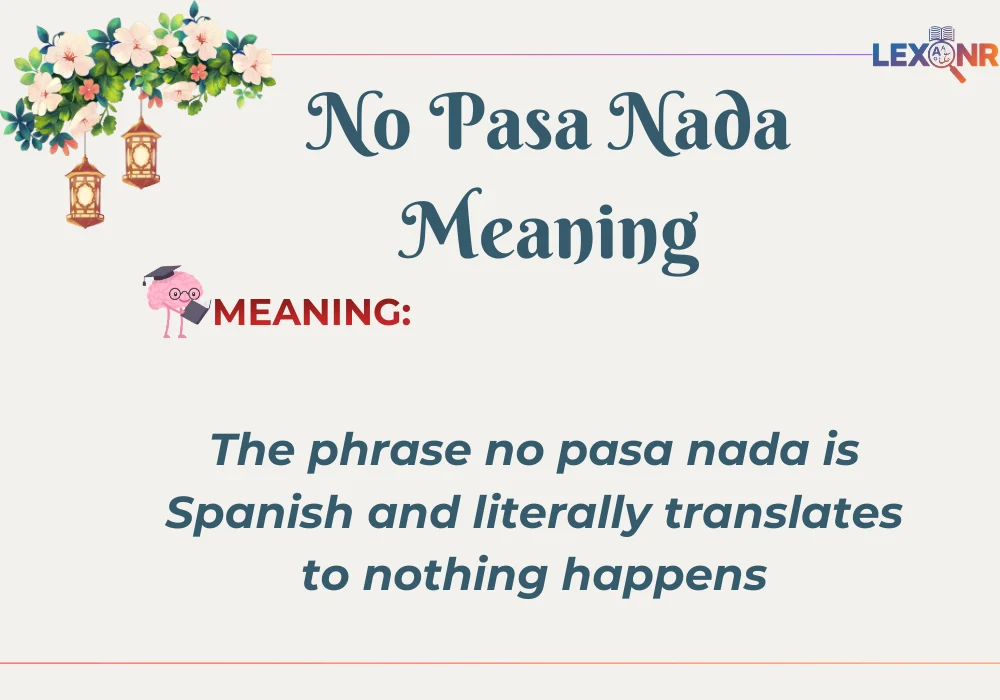
The phrase no pasa nada is Spanish and literally translates to nothing happens. However, in everyday conversation it actually means:
- It is okay
- No problem
- Do not worry about it
- It is not a big deal
- Everything is fine
People use no pasa nada to reassure someone that a mistake, delay, or small problem is not important.
For example, if someone apologizes for being late, another person might reply with no pasa nada to say that it is completely fine.
Origin of the Phrase
No pasa nada comes directly from everyday Spanish conversation and is commonly used in Spain and many Latin American countries. It is part of natural spoken language and is often used to comfort someone or reduce tension in a situation.
Over time, the phrase became widely recognized online because many bilingual speakers use it naturally while texting or commenting on social media.
Today, even people who do not speak Spanish sometimes recognize no pasa nada because it appears frequently in memes, chats, and international conversations.
How to Use No Pasa Nada in Texts or Chat
Situations Where People Use It
The phrase no pasa nada is typically used when someone wants to reassure another person. It works well in situations such as:
- Someone apologizes for a mistake
- A small accident happens
- Someone worries about bothering you
- Plans change unexpectedly
In these cases, saying no pasa nada shows that everything is still okay.
Common Ways People Use the Phrase
Responding to an apology
Example
Friend: Sorry I replied late
You: No pasa nada
Comforting someone
Example
Friend: I think I messed up the presentation
You: No pasa nada, it will be fine
Reducing tension in a situation
Example
Coworker: Sorry I accidentally deleted that file
You: No pasa nada, we can recover it
Examples of No Pasa Nada in Conversations
Here are some natural examples showing how the phrase appears in real conversations.
Text conversation
Friend: Sorry I forgot to send the document
Reply: No pasa nada, send it when you can
Social media comment
User one: Sorry for the typo
User two: No pasa nada, we understood
Group chat example
Friend one: I might be late for dinner
Friend two: No pasa nada, we will wait
Casual conversation
Person one: Sorry I stepped on your shoe
Person two: No pasa nada
In all these cases, the phrase helps keep the conversation friendly and relaxed.
Common Mistakes or Misunderstandings
Thinking It Means Literally Nothing Happened
While no pasa nada literally translates to nothing happens, the real meaning is closer to it is okay or do not worry.
It is more about reassurance than describing an event.
Using It in Serious Situations
The phrase works best for small issues. Using no pasa nada for serious problems might sound dismissive.
For example, if someone is dealing with a major issue, a more thoughtful response may be needed.
Pronunciation Confusion
People sometimes mispronounce the phrase when reading it for the first time. It is typically pronounced similar to:
No pah sah nah dah
Similar Phrases to No Pasa Nada
| Phrase | Meaning | Common Usage |
|---|---|---|
| No problem | Everything is fine | Casual conversations |
| It is okay | Reassuring response | Everyday speech |
| Do not worry | Comforting someone | Friendly chats |
| No big deal | Minimizing a small mistake | Informal texting |
| All good | Everything is fine | Casual internet slang |
| It is fine | Accepting a small issue | Everyday conversation |
| No worries | Relaxed reassurance | Texting and chats |
These phrases share a similar tone and purpose as no pasa nada, especially when responding to apologies or small problems.
FAQs:
What does no pasa nada mean in English
No pasa nada means no problem, it is okay, or do not worry about it. It is used to reassure someone that a situation is not serious.
Is no pasa nada formal or informal
The phrase is generally casual and commonly used in everyday conversation, texting, and friendly interactions.
Is no pasa nada used in Spain or Latin America
It is widely used in both Spain and Latin American countries and is understood by Spanish speakers around the world.
Can non Spanish speakers use no pasa nada
Yes. Many people who do not speak Spanish still use the phrase casually in conversations or online chats, especially when communicating with Spanish speakers.
Is no pasa nada rude
No. It is usually polite and reassuring. It is meant to comfort someone and reduce stress in small situations.
Conclusion:
The no pasa nada meaning is simple but powerful in everyday communication. The phrase is used to reassure someone that everything is fine and that a mistake or small problem is not important. Because of its friendly tone, it appears frequently in texting, online conversations, and casual speech.
Understanding this phrase helps you better follow conversations with Spanish speakers and respond naturally when someone apologizes or worries about a situation. Even if you are just beginning to learn Spanish expressions, no pasa nada is a useful and widely recognized phrase that helps keep conversations positive and relaxed.
Have a favorite slang word, abbreviation, or foreign phrase you keep seeing online
Share it in the comments and let us break down its meaning together.

I am John, a dedicated writer and language enthusiast with a strong interest in words and their meanings. I focus on creating clear, accurate, and easy-to-understand content to help readers strengthen their vocabulary and language skills.
Through Lexonr, my aim is to make word meanings accessible for students, learners, and language enthusiasts from all backgrounds. I believe that understanding language plays a key role in effective communication and continuous learning.
I am committed to delivering helpful, reliable, and high-quality content while contributing to the ongoing growth and improvement of Lexonr.