If you have ever come across the word ombre in a conversation, fashion post, or beauty tutorial and wondered what it actually means, you are not alone. The term appears frequently in hair trends, design discussions, and sometimes even in casual online chats. Understanding the ombre meaning helps you recognize a popular style technique and use the word correctly when talking about fashion, hair, or design.
In simple terms, ombre refers to a gradual color transition from one shade to another. It is widely used in hairstyles, clothing, nail art, and interior design. This guide explains the meaning of ombre, where the word comes from, how people use it in conversations, and examples that make the concept easy to understand.
What Does Ombre Mean
Definition of Ombre
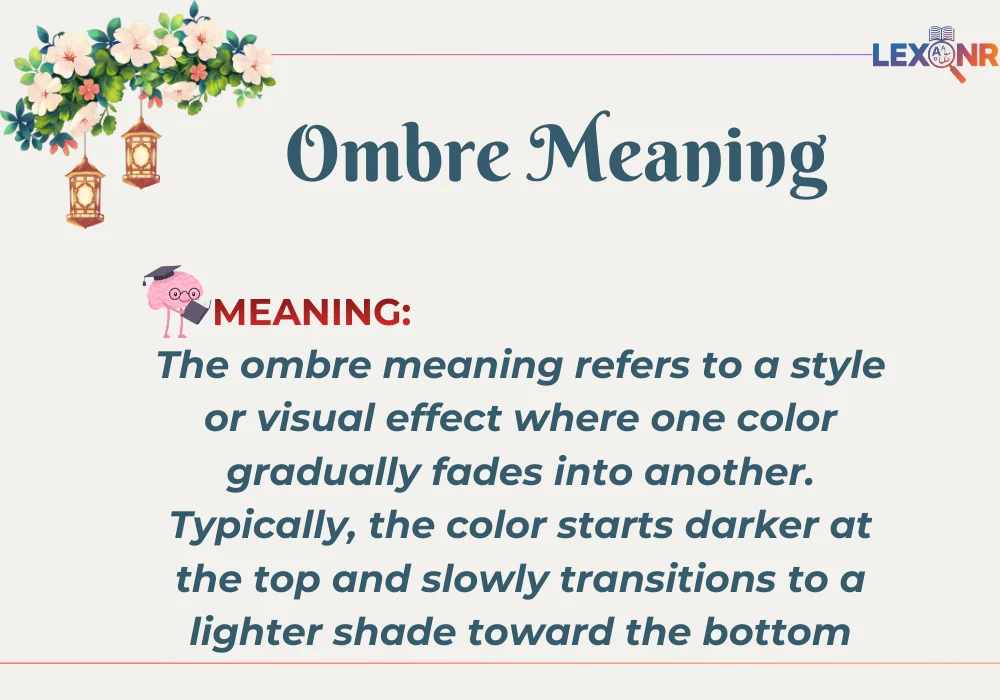
The ombre meaning refers to a style or visual effect where one color gradually fades into another. Typically, the color starts darker at the top and slowly transitions to a lighter shade toward the bottom.
For example
- Dark brown hair fading into blonde ends
- A shirt that gradually changes from blue to white
- Nail polish that blends from pink into purple
The key feature of ombre is the smooth, natural-looking transition between colors.
Origin of the Word Ombre
The word ombre comes from the French language and originally means shaded or shadowed. In design and beauty industries, it became popular to describe color shading techniques that blend smoothly instead of changing abruptly.
Over time, the word spread into fashion, hairstyling, and online conversations where people use it to describe anything that gradually shifts in color.
How Ombre Is Used in Conversations
Common Situations Where People Use Ombre
You will often see the word ombre used when discussing
- Hair coloring styles
- Nail art designs
- Clothing patterns
- Graphic design or art
- Home decor and interior design
The word helps describe a visual style rather than a behavior or personality.
Examples of Ombre in Everyday Conversations
Hair salon discussion
I want an ombre hairstyle with darker roots and lighter ends.
Fashion conversation
That dress has a beautiful ombre effect from pink to orange.
Nail art example
My nail artist did an ombre design that blends purple into lavender.
Home decor discussion
The wall art uses an ombre gradient from deep blue to soft white.
These examples show how ombre is used to describe gradual color blending.
Examples of Ombre in Style and Design
Ombre Hair
One of the most popular uses of ombre is in hair coloring. In this style, hair starts darker near the roots and becomes lighter toward the ends.
Common examples include
- Brown fading into caramel
- Black fading into silver
- Red fading into copper
This technique creates a natural and dimensional look.
Ombre Nails
Ombre nails are created by blending two or more nail polish colors smoothly together.
Popular combinations include
- Pink and white
- Blue and turquoise
- Purple and lavender
The smooth gradient effect makes nails look stylish and modern.
Ombre Fashion
In clothing, ombre refers to fabrics where the color gradually transitions across the garment.
Examples include
- Hoodies with fading color tones
- Dresses that transition from dark to light
- Scarves with blended shades
Ombre in Graphic Design
Designers often use ombre gradients in digital graphics, logos, and website backgrounds to create depth and visual interest.
A common design example is a background fading from deep purple into soft pink.
Common Mistakes or Misunderstandings
Confusing Ombre With Highlights
Many people confuse ombre hair with highlights. However, they are different techniques.
Highlights involve adding lighter strands throughout the hair, while ombre focuses on a gradual transition from dark to light along the length of the hair.
Thinking Ombre Only Applies to Hair
Although it is famous in hair styling, ombre is used across many creative fields such as clothing, nail art, painting, and graphic design.
Assuming Ombre Requires Only Two Colors
While many designs use two colors, ombre effects can include multiple shades blending smoothly together.
Similar Style Terms to Ombre
| Style Term | Meaning | Common Usage |
|---|---|---|
| Gradient | Smooth color transition between shades | Graphic design, digital art |
| Balayage | Hand painted hair coloring technique | Hair salons |
| Dip Dye | Hair ends colored differently from the rest | Fashion hair trends |
| Color Fade | Gradual color change | Clothing, design |
| Blended Color | Multiple shades smoothly mixed | Nail art, painting |
| Two Tone | Two contrasting colors together | Fashion and hair |
| Shaded Effect | Dark to light color transition | Art and illustration |
These terms often appear in discussions about style, beauty, and design.
FAQs:
What does ombre mean
Ombre refers to a style where one color gradually fades into another, usually transitioning from darker shades to lighter ones.
Is ombre only used for hair
No. While ombre is very popular in hair styling, it is also used in nail art, fashion, graphic design, and home decor.
What is the difference between ombre and balayage
Ombre focuses on a clear color transition from dark to light, while balayage is a technique where color is painted onto the hair in a more natural scattered pattern.
Can ombre include more than two colors
Yes. Ombre designs can use multiple shades that blend gradually into each other.
Why is ombre popular
Ombre is popular because it creates a stylish, natural looking color transition that works well in hair, fashion, and design.
Conclusion:
The ombre meaning describes a visual style where colors gradually blend from one shade to another. It is widely used in hairstyles, nail art, clothing, and design because of its smooth and eye-catching effect.
Understanding the concept of ombre makes it easier to recognize popular beauty and design trends. Whether you see it in a hairstyle, a fashion piece, or a digital graphic, the ombre effect always focuses on soft color transitions that create a stylish and modern appearance.
Have you seen a creative ombre style recently
Share your favorite ombre idea or trend in the comments and join the conversation.

I am John, a dedicated writer and language enthusiast with a strong interest in words and their meanings. I focus on creating clear, accurate, and easy-to-understand content to help readers strengthen their vocabulary and language skills.
Through Lexonr, my aim is to make word meanings accessible for students, learners, and language enthusiasts from all backgrounds. I believe that understanding language plays a key role in effective communication and continuous learning.
I am committed to delivering helpful, reliable, and high-quality content while contributing to the ongoing growth and improvement of Lexonr.