Medical terms can sometimes sound complicated, especially when you first encounter them in a prescription, hospital report, or health article. One such term is parenteral. If you have seen this word in medical instructions or healthcare discussions and wondered what it means, you are not alone.
Understanding the parenteral meaning is important because it relates to how medications and nutrients enter the body. This term is commonly used by doctors, nurses, pharmacists, and medical researchers when discussing treatment methods that do not involve the digestive system.
This guide explains the meaning of parenteral, how it is used in medicine, real examples of parenteral treatments, and the difference between parenteral and other medication methods.
What Does Parenteral Mean
Definition of Parenteral
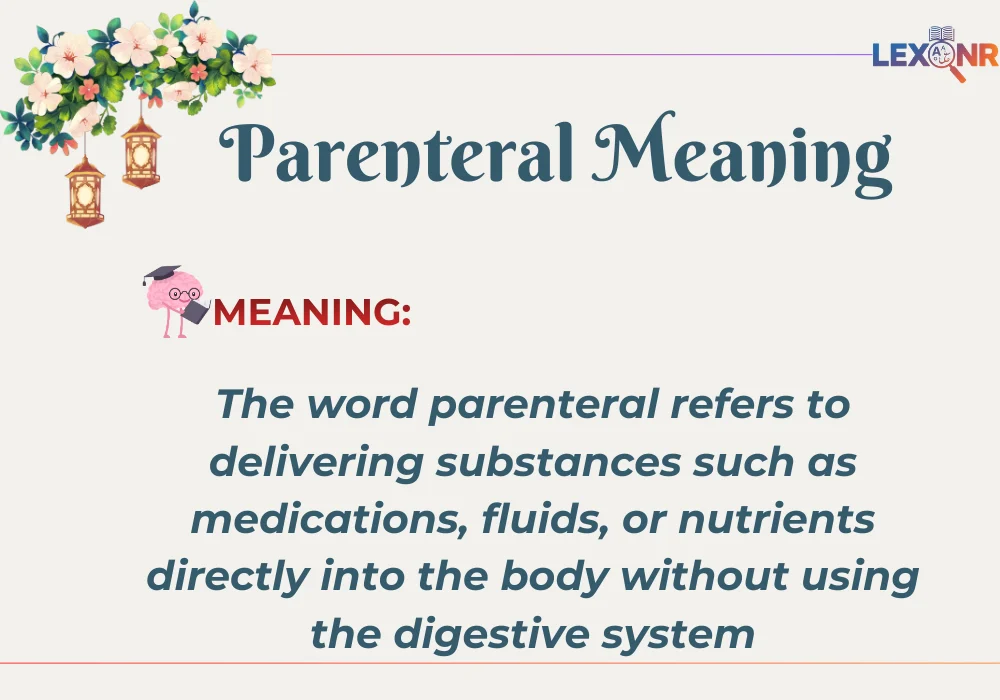
The word parenteral refers to delivering substances such as medications, fluids, or nutrients directly into the body without using the digestive system.
In simple terms, parenteral administration means giving medicine through injections or infusions rather than swallowing pills or liquids.
This usually includes methods such as
- Injections
- Intravenous drips
- Infusions directly into the bloodstream or tissues
Doctors often choose parenteral administration when fast action is needed or when the digestive system cannot absorb a medication properly.
Origin of the Word Parenteral
The term parenteral comes from medical language derived from Greek roots.
- Para means beside or outside
- Enteron means intestine
Together, the word essentially means outside the intestine, which explains why parenteral treatments bypass the digestive system.
This terminology has been used in healthcare and pharmacology for many years to describe non-oral methods of drug delivery.
How Parenteral Administration Works
Parenteral treatments work by delivering substances directly into body tissues or the bloodstream. Because the digestive system is bypassed, the medication can enter circulation more quickly and predictably.
Common situations where parenteral methods are used include
- Emergency medical care
- Hospital treatments
- Severe infections
- Patients unable to swallow medication
- Situations where fast drug action is required
Since the medication does not pass through the stomach or intestines, it avoids breakdown by digestive enzymes and stomach acid.
Types of Parenteral Administration
Several different methods fall under parenteral administration, each used for specific medical purposes.
Intravenous Injection
This method delivers medication directly into a vein.
Characteristics include
- Fastest absorption
- Immediate effect in many cases
- Commonly used in hospitals
Examples include antibiotics, chemotherapy drugs, and emergency medications.
Intramuscular Injection
Intramuscular injections are given directly into muscle tissue.
Common features include
- Moderately fast absorption
- Used for vaccines and certain medications
Muscle tissue has good blood supply, allowing the medication to enter circulation gradually.
Subcutaneous Injection
This method delivers medication just under the skin into fatty tissue.
Common uses include
- Insulin injections
- Hormone therapies
- Some vaccines
Subcutaneous injections usually absorb slower than intravenous injections.
Intradermal Injection
This type of injection is given into the top layer of skin.
It is commonly used for
- Allergy tests
- Tuberculosis skin tests
- Some diagnostic procedures
Examples of Parenteral Treatments
Many common medical treatments use parenteral methods to deliver medications or nutrients effectively.
Examples include
- Insulin injections for diabetes
- Intravenous antibiotics for infections
- Vaccines given through injections
- Chemotherapy medications for cancer treatment
- Emergency medications in ambulances or hospitals
Parenteral delivery is often essential when quick action or precise dosing is required.
Parenteral vs Oral Medication
Many people are familiar with oral medication, which involves swallowing tablets, capsules, or liquids. Understanding the difference between oral and parenteral methods helps clarify why doctors sometimes choose injections instead.
| Method | Description | Example |
|---|---|---|
| Oral | Medication taken by mouth and absorbed through the digestive system | Tablets, capsules, syrups |
| Parenteral | Medication delivered directly into the body without using digestion | Injections, IV drips |
Parenteral administration often works faster and avoids problems related to digestion or absorption.
Advantages of Parenteral Administration
There are several reasons healthcare providers choose parenteral treatment methods.
Faster Action
Because the drug enters the bloodstream directly, it can begin working more quickly than oral medication.
Accurate Dosage
Parenteral delivery allows doctors to control the exact amount of medication entering the body.
Useful When Patients Cannot Swallow
Some patients cannot take oral medication due to illness, surgery, or unconsciousness. Parenteral methods allow treatment to continue.
Better Absorption
Certain medications are destroyed by stomach acid or digestive enzymes. Parenteral administration prevents this issue.
Possible Risks or Considerations
While parenteral methods are effective, they also require careful handling and medical supervision.
Possible concerns include
- Risk of infection at injection sites
- Need for sterile equipment
- Potential pain or discomfort
- Requirement for trained medical professionals
Because of these factors, parenteral treatments are usually administered by healthcare professionals or under medical guidance.
Similar Medical Terms Related to Parenteral
| Term | Meaning | Example Usage |
|---|---|---|
| Oral | Medication taken through the mouth | Pain reliever tablets |
| Topical | Applied directly to skin | Creams and ointments |
| Intravenous | Medication injected into a vein | Hospital IV therapy |
| Intramuscular | Medication injected into muscle | Many vaccines |
| Subcutaneous | Medication injected under the skin | Insulin injections |
| Infusion | Slow delivery of fluid or medication into bloodstream | IV nutrient therapy |
These terms are often used alongside parenteral when discussing medical treatments and drug delivery methods.
FAQs:
What does parenteral mean in medicine
In medicine, parenteral refers to giving medications or nutrients directly into the body through injections or infusions instead of through the digestive system.
What is an example of parenteral administration
An example of parenteral administration is an intravenous injection where medication is delivered directly into a vein.
Why do doctors use parenteral drugs
Doctors use parenteral drugs when quick action is required, when the digestive system cannot absorb a medication properly, or when a patient cannot swallow medicine.
Is parenteral the same as injection
In most cases, yes. Parenteral administration usually involves injections or infusions such as intravenous, intramuscular, or subcutaneous methods.
Is parenteral safer than oral medication
Both methods are safe when used correctly. Parenteral methods may act faster but require proper medical supervision to prevent infection or complications.
Conclusion:
The parenteral meaning in medicine refers to delivering medications, fluids, or nutrients directly into the body without passing through the digestive system. This method is commonly used in hospitals, emergency care, and treatments where fast and reliable drug delivery is necessary.
Understanding how parenteral administration works can help patients better understand medical instructions, treatment plans, and healthcare discussions. While injections and infusions may seem complex, they play an essential role in modern medicine by allowing doctors to provide precise and effective treatment when it matters most.
Have you ever heard another medical term that seemed confusing at first
Share it in the comments and let us explain it in simple language.

I am John, a dedicated writer and language enthusiast with a strong interest in words and their meanings. I focus on creating clear, accurate, and easy-to-understand content to help readers strengthen their vocabulary and language skills.
Through Lexonr, my aim is to make word meanings accessible for students, learners, and language enthusiasts from all backgrounds. I believe that understanding language plays a key role in effective communication and continuous learning.
I am committed to delivering helpful, reliable, and high-quality content while contributing to the ongoing growth and improvement of Lexonr.