Have you ever seen the word perishable on food packaging, shipping labels, or grocery store signs and wondered what it actually means? Understanding the perishable meaning is important because it relates to products that can spoil, decay, or lose quality quickly if they are not stored properly.
This term is commonly used in food storage, transportation, supermarkets, and even logistics. Knowing what perishable means helps people handle products correctly, reduce waste, and keep food safe to eat.
In this guide, you will learn the clear definition of perishable, how it is used in everyday situations, examples of perishable goods, and common misunderstandings about the term.
What Does Perishable Mean
Definition of Perishable
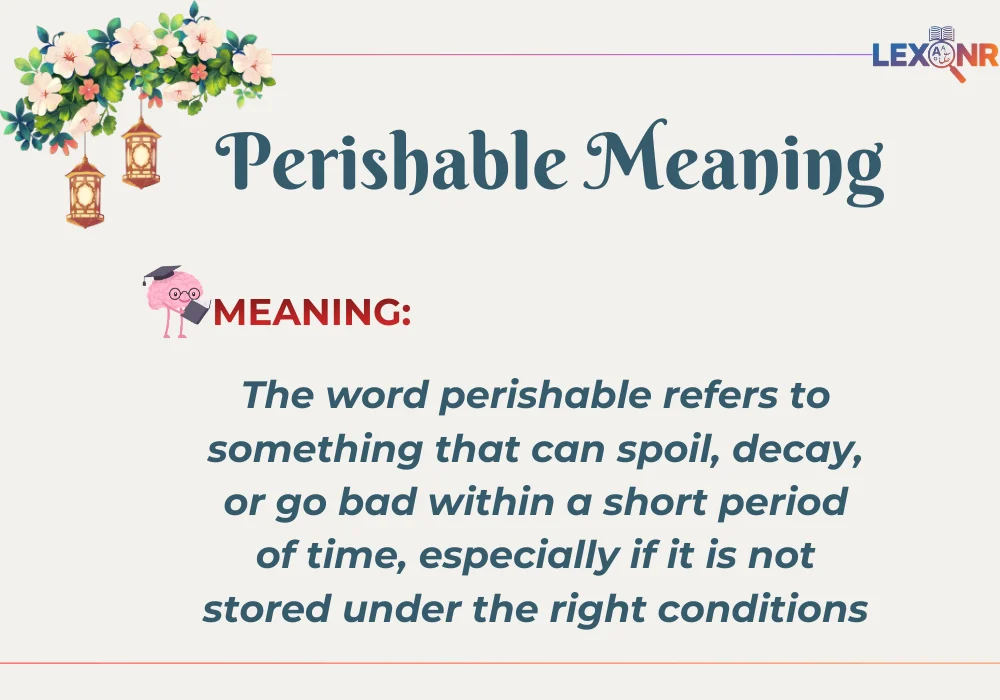
The word perishable refers to something that can spoil, decay, or go bad within a short period of time, especially if it is not stored under the right conditions.
Most commonly, perishable items are foods that require refrigeration or special handling to stay fresh and safe.
In simple terms, perishable means something that does not last long and can spoil quickly.
Origin of the Word Perishable
The word perishable comes from the verb perish, which means to decay, spoil, or be destroyed over time. The word eventually became widely used in industries such as food production, agriculture, and transportation to describe items with a short shelf life.
Today, the term appears frequently on packaging, shipping boxes, grocery labels, and storage instructions.
How Perishable Is Used in Everyday Life
The term perishable appears in many daily situations. People often encounter it when shopping for groceries, storing food at home, or shipping temperature-sensitive products.
Common places where the word is used include
- Grocery stores
- Food delivery services
- Restaurants and kitchens
- Shipping and logistics companies
- Food packaging labels
For example, you might see a label that says Perishable Item Keep Refrigerated. This tells handlers that the product must stay cold to prevent spoilage.
Examples of Perishable Items
Perishable goods are usually foods or products that spoil quickly. Here are some common examples.
Fresh Foods
Fresh foods are the most common type of perishable items.
Examples include
- Fresh fruits
- Fresh vegetables
- Raw meat
- Poultry
- Fish and seafood
These items can spoil within days if not refrigerated.
Dairy Products
Dairy products are also highly perishable.
Examples include
- Milk
- Cheese
- Yogurt
- Cream
- Butter
These products must usually be kept cold to prevent bacterial growth.
Prepared or Cooked Foods
Cooked foods also fall into the perishable category.
Examples include
- Leftovers
- Cooked rice or pasta
- Sandwiches
- Restaurant meals
- Takeout food
If left at room temperature for too long, they can spoil quickly.
Examples of Perishable in Everyday Conversations
Here are some simple examples showing how the word perishable might appear in daily conversations.
Example one
Please put the milk in the fridge because it is perishable.
- Example two
- The delivery company ships perishable goods overnight.
- Example three
- This grocery order contains several perishable items.
Example four
Make sure the cooler stays cold because the food inside is perishable.
These examples show how the word is commonly used in normal communication.
Common Mistakes or Misunderstandings
Even though the term is simple, people sometimes misunderstand the perishable meaning.
Confusing Perishable With Expired
A perishable item is not necessarily expired. It simply means the product can spoil quickly if not stored properly.
Example
Fresh milk is perishable but still safe to drink before its expiration date.
Thinking Only Food Is Perishable
While food is the most common example, other products can also be perishable, such as
- Flowers
- Certain medicines
- Some cosmetics
- Biological samples
These products can lose quality quickly if not handled properly.
Assuming Refrigeration Always Prevents Spoilage
Refrigeration slows spoilage but does not stop it completely. Even refrigerated perishable foods eventually expire.
Similar Words Related to Perishable
| Word | Meaning | Common Usage |
|---|---|---|
| Spoilable | Can go bad easily | Food storage |
| Fresh | Recently produced or harvested | Groceries |
| Decaying | Breaking down or rotting | Biology or food |
| Expired | Past its safe or usable date | Packaging labels |
| Short shelf life | Does not last long | Food and retail |
| Temperature sensitive | Requires controlled temperature | Shipping |
| Refrigerated | Stored in cold conditions | Food preservation |
These words often appear in discussions about food safety and storage.
FAQs:
What does perishable mean in simple words
Perishable means something that can spoil, rot, or lose quality quickly if it is not stored properly.
What are examples of perishable foods
Common perishable foods include milk, meat, fish, fruits, vegetables, and cooked meals.
Why are perishable foods kept in the refrigerator
Refrigeration slows the growth of bacteria and helps keep perishable foods fresh for a longer time.
Are all foods perishable
No. Some foods are non perishable, meaning they can last for a long time without refrigeration. Examples include rice, pasta, canned goods, and dried foods.
What does perishable mean on a shipping label
On a shipping label, perishable means the package contains items that must be delivered quickly or kept at a controlled temperature to prevent spoilage.
Conclusion:
The perishable meaning refers to products that can spoil, decay, or lose quality quickly, especially when they are not stored properly. This term is most often used for foods like meat, dairy products, fruits, vegetables, and cooked meals.
Understanding the concept of perishable items helps people store food safely, reduce waste, and handle groceries or shipments correctly. When you see the word on packaging or shipping labels, it is simply a reminder that the item needs careful storage and timely use.
Have a word or term you keep seeing but do not fully understand
Share it in the comments and we can explain it together.

I am Malik, a dedicated writer and language enthusiast with a strong passion for words and their meanings. I focus on creating clear, accurate, and easy-to-understand content to help readers improve their vocabulary and language skills.
Through Lexonr, my goal is to make word meanings accessible for students, learners, and language lovers from all backgrounds. I believe that understanding words is the foundation of effective communication and lifelong learning.
I am committed to providing helpful and reliable content while continuously improving the quality and usefulness of Lexonr.