You may have heard someone say stop pretending or that is just pretense and wondered what it actually means. The word pretense is commonly used in conversations, writing, and even online discussions, yet many people only have a vague idea of its meaning. Understanding the pretense meaning helps you better interpret situations, recognize fake behavior, and express yourself more clearly.
This article explains pretense meaning in simple language, shows how it is used in real life, highlights common misunderstandings, and provides clear examples so you can use the word confidently.
What Does Pretense Mean
Definition of Pretense
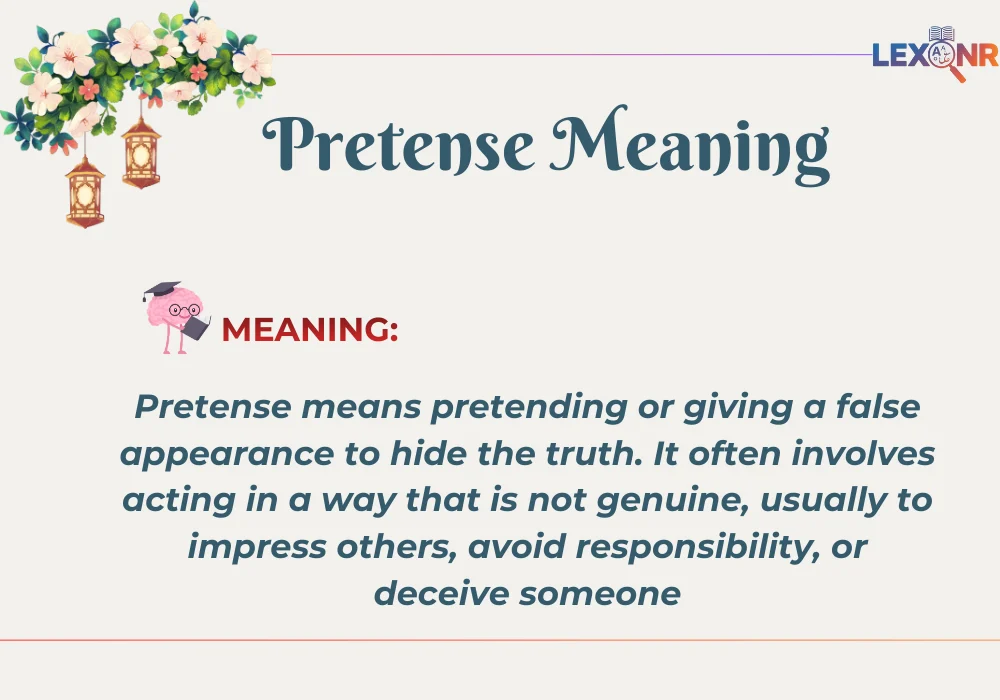
Pretense means pretending or giving a false appearance to hide the truth. It often involves acting in a way that is not genuine, usually to impress others, avoid responsibility, or deceive someone.
In simple terms, pretense is when someone acts one way but feels or thinks another way inside.
Pretense can refer to
- Fake behavior
- False claims
- Insincere actions
- Making excuses that are not real
Origin of the Word Pretense
The word pretense comes from an old term meaning to stretch forward or put forward a claim. Over time, it became associated with putting on a false front or pretending something is true when it is not.
Today, the word is commonly used in everyday speech, writing, and discussions to describe dishonesty or insincerity in behavior.
How to Use Pretense in Daily Language
When Pretense Is Commonly Used
Pretense is often used when talking about
- Fake emotions
- Dishonest behavior
- False excuses
- Social masks people wear
It appears in
- Everyday conversations
- Books and articles
- Arguments or debates
- Social observations
Common Ways Pretense Is Used
Calling out fake behavior
Example: His kindness was just pretense to gain approval
Describing false excuses
Example: She left early under the pretense of being tired
Talking about emotional masks
Example: He laughed, but it was all pretense
Examples of Pretense in Real Situations
- Example in conversation
- I could tell her confidence was just pretense, she was actually nervous
- Example at work
- He praised the idea, but it felt like pretense rather than real support
- Example in relationships
- Smiling through pain can become a pretense over time
- Example in storytelling
- The character lived under the pretense of happiness
These examples show how pretense is often linked to hidden truth or suppressed feelings.
Common Mistakes or Misunderstandings
Confusing Pretense With Politeness
Being polite is not always pretense. Pretense involves intentional deception, while politeness is often social courtesy.
Thinking Pretense Is Always Evil
Pretense is not always malicious. Sometimes people use it to protect feelings or avoid conflict.
Using Pretense Incorrectly as Pretend
Pretense is usually more serious than simple pretending. Pretending can be playful, while pretense often involves dishonesty.
Similar Words to Pretense
| Word | Meaning | How It Differs |
|---|---|---|
| Pretending | Acting unreal | Can be playful or harmless |
| Facade | False outward appearance | Focuses on image |
| Deception | Intentional lying | Stronger and more serious |
| Act | Fake behavior | Informal usage |
| Excuse | Reason given | May or may not be false |
| Hypocrisy | Saying one thing, doing another | Moral contradiction |
| Charade | Pretended act | Often dramatic |
These words share similarities with pretense but differ slightly in tone and usage.
FAQs:
What is the simple meaning of pretense
Pretense means pretending or acting falsely to hide the truth.
Is pretense good or bad
Pretense is usually viewed negatively, but sometimes people use it to protect themselves or others.
Can pretense be unintentional
Most of the time, pretense is intentional, but sometimes people may not realize they are hiding their true feelings.
What is an example of pretense in real life
Smiling while feeling upset or making a fake excuse to avoid responsibility are common examples.
Is pretense the same as lying
Not exactly. Lying involves direct false statements, while pretense focuses more on behavior or appearance.
Conclusion:
The pretense meaning revolves around false appearance, insincerity, and hiding reality. It describes moments when people act differently from how they truly feel or think. Understanding this word helps you recognize fake behavior in others and express situations more accurately in your own language.
Whether used in conversation, writing, or observation, pretense highlights the gap between truth and appearance. Knowing how and when to use it correctly adds depth and clarity to your communication.
Have a word you often hear but want explained clearly
Share it in the comments and let us break it down together

I am Malik, a dedicated writer and language enthusiast with a strong passion for words and their meanings. I focus on creating clear, accurate, and easy-to-understand content to help readers improve their vocabulary and language skills.
Through Lexonr, my goal is to make word meanings accessible for students, learners, and language lovers from all backgrounds. I believe that understanding words is the foundation of effective communication and lifelong learning.
I am committed to providing helpful and reliable content while continuously improving the quality and usefulness of Lexonr.