You have probably seen or heard the word ridiculous used everywhere — in texts, social media comments, memes, arguments, and everyday conversations. Sometimes it sounds funny, sometimes insulting, and other times exaggerated for effect. Understanding the ridiculous meaning clearly helps you figure out the speaker’s tone and respond the right way.
This article explains what ridiculous really means, how people use it in texting and online conversations, and how you can use it naturally without sounding rude or dramatic.
What Does Ridiculous Mean
Definition of Ridiculous
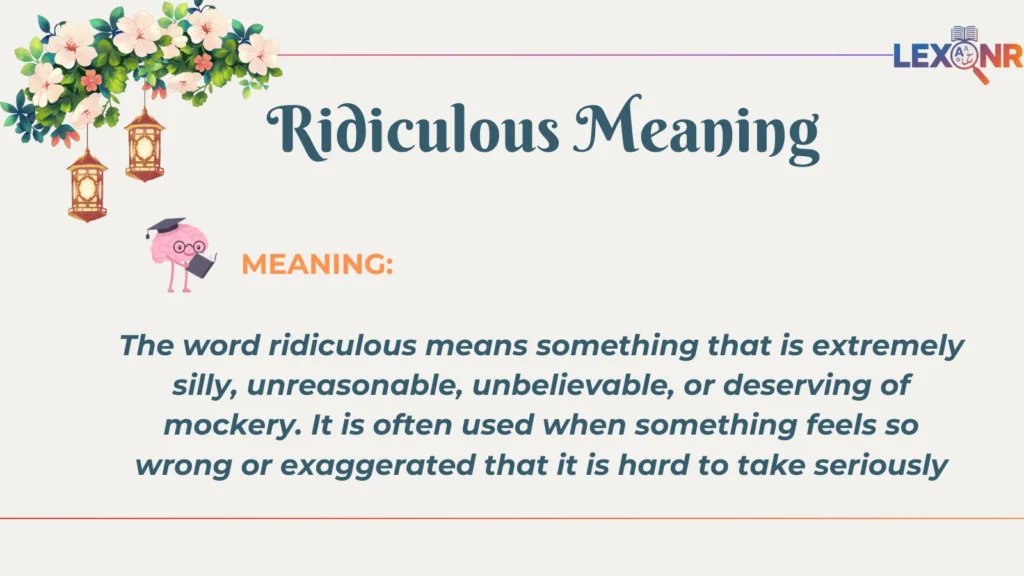
The word ridiculous means something that is extremely silly, unreasonable, unbelievable, or deserving of mockery. It is often used when something feels so wrong or exaggerated that it is hard to take seriously.
In simple terms, ridiculous describes
- Something that makes no sense
- Something laughably bad or extreme
- Something that feels unfair or absurd
- An action or idea that deserves criticism or humor
The tone can range from playful to harsh depending on how it is used.
Origin of Ridiculous
The word ridiculous comes from an older meaning related to laughter and mockery. Over time, it evolved into a common English word used to criticize ideas, behavior, or situations that feel over the top or unreasonable.
In modern usage, especially online, ridiculous is often exaggerated for emphasis rather than meant literally.
How to Use Ridiculous in Texts or Chat
Common Situations Where Ridiculous Is Used
People commonly use ridiculous in
- Text messages
- Social media comments
- Online arguments or debates
- Memes and captions
- Casual conversations
It is flexible and widely understood, making it easy to use but also easy to misuse.
Popular Ways Ridiculous Is Used
Expressing frustration
Used when something feels unfair or annoying
Example: The price increase is ridiculous
Reacting to something shocking
Used for dramatic emphasis
Example: That plot twist was ridiculous
Playful exaggeration
Used humorously with friends
Example: You spent how much on snacks, that is ridiculous
Criticizing behavior
Used to call out actions
Example: Skipping the meeting was a ridiculous decision
Tone and context decide whether it sounds funny or offensive.
Examples of Ridiculous in Conversations
Texting example
Friend one: They canceled the event last minute
Friend two: That is ridiculous
Social media example
This update is ridiculous, nothing works anymore
Casual conversation example
I stayed up all night overthinking something ridiculous
Playful example
That outfit is ridiculous in the best way
These examples show how ridiculous can be negative, neutral, or positive depending on intent.
Common Mistakes or Misunderstandings
Using Ridiculous Too Harshly
Calling a person ridiculous directly can feel insulting. It is usually safer to criticize actions or situations instead.
Better: That rule is ridiculous
Risky: You are ridiculous
Overusing Ridiculous
Using the word too often can make it lose impact or make you sound overly dramatic.
Using It in Formal Settings
Ridiculous is informal and emotional. In professional writing or serious discussions, softer alternatives are often better.
Similar Words and Slangs to Ridiculous
| Word or Slang | Meaning | Common Usage |
|---|---|---|
| Absurd | Completely unreasonable | Formal and informal |
| Shocking | Extreme or unbelievable | Casual conversation |
| Unreal | Hard to believe | Texting, social media |
| Over the top | Excessive behavior | Informal speech |
| Wild | Shockingly extreme | Slang, memes |
| Nonsense | Makes no sense | Everyday conversation |
| Clownish | Silly or embarrassing | Casual criticism |
These words share a similar idea but vary in tone and intensity.
FAQs:
What is the simple meaning of ridiculous
Ridiculous means something is very silly, unreasonable, or hard to take seriously.
Is ridiculous a bad word
It is not a swear word, but it can sound rude if used directly toward a person.
Can ridiculous be used in a funny way
Yes. Many people use it humorously to exaggerate situations or joke with friends.
Is ridiculous formal or informal
It is mostly informal and better suited for casual conversations.
Can ridiculous be positive
Sometimes. It can be used positively to describe something extreme in a fun or impressive way.
Conclusion:
The ridiculous meaning depends heavily on tone and context. At its core, the word describes something that feels exaggerated, unreasonable, or laughably unbelievable. It can express frustration, humor, disbelief, or criticism.
When used carefully, ridiculous is a powerful word that adds emotion and emphasis to conversations. Just be mindful of who you are talking to and how strong you want your message to sound.

I am Malik, a dedicated writer and language enthusiast with a strong passion for words and their meanings. I focus on creating clear, accurate, and easy-to-understand content to help readers improve their vocabulary and language skills.
Through Lexonr, my goal is to make word meanings accessible for students, learners, and language lovers from all backgrounds. I believe that understanding words is the foundation of effective communication and lifelong learning.
I am committed to providing helpful and reliable content while continuously improving the quality and usefulness of Lexonr.