Have you ever wondered why things exist, or why certain events seem to have a purpose? The term teleology meaning dives into exactly that. It helps explain not just philosophical debates but also everyday questions like why tools are designed a certain way, why nature seems purposeful, or why people set goals the way they do.
Understanding teleology meaning is not just for philosophers—it helps you make sense of the world, sharpen your reasoning, and understand conversations about purpose, design, or intentionality.
What Does Teleology Mean
Definition of Teleology
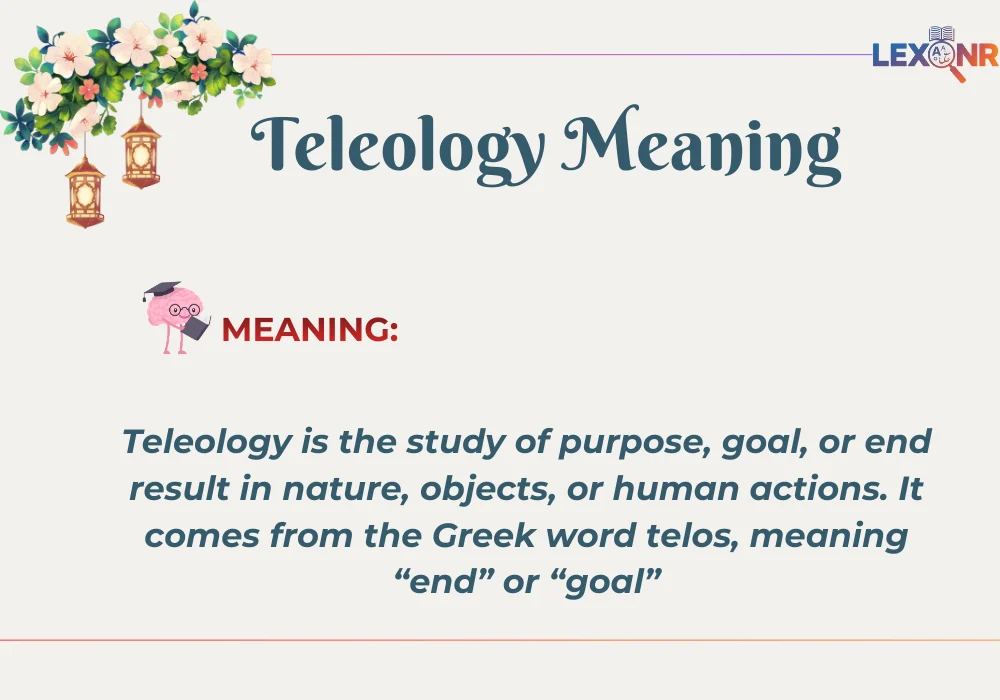
Teleology is the study of purpose, goal, or end result in nature, objects, or human actions. It comes from the Greek word telos, meaning “end” or “goal.”
In simple words, teleology asks why something exists or happens based on its intended purpose, rather than just the processes that lead to it.
Examples:
- A knife exists to cut. Its design reflects its purpose.
- Birds have wings to fly. The wings’ structure shows their intended function.
- A school exists to educate students. Its teleology is to provide knowledge.
Origin of Teleology
The concept of teleology comes from ancient Greek philosophy, especially the works of Aristotle, who believed everything in nature has an end or purpose. He called this the final cause, meaning that the explanation for something is in its goal or intended outcome.
Over time, the idea spread beyond philosophy into theology, biology, and even engineering, wherever understanding purpose or design matters.
How to Use Teleology in Conversation
Where Teleology Appears
You can encounter teleology in many areas:
- Philosophy: Discussions about the purpose of life or ethical actions
- Biology: Understanding why organs, species, or traits exist
- Everyday life: Explaining why things are designed a certain way or why people take certain actions
Examples of Using Teleology
Philosophy
- “The teleology of human life is a big topic in ethics—are we here for a reason, or do we create our own purpose?”
Biology
- “The teleology of the heart is clear: it pumps blood to sustain life.”
Everyday life
- “The teleology of this coffee machine is obvious—it was designed to save time and make perfect coffee.”
Common Mistakes or Misunderstandings
Mistake 1: Thinking Teleology Only Means God or Religion
While teleology is often used in theological contexts, it applies to anything with a purpose, from natural phenomena to artificial objects.
Mistake 2: Confusing Teleology With Causation
Teleology is about purpose, not just cause.
- Cause: The storm happened because of pressure differences.
- Teleology: Storms help redistribute energy, maintaining balance in the ecosystem.
Mistake 3: Overusing in Casual Conversation
Teleology is best for thoughtful discussions. Using it jokingly without context, like “What’s the teleology of my sandwich?” might confuse people unless it’s a playful moment.
Similar Terms to Teleology
| Term | Meaning | Common Usage |
|---|---|---|
| Purpose | The intended goal or reason for something | Philosophy, daily conversation |
| Function | What something does | Biology, engineering |
| Goal | The target someone or something is working toward | Personal development, motivation |
| Design | Arrangement or structure with a purpose | Science, engineering |
| Intentionality | Acting with a goal in mind | Philosophy, psychology |
| Final cause | Aristotle’s term for purpose | Philosophy |
| Aim | Target or objective | Everyday use |
These words often overlap with teleology when discussing intended outcomes, purpose, or design.
FAQs:
What is teleology in simple words
Teleology is the study of purpose or end goals. It looks at why things exist or happen based on their intended use or outcome.
Is teleology the same as causation
No. Causation explains what causes something to happen, while teleology focuses on why it exists or what it is for.
Who first used teleology
The term comes from Aristotle, who explored the goal-directed nature of objects, organisms, and human actions.
Can teleology apply to human behavior
Yes. It can explain the purpose behind decisions, habits, and personal goals.
Is teleology used in science
Yes. In biology, engineering, and design, teleology explains why something functions the way it does.
Conclusion:
The teleology meaning revolves around purpose, intention, and end goals. It helps explain the function of objects, traits in nature, and human behavior. Whether in philosophy, biology, or everyday conversation, teleology allows us to think critically about why things exist and how they serve their intended purpose.
Recognizing teleology improves understanding of the world and encourages deeper reflection about life, actions, and design. Next time you wonder why something exists or functions a certain way, consider its teleology—it may change the way you see everyday objects, nature, and human choices.
Have you ever noticed a situation where understanding purpose completely changed your perspective? Share your thoughts in the comments and let’s explore the meaning behind everyday things together!

I am John, a dedicated writer and language enthusiast with a strong interest in words and their meanings. I focus on creating clear, accurate, and easy-to-understand content to help readers strengthen their vocabulary and language skills.
Through Lexonr, my aim is to make word meanings accessible for students, learners, and language enthusiasts from all backgrounds. I believe that understanding language plays a key role in effective communication and continuous learning.
I am committed to delivering helpful, reliable, and high-quality content while contributing to the ongoing growth and improvement of Lexonr.