If you have ever come across the word Tetragrammaton while reading religious texts, watching documentaries, or browsing spiritual discussions online, you may have paused and wondered what it actually means. The term looks complex, mysterious, and deeply symbolic, which often makes people curious but also confused.
Understanding the Tetragrammaton meaning is important because it plays a central role in biblical studies, Jewish tradition, Christian theology, and discussions about the name of God. This article explains the meaning, origin, pronunciation issues, and real-world usage of the Tetragrammaton in a clear, human, and easy-to-understand way.
What Does Tetragrammaton Mean
Definition of Tetragrammaton
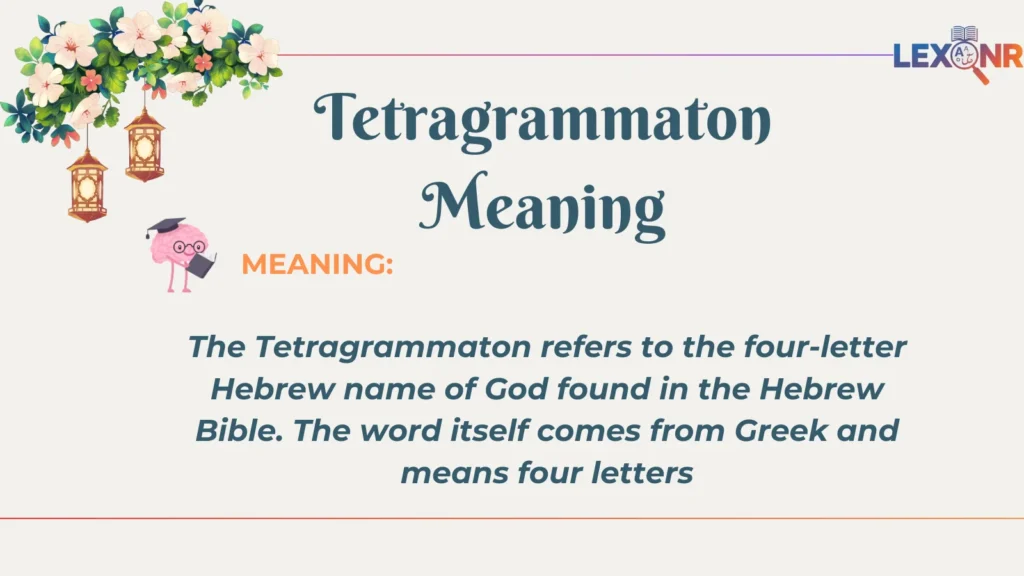
The Tetragrammaton refers to the four-letter Hebrew name of God found in the Hebrew Bible. The word itself comes from Greek and means four letters.
Those four Hebrew letters are
Yod
He
Waw
He
Together, they are written as YHWH in English letters.
In simple terms, the Tetragrammaton is the sacred personal name of God as revealed in the Hebrew scriptures.
Why It Is Called Tetragrammaton
The name comes from two Greek words
Tetra meaning four
Gramma meaning letter
So, Tetragrammaton literally means four-letter word. It does not describe a meaning by itself but refers specifically to the structure of God’s name written with four consonants.
Origin and Historical Background
Tetragrammaton in the Hebrew Bible
The Tetragrammaton appears thousands of times in the Hebrew Bible. It is first introduced in the book of Exodus, where God reveals His name to Moses at the burning bush.
This name was considered extremely sacred. Ancient Israelites treated it with deep reverence and avoided casual use.
Why Vowels Are Missing
Ancient Hebrew was written mostly without vowels. Because of this, YHWH was written using only consonants. Over time, as pronunciation traditions faded, the exact spoken form of the name became uncertain.
This is one reason why different pronunciations exist today.
How the Tetragrammaton Is Pronounced
Common Pronunciations
Because the original pronunciation is not universally agreed upon, several versions are commonly used:
- Yahweh
- Jehovah
- YHWH spoken as individual letters
- LORD in translations
Among scholars, Yahweh is widely considered the most likely historical pronunciation, though it is still treated with respect and caution.
Why Many Avoid Pronouncing It
In Jewish tradition, the Tetragrammaton is considered too holy to be spoken aloud. Instead, substitute titles are used such as:
- Adonai meaning Lord
- HaShem meaning The Name
This practice developed to prevent misuse or disrespect of the divine name.
Meaning and Symbolism of the Tetragrammaton
The Deeper Meaning Behind YHWH
Many scholars link the Tetragrammaton to the Hebrew verb meaning to be. This connects the name with ideas such as:
- Eternal existence
- Self-existence
- Unchanging nature
- God as the source of being
In this sense, the Tetragrammaton meaning goes beyond a name and expresses the idea of God as always present and always existing.
Spiritual Significance
For believers, the Tetragrammaton represents:
- God’s personal relationship with humanity
- Divine authority and holiness
- Covenant and faithfulness
- Sacred identity
It is not just a label but a profound expression of divine nature.
How the Tetragrammaton Is Used Today
In Religious Texts
Most English Bible translations replace the Tetragrammaton with LORD written in capital letters. This signals that the original Hebrew text contains YHWH rather than a generic word for lord.
In Academic and Theological Study
Scholars use the term Tetragrammaton when discussing:
- Biblical linguistics
- Ancient Hebrew manuscripts
- Translation history
- Theology and doctrine
It allows discussion of the divine name without directly pronouncing it.
In Spiritual and Cultural Discussions
Outside formal religion, the Tetragrammaton appears in:
- Philosophy
- Symbolism
- Art and literature
- Historical documentaries
In these contexts, it often represents mystery, sacred power, or divine identity.
Common Misunderstandings About the Tetragrammaton
It Is Not a Magical Word
Some people mistakenly believe the Tetragrammaton has magical powers. In reality, its importance is spiritual and theological, not mystical in a spell-like sense.
It Is Not a Modern Invention
The Tetragrammaton is ancient and deeply rooted in biblical history. It is not a later religious concept or symbolic invention.
It Is Not the Same as God in General
In Hebrew, there are multiple words for God. The Tetragrammaton is unique because it represents the personal name of God rather than a general title.
Similar Sacred Names and Terms
| Term | Meaning | Context |
|---|---|---|
| Adonai | Lord or Master | Jewish prayer and reading |
| Elohim | God or divine being | Hebrew Bible |
| El Shaddai | God Almighty | Biblical and theological use |
| HaShem | The Name | Jewish daily speech |
| Jehovah | Traditional pronunciation of YHWH | Older translations |
These terms are often used alongside or in place of the Tetragrammaton depending on tradition and context.
FAQs:
What is the Tetragrammaton in simple terms
The Tetragrammaton is the four-letter Hebrew name of God written as YHWH in English letters.
Why is the Tetragrammaton not spoken
It is considered extremely sacred, and many traditions avoid pronouncing it to show respect.
Is Yahweh the same as the Tetragrammaton
Yahweh is believed to be the spoken form of the Tetragrammaton, though it is still treated carefully.
Why do Bibles use LORD instead of the name
Many translations replace YHWH with LORD to respect religious tradition and avoid misuse of the divine name.
Does the Tetragrammaton have a literal meaning
It is often connected to the idea of being or existence, symbolizing God as eternal and self-existent.
Conclusion:
The Tetragrammaton meaning goes far beyond a simple word or name. It represents the sacred identity of God, rooted deeply in history, language, and faith. Understanding it helps readers appreciate why this four-letter name is treated with such reverence and why it remains central to biblical and theological discussions.
Whether studied academically or spiritually, the Tetragrammaton reminds people of the depth, mystery, and significance behind ancient religious language. Learning its meaning allows for a clearer and more respectful understanding of one of the most important concepts in religious history.
If you have another word or term you would like explained in detail, feel free to share it and continue the learning journey.

I am John, a dedicated writer and language enthusiast with a strong interest in words and their meanings. I focus on creating clear, accurate, and easy-to-understand content to help readers strengthen their vocabulary and language skills.
Through Lexonr, my aim is to make word meanings accessible for students, learners, and language enthusiasts from all backgrounds. I believe that understanding language plays a key role in effective communication and continuous learning.
I am committed to delivering helpful, reliable, and high-quality content while contributing to the ongoing growth and improvement of Lexonr.