The word buddy is one of the most commonly used terms in texting, casual speech, and online conversations. You have probably seen it in messages like hey buddy, thanks buddy, or relax buddy and wondered what tone it really carries. Is it friendly, sarcastic, or slightly passive aggressive? The answer depends entirely on context.
Understanding the buddy meaning in texting and modern communication helps you read between the lines, respond appropriately, and avoid misinterpreting someone’s tone. This guide explains what buddy means, how people use it today, and how you can use it naturally in conversations.
What Does Buddy Mean
Definition of Buddy in Simple Terms
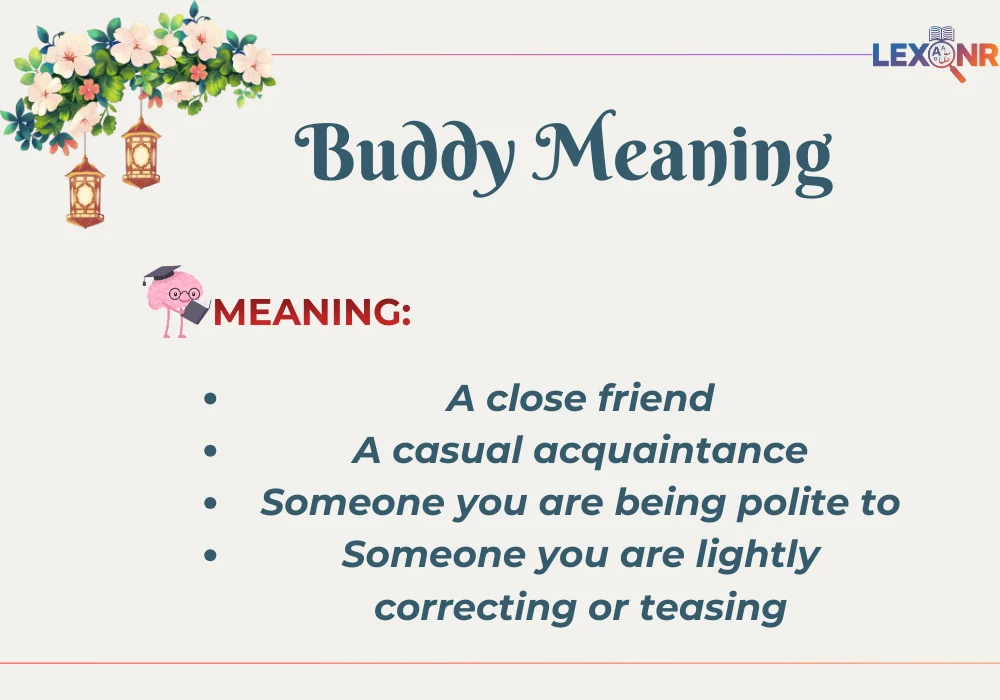
At its core, buddy means a friend, companion, or someone you feel comfortable with. It is an informal term used to address another person in a friendly or familiar way.
Depending on the situation, buddy can mean
- A close friend
- A casual acquaintance
- Someone you are being polite to
- Someone you are lightly correcting or teasing
The tone of buddy matters more than the word itself.
Origin of the Word Buddy
The word buddy originated as a friendly term for a companion or partner. Over time, it became deeply rooted in casual English, especially in spoken language.
As texting and online chat grew, buddy evolved into a flexible term that could sound warm, neutral, or sarcastic depending on how it is used. This adaptability is why the word remains so popular across different platforms and age groups.
Buddy Meaning in Texting
How Buddy Is Commonly Used in Messages
In texting, buddy is often used to set the tone of a message. It can soften a sentence, make it feel friendlier, or sometimes add subtle sarcasm.
Common texting uses include
- Greeting someone casually
- Expressing friendliness
- Light teasing
- Calmly correcting someone
Example
Hey buddy, did you get my message
Friendly vs Sarcastic Buddy
One of the biggest reasons people get confused about buddy meaning is tone.
Friendly buddy
Sounds warm and welcoming
Example: Thanks for helping me out, buddy
Sarcastic or passive buddy
Sounds slightly dismissive or corrective
Example: Slow down, buddy
The difference usually comes from context, emojis, and prior conversation.
How to Use Buddy Correctly
Situations Where Buddy Works Well
Buddy is most appropriate in
- Casual texting
- Conversations with friends
- Light workplace chats
- Social media replies
It helps keep things relaxed and conversational.
When to Avoid Using Buddy
Even though it is common, buddy may feel awkward in some situations.
Avoid using it when
- Talking to someone much older in a formal setting
- Speaking to a superior in a professional environment
- Addressing someone who prefers formal language
In these cases, buddy may sound too casual or even disrespectful.
Examples of Buddy in Conversations
Text Message Example
Person one: I finally fixed the issue
Person two: Nice work, buddy
Friendly Reminder Example
Hey buddy, just reminding you about the meeting
Light Teasing Example
Look at you finishing early, buddy
Slightly Firm Example
Careful there, buddy
These examples show how buddy can change meaning depending on tone.
Common Misunderstandings About Buddy
Thinking Buddy Is Always Friendly
While often friendly, buddy can sometimes sound patronizing if used with the wrong tone. Short replies without emojis or warmth can change how it feels.
Using Buddy With Strangers
Calling a stranger buddy can feel overly familiar in some cultures or situations. Some people may prefer neutral terms instead.
Overusing Buddy
Using buddy too often in the same conversation can feel forced or unnatural. Balance is key.
Similar Slangs and Words to Buddy
| Term | Meaning | Tone |
|---|---|---|
| Pal | Friend or companion | Friendly |
| Mate | Friend, common in some regions | Casual |
| Bro | Close friend or peer | Informal |
| Dude | Casual way to address someone | Relaxed |
| Friend | Neutral and polite | Safe |
| Champ | Encouraging or sometimes sarcastic | Context based |
| Boss | Respectful or playful | Informal |
These words often overlap with buddy in meaning and usage.
Buddy Meaning in Different Contexts
Buddy in Social Media
On social media, buddy is often used in comments to sound approachable or supportive.
Example
Great post, buddy
Buddy in Workplace Chats
In relaxed workplaces, buddy can help create a friendly environment. In more formal workplaces, it may feel unprofessional.
Buddy in Arguments
During disagreements, buddy can sometimes escalate tension if it sounds dismissive.
Example
Listen here, buddy
In this case, it usually signals irritation rather than friendliness.
FAQs:
What does buddy mean in texting
In texting, buddy usually means friend or companion, but it can also signal teasing or mild correction depending on context.
Is buddy a respectful term
Generally yes, but it depends on the situation and relationship between people.
Can buddy be sarcastic
Yes. Tone, message length, and context can make buddy sound sarcastic or passive aggressive.
Is buddy used for close friends only
No. Buddy can be used for close friends, casual acquaintances, or even strangers in informal settings.
Should I use buddy in professional messages
Only if the environment is very casual. In formal communication, it is better to avoid it.
Conclusion:
The buddy meaning in texting and everyday conversation is flexible and highly context dependent. It can express friendliness, comfort, encouragement, or even mild frustration depending on how it is used.
When used naturally and with the right tone, buddy helps keep conversations relaxed and human. Pay attention to context, relationship, and delivery, and you will always understand whether buddy is meant warmly or with a hint of sarcasm.
Have a slang word or everyday term you want explained next
Share it in the comments and let us break it down together

Hi I am Mark Alex , a dedicated writer and language enthusiast with a strong passion for words and their meanings. I focus on creating clear, accurate, and easy-to-understand content to help readers improve their vocabulary and language skills.
Through Lexonr, my goal is to make word meanings accessible for students, learners, and language lovers from all backgrounds. I believe that understanding words is the foundation of effective communication and lifelong learning.
I am committed to providing helpful and reliable content while continuously improving the quality and usefulness of Lexonr.