If someone texts you “sorry to hear that,” they’re expressing sympathy after hearing about bad news or a difficult situation. It’s a polite and caring phrase commonly seen in text messages, WhatsApp chats, Instagram DMs, Snapchat, and other social media conversations.
People often search for this phrase because they receive it in a message and want to know exactly what it means, whether it’s sincere, and how they should respond.
Although it’s not internet slang or an acronym, “sorry to hear that” is one of the most common expressions used in digital communication to show empathy and support.
Sorry To Hear That Meaning in Text
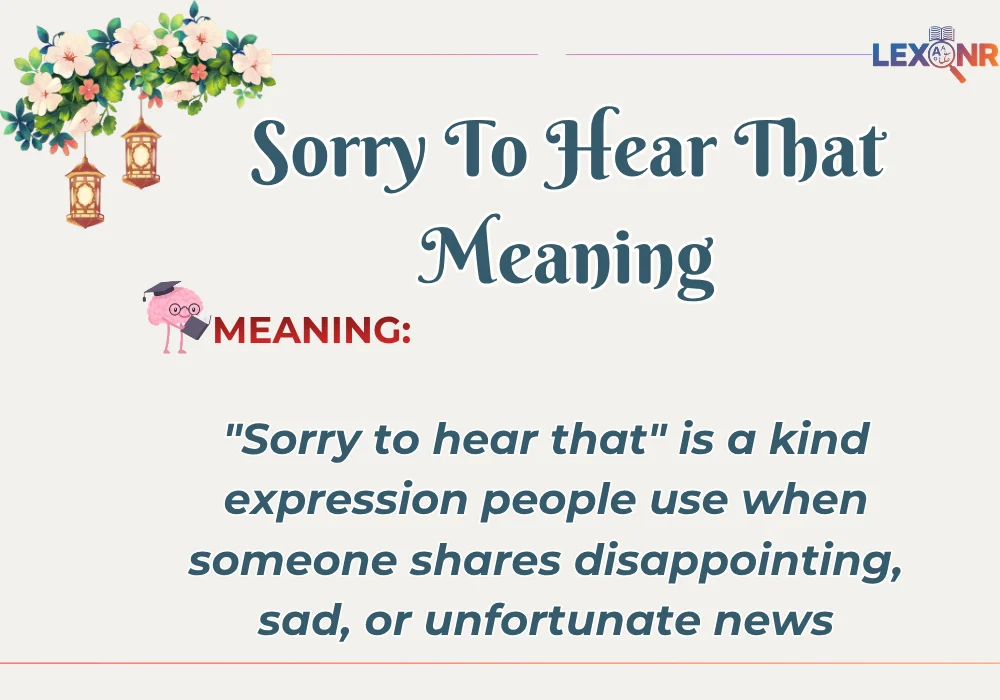
“Sorry to hear that” is a kind expression people use when someone shares disappointing, sad, or unfortunate news.
It tells the other person that you feel sympathy for what they’re going through. The phrase doesn’t necessarily mean the sender is apologizing for causing the problem. Instead, they’re expressing compassion and acknowledging that the situation is difficult.
For example:
- “I lost my wallet today.”
- “Sorry to hear that. I hope you find it soon.”
In everyday texting, the phrase is used to comfort someone without needing to write a long message.
Is It Slang, an Acronym, or an Abbreviation?
No. “Sorry to hear that” is not slang, an acronym, or an abbreviation.
It’s a standard English expression that has been used for many years in both spoken and written communication. Today, it’s just as common in text messages and social media as it is in face-to-face conversations.
What Does It Mean in Everyday Chat?
In casual conversations, “sorry to hear that” simply means:
- I feel bad for what happened.
- I hope things get better.
- I understand you’re going through a difficult time.
- I’m showing support and kindness.
People use it after hearing about situations like:
- Someone getting sick
- Losing a job
- Failing an exam
- A family emergency
- A breakup
- Losing a pet
- Missing an important event
Where People Use Sorry To Hear That
You’ll see this phrase across many messaging apps and social media platforms whenever people share personal news.
TikTok
On TikTok, users often leave comments saying “sorry to hear that” when a creator shares a personal struggle or difficult life update.
Examples:
- “Sorry to hear that. Wishing you all the best.”
- “I’m sorry to hear that. Stay strong.”
Snapchat
On Snapchat, friends use the phrase during private chats after hearing bad news.
For example:
- “Sorry to hear that. Are you okay?”
- “I’m really sorry to hear that. Let me know if you need anything.
Instagram users commonly send this message through DMs or comments.
Examples include:
- “Sorry to hear that. Hope things improve soon.”
- “Sending positive thoughts your way.”
WhatsApp conversations often include this phrase after someone shares family news, health updates, or personal challenges.
For example:
- “Sorry to hear that. I’m here if you want to talk.”
- “Really sorry to hear that. Take care of yourself.”
SMS
Even in regular text messages, “sorry to hear that” remains one of the most natural ways to express sympathy.
Examples:
- “Sorry to hear that. Hope tomorrow is better.”
- “I’m sorry to hear that. Let me know if I can help.”
Real Chat Examples
Example 1
A: My flight got canceled.
B: Sorry to hear that.
A: Hopefully I can get another one.
Example 2
A: I didn’t get the job.
B: Sorry to hear that. Another opportunity will come.
A: I hope so.
Example 3
A: My dog isn’t feeling well.
B: Sorry to hear that. I hope your dog recovers quickly.
A: Thank you.
Example 4
A: I failed my driving test.
B: Sorry to hear that. You’ll do better next time.
A: I’ll keep practicing.
Example 5
A: My phone broke today.
B: Sorry to hear that. That’s really frustrating.
A: It definitely is.
Example 6
A: I caught the flu.
B: Sorry to hear that. Get plenty of rest.
A: Thanks.
Example 7
A: We had to cancel our vacation.
B: Sorry to hear that. Hopefully you can reschedule soon.
A: That’s the plan.
Example 8
A: I lost my favorite watch.
B: Sorry to hear that. I hope someone returns it.
A: Me too.
Example 9
A: My internet has been down all day.
B: Sorry to hear that. Hopefully it’s fixed soon.
A: I really hope so.
Example 10
A: My basketball game got canceled because of the rain.
B: Sorry to hear that. Maybe they’ll arrange another match.
A: I hope they do.
How to Reply When Someone Says “Sorry To Hear That”
There are many ways to respond depending on the conversation.
Funny Replies
- At least my bad luck is keeping life interesting.
- I’ll survive somehow.
- Maybe today just isn’t my day.
Casual Replies
- Thanks.
- I appreciate it.
- Hopefully things get better soon.
- That’s kind of you.
Friendly Replies
- Thanks for checking on me.
- That really means a lot.
- I appreciate your support.
- Thanks for your kindness.
Neutral Replies
- Thank you.
- I appreciate your message.
- Hopefully everything works out.
- Thanks for understanding.
Is Sorry To Hear That Rude or Offensive?
No. This phrase is considered polite, respectful, and thoughtful.
It’s commonly used when someone wants to acknowledge another person’s sadness or disappointment without being intrusive.
Because it’s a neutral and compassionate expression, it’s appropriate in both personal and professional conversations.
Is It Safe to Use?
Yes. You can safely use it in:
- Text messages
- WhatsApp chats
- Instagram DMs
- Snapchat conversations
- Emails
- Workplace messaging apps
- School discussions
Is It Appropriate at School or Work?
Absolutely.
Unlike many internet abbreviations, “sorry to hear that” is suitable in formal situations.
For example, if a coworker mentions they’re unwell or a classmate shares difficult news, this phrase is respectful and appropriate.
Who Uses This Term?
Almost everyone uses this expression because it’s part of everyday English.
Age Groups
You’ll hear it from:
- Teenagers
- College students
- Adults
- Parents
- Professionals
- Older adults
Gen Z Usage
Gen Z often uses shorter responses like:
- Sorry.
- That sucks.
- Hope you’re okay.
However, “sorry to hear that” is still common, especially when someone wants to sound more caring.
Common Platforms
The phrase appears regularly on:
- Facebook Messenger
- Snapchat
- TikTok
- SMS
- Discord
How Often Does It Appear Online?
Very often.
Whenever people share personal updates, health issues, losses, disappointments, or emotional experiences, you’ll likely see someone reply with “sorry to hear that.”
Origin of the Term
“Sorry to hear that” didn’t begin as internet slang.
It has been a standard English expression for many decades and was commonly used in face-to-face conversations long before texting and social media existed.
As communication moved online, people naturally continued using the phrase in emails, chat rooms, instant messaging, and eventually on today’s social platforms.
Unlike many internet abbreviations, its origin is clear. It comes from everyday spoken English and remains one of the most widely accepted ways to express sympathy.
Comparison Table
| Term | Meaning | Type | Usage | Popularity |
|---|---|---|---|---|
| Sorry to hear that | Expressing sympathy | Phrase | Comforting someone | Very High |
| IDK | I don’t know | Acronym | Showing uncertainty | Very High |
| IDC | I don’t care | Acronym | Showing indifference | High |
| IMO | In my opinion | Acronym | Sharing opinions | Very High |
| BRB | Be right back | Acronym | Leaving a chat briefly | High |
Real World Usage Example
Imagine your friend sends you a message saying they didn’t pass an important exam they’ve been studying for all year.
Instead of ignoring the news or changing the subject, you reply:
“Sorry to hear that. I know how hard you worked. Don’t give up—you’ll have another chance.”
This response shows empathy, offers encouragement, and lets your friend know you care about what they’re experiencing.
FAQs:
What does Sorry To Hear That mean in text messages?
It means the sender feels sympathy after hearing about something sad, disappointing, or unfortunate.
What does Sorry To Hear That mean on TikTok?
On TikTok, it’s commonly used in comments when creators share personal struggles, difficult experiences, or emotional updates.
Is Sorry To Hear That slang?
No. It’s a standard English phrase rather than internet slang or an abbreviation.
Is Sorry To Hear That rude or offensive?
No. It’s a polite and respectful expression that shows empathy and support.
How should you reply to Sorry To Hear That?
A simple “Thank you,” “I appreciate it,” or “Thanks for your support” is usually the best response.
Conclusion:
“Sorry to hear that” is a thoughtful phrase used to express sympathy when someone shares bad news or a difficult experience. You’ll commonly see it in text messages, WhatsApp, Instagram, Snapchat, emails, and other online conversations.
Because it’s polite, sincere, and appropriate in both casual and professional settings, it’s one of the safest expressions to use when you want to show kindness. If someone sends it to you, a simple thank you is usually all that’s needed.

Hi, I’m Mike Grobgaard, founder of Lexonr. I write about meanings, internet slang, biblical terms, and modern expressions in a simple yet engaging way. My goal is to help readers understand the deeper story behind every word they search for.