Understanding the Meaning Of Integrity is more than just looking it up in a dictionary. Integrity is a word you see often in conversations about character, work, and relationships. Knowing exactly what it means helps you communicate clearly, build trust, and understand how people use it in real life situations.
This article explains the meaning of integrity, how it shows up in everyday interactions, examples to make it relatable, similar terms, frequently asked questions, and practical tips for using it in your life.
What Does Integrity Mean
Definition of Integrity
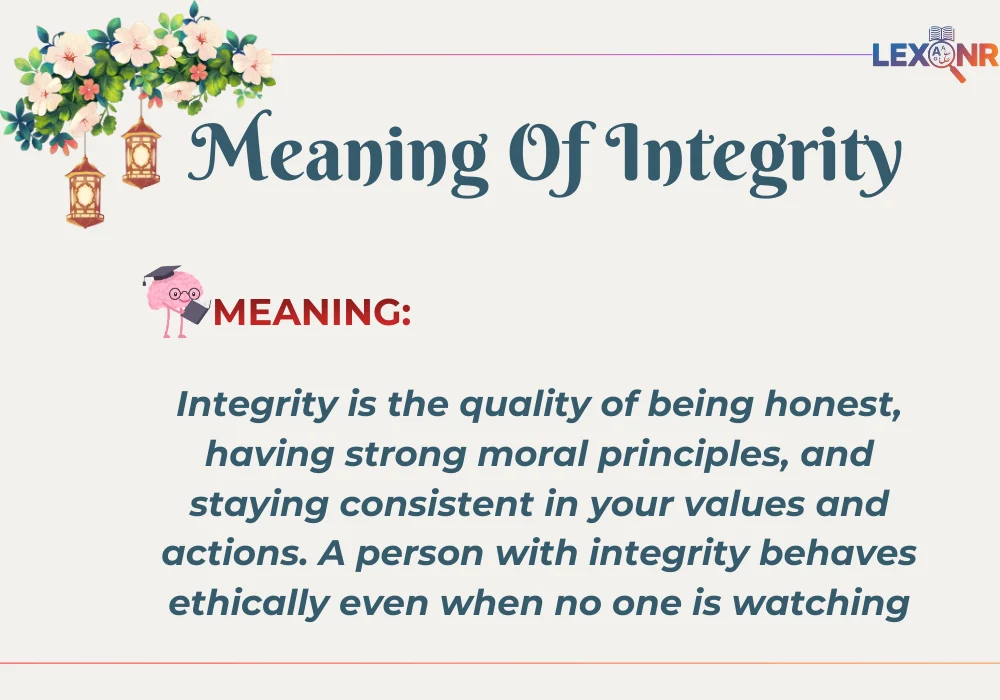
Integrity is the quality of being honest, having strong moral principles, and staying consistent in your values and actions. A person with integrity behaves ethically even when no one is watching.
In simple terms:
- Doing the right thing even when it is hard
- Being honest and trustworthy
- Acting consistently with your values and beliefs
Integrity is considered one of the most important qualities in personal, social, and professional life.
Origin of Integrity
The word integrity comes from the Latin integritas, which means completeness or wholeness. Over time, it came to represent moral wholeness — being complete in character, ethics, and honesty.
People often associate integrity with:
- Reliability
- Fairness
- Accountability
- Honesty
How to Demonstrate Integrity in Daily Life
Key Ways to Show Integrity
1. Being Honest
Always tell the truth, even when it might be inconvenient.
Example: Admitting a mistake at work instead of hiding it.
2. Staying Consistent
Align your actions with your values consistently.
Example: If you value fairness, treat everyone equally, both in public and private.
3. Taking Responsibility
Own up to your actions and their consequences.
Example: Returning money you found instead of keeping it.
4. Respecting Others
Treat people with fairness and kindness.
Example: Listening without judgment, even when opinions differ.
5. Keeping Promises
Follow through on commitments.
Example: Meeting deadlines and honoring agreements.
Examples of Integrity in Real Life
Workplace Example
A colleague discovers a coworker made an error. Instead of blaming them unfairly, they report the issue honestly and offer help to fix it.
Social Example
Someone finds a lost phone on the street. Instead of keeping it, they contact the owner or turn it in.
Personal Example
You promise a friend to keep a secret. You honor that promise even if others try to convince you to reveal it.
Integrity is visible in both small daily actions and major life decisions.
Common Mistakes or Misunderstandings
Mistake #1: Confusing Integrity with Perfection
Integrity does not mean never making mistakes. It means being honest about mistakes and striving to do the right thing.
Mistake #2: Thinking It’s Only for Serious Situations
Integrity matters in everyday actions, not just big decisions. Small acts of honesty add up.
Mistake #3: Using Integrity as an Excuse
Claiming “I have integrity” without backing it up with action is meaningless. True integrity shows in behavior, not words.
Similar Terms to Integrity
| Term | Meaning | Common Usage |
|---|---|---|
| Honesty | Being truthful | Personal life, work |
| Accountability | Owning actions and outcomes | Professional and social situations |
| Trustworthiness | Being reliable and dependable | Friendships, work, relationships |
| Moral character | Following ethical principles | General life and decisions |
| Ethical conduct | Acting according to moral rules | Professional and social contexts |
| Honor | Respecting principles or promises | Cultural or personal contexts |
| Uprightness | Being morally correct and fair | Social and professional life |
These words overlap with integrity in meaning but may emphasize slightly different aspects.
FAQs:
What is the meaning of integrity in simple words
Integrity means being honest, ethical, and consistent in your actions and values.
Why is integrity important
Integrity builds trust, strengthens relationships, and creates respect in personal and professional life.
Can integrity be learned
Yes. By practicing honesty, accountability, and ethical behavior, anyone can develop integrity over time.
How do you show integrity at work
By being honest, keeping promises, admitting mistakes, treating colleagues fairly, and acting ethically in all situations.
Is integrity the same as honesty
Not exactly. Honesty is part of integrity, but integrity also includes consistency, moral principles, and ethical behavior.
Conclusion:
The Meaning Of Integrity is about honesty, moral strength, and consistent ethical behavior. It is visible in everyday actions, decisions, and interactions. People with integrity earn trust, respect, and credibility.
By practicing integrity in small and large ways, you can improve personal relationships, workplace reputation, and self-respect.
Have you witnessed someone showing integrity in an inspiring way? Share your stories in the comments and let’s celebrate real-life examples together

Hi I am Mark Alex , a dedicated writer and language enthusiast with a strong passion for words and their meanings. I focus on creating clear, accurate, and easy-to-understand content to help readers improve their vocabulary and language skills.
Through Lexonr, my goal is to make word meanings accessible for students, learners, and language lovers from all backgrounds. I believe that understanding words is the foundation of effective communication and lifelong learning.
I am committed to providing helpful and reliable content while continuously improving the quality and usefulness of Lexonr.