Have you ever reacted emotionally to something small and wondered why it affected you so deeply? Or felt a sudden wave of joy, fear, or insecurity that seemed bigger than the moment? That often connects to your inner child.
Understanding the inner child meaning is important because it helps you recognize hidden emotions, past experiences, and behavior patterns that shape how you think, feel, and respond today. Whether you are exploring personal growth, emotional healing, or just curious about the concept, this guide will explain everything in a clear and practical way.
What Does Inner Child Mean
Definition of Inner Child
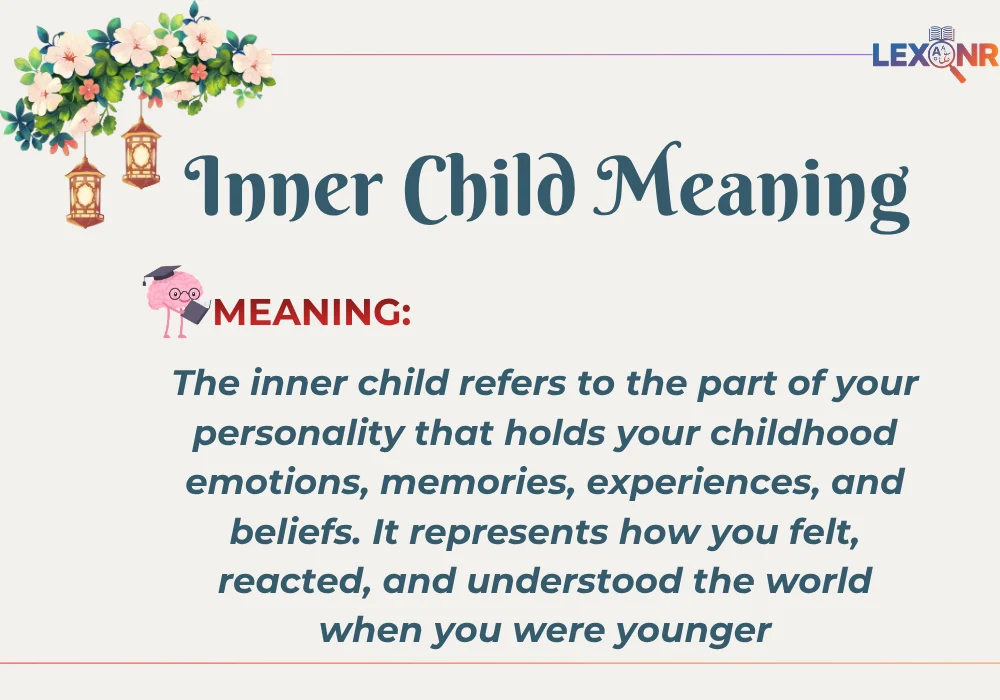
The inner child refers to the part of your personality that holds your childhood emotions, memories, experiences, and beliefs. It represents how you felt, reacted, and understood the world when you were younger.
Your inner child can include
- Childhood joy, curiosity, and creativity
- Emotional wounds or past hurts
- Early beliefs about yourself and others
- Unmet needs from your upbringing
In simple terms, your inner child is the emotional memory of your younger self that still influences you today.
Origin of the Inner Child Concept
The idea of the inner child comes from psychology and personal development. It became widely known through therapy practices that focus on emotional healing and self-awareness.
Psychologists noticed that many adult behaviors are deeply connected to childhood experiences. Over time, the term inner child became a popular way to describe this emotional connection in an easy and relatable way.
How the Inner Child Shows Up in Daily Life
Emotional Reactions
Sometimes your reactions are stronger than the situation. This can be your inner child responding.
Example
Getting very upset over small criticism may reflect past experiences of feeling judged or not good enough.
Relationships
Your inner child often affects how you connect with others.
Example
- Fear of abandonment
- Need for constant validation
- Difficulty trusting people
These patterns usually come from early emotional experiences.
Self-Talk
The way you speak to yourself is often shaped by your inner child.
Example
- Saying I am not good enough
- Feeling like you always mess things up
These thoughts often come from childhood beliefs.
How to Connect With Your Inner Child
Simple Ways to Reconnect
1. Reflect on your childhood
Think about what made you happy, scared, or emotional.
2. Notice your triggers
Pay attention to situations that cause strong reactions.
3. Practice self-compassion
Talk to yourself kindly instead of being overly critical.
4. Do things you loved as a child
Drawing, playing games, or listening to music can help reconnect with that part of you.
Why This Matters
Connecting with your inner child helps you
- Understand your emotions better
- Heal past wounds
- Build healthier relationships
- Improve self-confidence
Examples of Inner Child in Real Life
Example 1
You feel ignored when someone takes time to reply. This may connect to childhood feelings of being overlooked.
Example 2
You get extremely happy doing something creative like painting. That is your inner child expressing joy.
Example 3
You avoid trying new things because of fear of failure. This may come from past criticism or pressure.
Common Mistakes or Misunderstandings
Thinking Inner Child Is Only Negative
Many people assume the inner child only represents trauma. In reality, it also holds joy, creativity, and curiosity.
Ignoring Emotional Patterns
Dismissing your reactions instead of understanding them can keep you stuck in the same patterns.
Expecting Instant Healing
Working with your inner child takes time and patience. It is a gradual process.
Similar Concepts to Inner Child
| Concept | Meaning | Usage Context |
|---|---|---|
| Emotional Self | Your feelings and emotional responses | Psychology, self-growth |
| Subconscious Mind | Hidden thoughts and beliefs | Personal development |
| Past Self | Your earlier experiences shaping you | Reflection, journaling |
| Trauma Response | Reactions linked to past pain | Therapy, healing |
| Self-Awareness | Understanding your thoughts and emotions | Everyday growth |
These concepts relate closely to the inner child meaning and help explain how past experiences influence present behavior.
FAQs:
What is the inner child in simple words
The inner child is the part of you that carries your childhood emotions, memories, and experiences into adulthood.
Is the inner child real or just a concept
It is a psychological concept used to explain how early experiences influence your thoughts and emotions today.
How do I know if my inner child is triggered
You may notice strong emotional reactions, sensitivity, or repeating patterns in relationships and behavior.
Can healing your inner child improve your life
Yes. It can help you understand yourself better, improve relationships, and reduce emotional stress.
Is everyone affected by their inner child
Yes. Everyone carries experiences from childhood that shape their personality and reactions.
Conclusion:
Understanding the inner child meaning gives you a powerful way to explore your emotions and behavior. It helps you see that many of your reactions are not random but connected to past experiences and unmet needs.
By becoming aware of your inner child and treating yourself with kindness, you can build healthier emotional patterns and improve your overall well-being. Growth starts with awareness, and this concept is a meaningful step in that direction.
What is one childhood memory that still influences how you think or feel today
Share your thoughts and start your journey toward better self-understanding

I am John, a dedicated writer and language enthusiast with a strong interest in words and their meanings. I focus on creating clear, accurate, and easy-to-understand content to help readers strengthen their vocabulary and language skills.
Through Lexonr, my aim is to make word meanings accessible for students, learners, and language enthusiasts from all backgrounds. I believe that understanding language plays a key role in effective communication and continuous learning.
I am committed to delivering helpful, reliable, and high-quality content while contributing to the ongoing growth and improvement of Lexonr.