Have you ever agreed to do something even though you really did not want to? That feeling is exactly what reluctantly describes. Understanding the reluctantly meaning helps you express hesitation, unwillingness, or inner conflict more clearly in both writing and everyday conversations.
This word is commonly used in spoken English, storytelling, and even texting when you want to show that an action was done without enthusiasm. In this guide, you will learn the full meaning of reluctantly, how to use it naturally, and real-life examples that make it easy to understand.
What Does Reluctantly Mean
Definition of Reluctantly
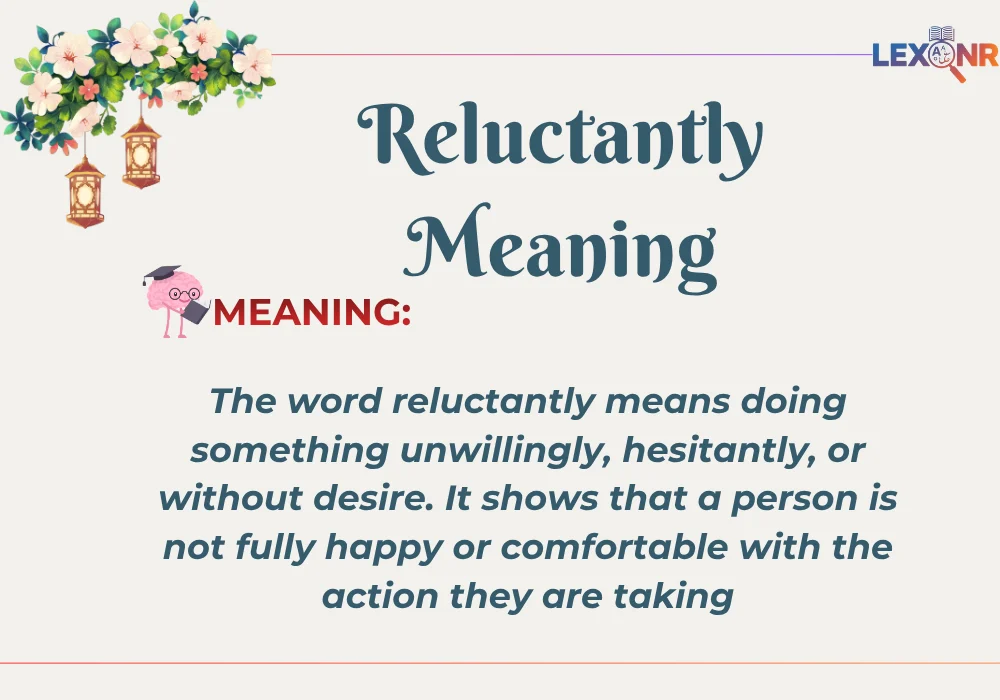
The word reluctantly means doing something unwillingly, hesitantly, or without desire. It shows that a person is not fully happy or comfortable with the action they are taking.
In simple words, reluctantly means
- Doing something you do not want to do
- Agreeing with hesitation
- Acting without enthusiasm
Origin of the Word Reluctantly
Reluctantly comes from the word reluctant, which has roots in Latin meaning to struggle against something. Over time, it evolved into a common English word used to describe emotional resistance or unwillingness.
How to Use Reluctantly in Sentences
When to Use Reluctantly
You can use reluctantly when someone
- Is forced or pressured into doing something
- Agrees but feels unsure
- Acts against their personal preference
It is often used in storytelling, conversations, and descriptive writing.
Common Sentence Structures
Here are some natural ways to use reluctantly
- Subject + reluctantly + verb
Example: She reluctantly agreed to help - Subject + verb + reluctantly
Example: He accepted the offer reluctantly - Reluctantly at the beginning
Example: Reluctantly, they decided to leave early
Examples of Reluctantly in Conversations
Everyday Conversation
I reluctantly said yes because I did not want to upset them
Workplace Example
He reluctantly attended the meeting even though he was busy
Student Life Example
She reluctantly finished her homework before going out
Relatable Scenario
I reluctantly woke up early on a weekend
These examples show how the word reflects hesitation or lack of excitement.
Common Mistakes or Misunderstandings
Confusing Reluctantly with Laziness
Reluctantly does not mean lazy. It means unwilling, not unwilling to work.
Wrong idea
He is reluctant so he is lazy
Correct idea
He is reluctant because he does not want to do that specific task
Using It in the Wrong Tone
Sometimes people use reluctantly in situations where there is no hesitation.
Incorrect
She reluctantly enjoyed the party
Correct
She reluctantly went to the party
Overusing the Word
Using reluctantly too often in writing can sound repetitive. It is better to mix it with similar expressions.
Similar Words to Reluctantly
| Word | Meaning | Example Usage |
|---|---|---|
| Hesitantly | With pause or uncertainty | He hesitantly answered the question |
| Unwillingly | Without wanting to | She unwillingly agreed |
| Grudgingly | With annoyance or resentment | He grudgingly helped |
| Hesitatingly | Slowly due to doubt | She spoke hesitatingly |
| Resistively | Showing resistance | He resistively followed orders |
| Half-heartedly | Without full effort | She half-heartedly tried |
| Doubtfully | With uncertainty | He doubtfully accepted the plan |
These words are close in meaning and can be used in similar contexts.
FAQs:
What does reluctantly mean in simple words
It means doing something even though you do not want to do it.
Is reluctantly a negative word
Not always. It simply shows hesitation or unwillingness, not necessarily something bad.
Can reluctantly be used in daily conversation
Yes, it is commonly used in everyday speaking and writing.
What is an example of reluctantly
She reluctantly agreed to join the trip even though she was tired.
What is the difference between reluctantly and unwillingly
Both are similar, but reluctantly often shows hesitation, while unwillingly shows stronger refusal or lack of desire.
Conclusion:
The reluctantly meaning is simple yet powerful. It helps describe moments when you act against your own wishes or feelings. Whether you are writing a story, speaking in daily life, or explaining emotions, this word adds clarity and depth to your expression.
Using reluctantly correctly allows you to communicate hesitation in a natural and relatable way. Just remember to use it in the right context and mix it with similar words to keep your language engaging.
Have a word you want to understand better
Share it in the comments and let us explain it clearly for you

I am John, a dedicated writer and language enthusiast with a strong interest in words and their meanings. I focus on creating clear, accurate, and easy-to-understand content to help readers strengthen their vocabulary and language skills.
Through Lexonr, my aim is to make word meanings accessible for students, learners, and language enthusiasts from all backgrounds. I believe that understanding language plays a key role in effective communication and continuous learning.
I am committed to delivering helpful, reliable, and high-quality content while contributing to the ongoing growth and improvement of Lexonr.