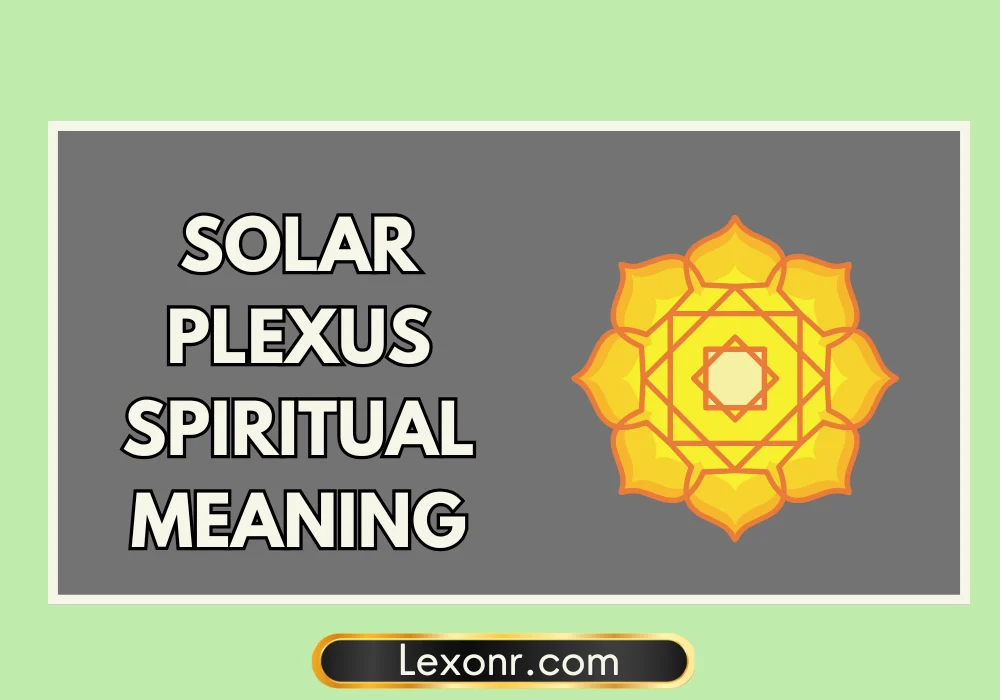
Have you ever felt a strange tightness in your stomach during emotional moments or sensed a deep inner reaction that feels more than just physical? Many people today search for the solar plexus spiritual meaning hoping to understand what this inner feeling might represent. Some link it to energy centers, emotions, or spiritual signals, while others feel confused about whether it has any place in a Christian understanding of life.
In a world filled with spiritual interpretations from many belief systems, it is important for believers to return to God’s Word for clarity. The Bible does not describe the solar plexus as a spiritual energy center, but it does speak deeply about the inner person, emotions, courage, fear, and the seat of our thoughts and decisions. God cares about what happens within us far more than any physical sensation.
This article will guide you through a biblical understanding of what people call the solar plexus spiritual meaning, helping you separate cultural ideas from Scripture grounded truth. You will find peace, clarity, and spiritual direction rooted in God’s Word.
⚡ Quick Biblical Insight
The Bible does not teach the solar plexus as a spiritual energy center. However, it does describe the inner parts of a person as the place of emotions, courage, fear, and decision making, which must be surrendered to God’s truth and peace in Christ.
📖 Biblical Background
The term solar plexus comes from modern anatomical and spiritual language, not from the Bible. It refers to a network of nerves in the upper abdomen, but many spiritual traditions assign it emotional or energetic meaning.
In Scripture, however, God speaks about the “heart,” “bowels,” or “inner being” as the center of human emotion and will. In Hebrew and Greek thought, these terms represent the deepest part of a person.
“Trust in the Lord with all your heart and lean not on your own understanding.” Proverbs 3:5
The Bible consistently directs believers away from relying on internal feelings as ultimate truth and instead anchors them in God’s Word. While emotions and bodily sensations are real, they are not spiritual authorities.
“The heart is deceitful above all things and beyond cure. Who can understand it?” Jeremiah 17:9
This does not mean emotions are bad, but that they must be guided by God’s truth rather than interpreted as spiritual signals.
✨ Spiritual Interpretations
1. Inner Peace Comes From God, Not Energy Centers
Verse:
“Peace I leave with you, my peace I give you.” John 14:27
Reflection:
What people call solar plexus sensations are often emotional responses such as anxiety or peace. The Bible teaches that true peace does not come from within the body but from Jesus Christ. When your inner self feels unsettled, God invites you to rest in Him, not interpret sensations as spiritual codes.
2. Courage and Fear Reside in the Inner Being
Verse:
“Be strong and courageous. Do not be afraid.” Joshua 1:9
Reflection:
Many associate the solar plexus with confidence or fear. Scripture agrees that humans experience these emotions deeply within. However, courage in the Bible is not an energy but a response of faith in God’s presence and promises.
3. Discernment Must Be Grounded in Scripture
Verse:
“Test everything. Hold fast to what is good.” 1 Thessalonians 5:21
Reflection:
Not every inner feeling or physical sensation carries spiritual meaning. God calls believers to test experiences through Scripture. This protects the heart from confusion and keeps faith anchored in truth rather than subjective interpretation.
4. God Renews the Inner Person
Verse:
“Be transformed by the renewing of your mind.” Romans 12:2
Reflection:
Instead of focusing on bodily energy centers, the Bible emphasizes transformation through the mind and spirit. God works from the inside out by renewing thoughts, healing emotions, and shaping character through the Holy Spirit.
5. Strength Comes From the Lord
Verse:
“The Lord is the strength of my life.” Psalm 27:1
Reflection:
Some teachings associate the solar plexus with personal power or strength. Scripture redirects this completely to God. True strength is not found in human energy but in dependence on the Lord.
🔍 Variations & Contextual Meanings
People experience what they call solar plexus sensations in different ways:
Emotional Stress Response
Sometimes tightness in the stomach is simply anxiety, stress, or emotional pressure. The body responds physically to mental strain.
Spiritual Curiosity
Some interpret these sensations as spiritual signals. However, in a biblical worldview, feelings must always be tested against Scripture.
Personal Awareness
Moments of inner awareness can be opportunities to pray, reflect, and seek God’s peace rather than assign mystical meaning.
The key is discernment. God does not confuse His children. He brings clarity, peace, and order.
⚠️ Dealing with Negative or Troubling Signs
If you feel disturbed or anxious when thinking about spiritual meanings tied to the body, remember this truth: God is not the author of fear.
🙏 Recommended Scriptures
- Psalm 91 for protection and peace
- Ephesians 6:10–18 for spiritual strength
- 2 Timothy 1:7 for freedom from fear
🛡️ Guidance
- Pray when you feel confused or anxious
- Reject fear based interpretations of bodily sensations
- Stay rooted in Scripture rather than spiritual trends
- Seek guidance from mature Christian leaders if needed
God’s presence brings peace, not confusion.
🌿 Faith-Based Action Steps
🙏 Prayer Example
Lord God,
Thank You for creating me with care and purpose. Help me not to be guided by confusion or fear but by Your Word and Your Spirit. When I feel uncertain inside, remind me that You are my peace and strength. Renew my mind and keep my heart anchored in truth. In Jesus name, Amen.
🔍 Self Examination
Ask yourself:
- Am I interpreting feelings through Scripture or through trends?
- Am I seeking God’s truth or searching for hidden meanings?
Let God’s Word be your foundation.
🤝 Spiritual Support
- Speak with a trusted pastor or Christian mentor
- Join a Bible centered community
- Stay consistent in prayer and Scripture reading
You are not meant to walk in confusion alone.
❓ FAQs:
What is the solar plexus spiritual meaning in Christianity?
The Bible does not define the solar plexus as a spiritual center. Christianity focuses on the heart and mind as the inner life, guided by God’s Word and the Holy Spirit.
Is the solar plexus mentioned in the Bible?
No, the solar plexus is a modern anatomical term and is not mentioned in Scripture. The Bible instead refers to the heart, spirit, and inner being.
Should Christians believe in energy centers like the solar plexus?
Christians are called to test all beliefs against Scripture. The Bible does not teach energy centers, so believers should focus on God’s truth rather than spiritual systems outside of Scripture.
Why do I feel sensations in my stomach during emotions?
These sensations are often natural physical responses to stress, anxiety, or strong emotions. They are not necessarily spiritual signs.
Can God speak through physical feelings?
God primarily speaks through His Word and the Holy Spirit. Feelings can guide awareness but should never override Scripture.
How can I find peace when I feel confused inside?
Pray, read Scripture, and focus on God’s promises. Peace comes from trusting God, not interpreting physical sensations.
Conclusion:
The idea of solar plexus spiritual meaning comes from modern spiritual interpretations, not from the Bible. While people may experience real physical or emotional sensations in this area, Scripture does not assign it any spiritual power or hidden message.
Instead, God calls us to focus on the heart, mind, and spirit as they are transformed by His truth. When confusion arises, He offers peace, not mystery. When fear appears, He offers strength, not uncertainty.
Your inner life matters deeply to God, but it is guided by His Word, not by bodily sensations or spiritual trends. The more you root yourself in Scripture, the more clarity and peace you will experience.
Trust that God is not hidden in confusing signs. He is near, He is clear, and He is faithful to lead you in truth.

Hi, I’m Mike Grobgaard, founder of Lexonr. I write about meanings, internet slang, biblical terms, and modern expressions in a simple yet engaging way. My goal is to help readers understand the deeper story behind every word they search for.