POV means “Point of View” in text. It is commonly used on TikTok, Snapchat, Instagram, and in text messages to show a specific perspective, situation, or experience.
You have probably seen POV in video captions, comments, or chats online. It has become one of the most popular internet terms, especially among younger social media users.
People search for its meaning because POV can be used in different ways depending on the platform. Sometimes it refers to a video scenario, while other times it is used in casual texting conversations.
Understanding POV helps you better follow online trends and social media content.
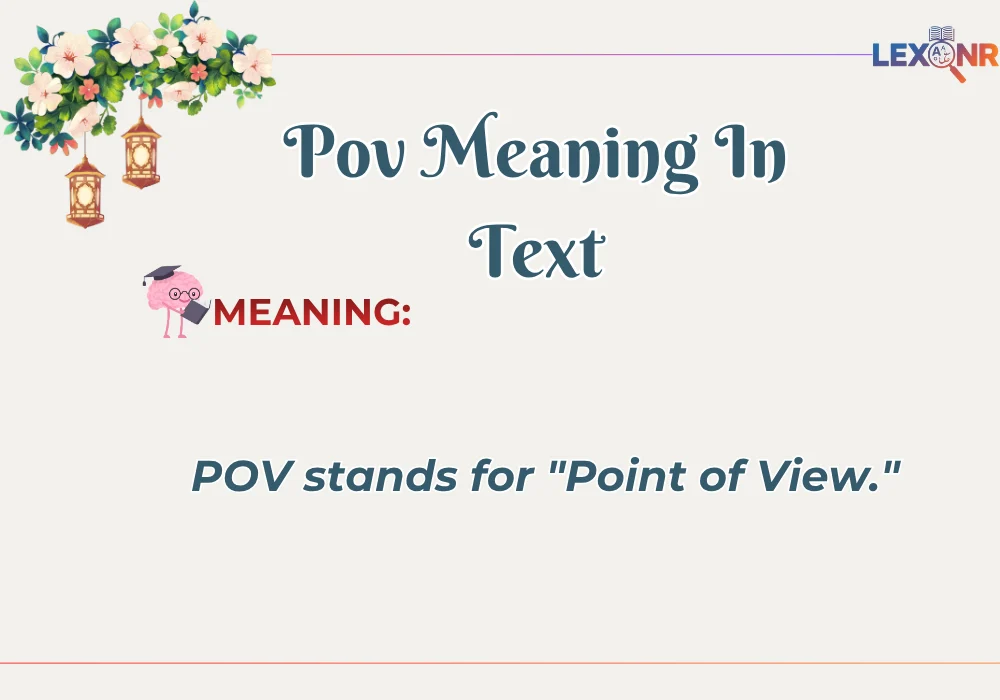
Pov Meaning In Text
POV stands for “Point of View.”
It is an abbreviation used to indicate a particular perspective or angle in a conversation, story, video, or situation.
In texting, POV often introduces a scenario where the reader imagines themselves in a specific situation.
For example:
- “POV: You’re late for class and the teacher is staring at you.”
- “POV: You finally get paid after a long month.”
The term helps create relatable or funny situations that people can easily imagine.
Is POV Slang or an Abbreviation?
POV is an abbreviation rather than traditional slang.
The phrase “point of view” has existed for a long time in literature, movies, and storytelling. However, social media users have given it a new purpose by turning it into a popular internet expression.
Today, POV is widely recognized as part of online culture.
What Does POV Mean in Everyday Chat?
In regular conversations, POV is often used to:
- Describe a situation
- Create a joke
- Share a relatable experience
- Tell a short story
- Express a personal perspective
For example:
- “POV: Your alarm doesn’t go off on Monday morning.”
- “POV: You open the fridge hoping new food appeared.”
These examples place the reader directly into the situation.
Where People Use POV
POV appears across many social media platforms and messaging apps.
TikTok
TikTok is where POV became extremely popular.
Creators often make videos with captions such as:
- “POV: You’re meeting your celebrity crush.”
- “POV: Your friend gives terrible advice.”
The viewer becomes part of the story being shown.
Snapchat
On Snapchat, users may use POV in stories or messages.
Examples:
- “POV: Me trying to stay awake in class.”
- “POV: It’s Friday afternoon.”
Instagram users include POV in:
- Reels
- Captions
- Stories
- Comments
Examples:
- “POV: You’re on vacation with no responsibilities.”
- “POV: Your coffee finally kicks in.”
In WhatsApp chats, POV is often used jokingly.
For example:
- “POV: You’re waiting for everyone to reply in the group chat.”
- “POV: You said you’ll sleep early but it’s midnight.”
SMS
Although less common in traditional texting, POV still appears in casual messages.
Examples:
- “POV: You realize tomorrow is Monday.”
- “POV: The food arrives right when you’re starving.”
Real Chat Examples
Example 1
A: Did you see that TikTok?
B: The one that said “POV: You’re the new student”?
A: Yeah, it was funny.
Example 2
A: What does POV mean?
B: It means point of view.
A: That makes sense now.
Example 3
A: Why is everyone writing POV?
B: It’s used to create a scenario.
A: Got it.
Example 4
A: POV: You forgot your homework.
B: That’s literally me today.
A: Same here.
Example 5
A: Did you post that reel?
B: Yeah, it’s a POV video.
A: Nice.
Example 6
A: POV: Your internet stops during a game.
B: That’s a nightmare.
A: Absolutely.
Example 7
A: What kind of content is trending?
B: POV videos are everywhere.
A: I’ve noticed that too.
Example 8
A: POV: It’s payday.
B: Best feeling ever.
A: Couldn’t agree more.
Example 9
A: Why is that video so relatable?
B: Because it’s a POV situation.
A: True.
Example 10
A: POV: You finally finish your exams.
B: Instant happiness.
A: Definitely.
How to Reply When Someone Says “POV”
Your response depends on the context of the conversation.
Funny Replies
- “Too accurate.”
- “Why does this describe me perfectly?”
- “I feel personally attacked.”
Casual Replies
- “That’s relatable.”
- “I understand that.”
- “Very true.”
Friendly Replies
- “That made me laugh.”
- “I can totally relate.”
- “Good one.”
Neutral Replies
- “Interesting perspective.”
- I see what you mean.”
- “Makes sense.”
Is POV Rude or Offensive?
No, POV is not rude or offensive.
It is generally considered a harmless internet abbreviation used for storytelling, humor, and social media content.
Most people use it in a positive or neutral way.
Is It Safe to Use?
Yes. POV is safe for:
- Text messages
- Social media posts
- Online discussions
- Group chats
- Comments
Is It Appropriate at School or Work?
In casual conversations, yes.
However, in formal reports, academic writing, or professional documents, it is usually better to write “point of view” instead of using the abbreviation.
Who Uses This Term?
POV is especially popular among younger internet users.
Age Groups
Common users include:
- Teenagers
- Gen Z
- Young adults
- Social media creators
Older users may also understand and use it, especially if they spend time online.
Gen Z Usage
Gen Z helped make POV one of the most recognizable social media terms.
Many viral TikTok trends revolve around POV videos that place viewers in specific situations.
Common Platforms
POV frequently appears on:
- TikTok
- Snapchat
- YouTube Shorts
- Discord
- X
How Often Does It Appear Online?
Very often.
POV is one of the most widely used social media expressions and appears in millions of posts, captions, and videos every day.
Origin of the Term
The phrase “Point of View” existed long before the internet.
It has been used for decades in:
- Literature
- Journalism
- Film
- Photography
- Storytelling
Originally, it described the perspective from which a story was told.
As social media evolved, users adapted the term for videos and memes. Instead of describing a narrator’s perspective, creators began using POV to place viewers directly into a scenario.
This modern usage became especially popular on TikTok during the late 2010s and early 2020s.
Internet Culture and POV
Social media helped transform POV into a trend because:
- It creates relatable content
- It encourages viewer engagement
- It works well in short videos
- It is easy to understand
Today, POV is a major part of internet culture.
Comparison Table
| Term | Meaning | Type | Usage | Popularity |
|---|---|---|---|---|
| POV | Point of View | Abbreviation | Showing a perspective or scenario | Very High |
| IDK | I Don’t Know | Acronym | Expressing uncertainty | Very High |
| IDC | I Don’t Care | Acronym | Showing indifference | High |
| IMO | In My Opinion | Acronym | Sharing opinions | Very High |
| BRB | Be Right Back | Acronym | Temporary absence from chat | High |
Real World Usage Example
Imagine your friend sends you a TikTok video with the caption:
“POV: You check your bank account after online shopping.”
The video shows someone looking shocked.
The creator uses POV to place viewers in the situation, making the content more relatable and humorous. Many viewers will understand the feeling and engage with the post.
FAQs:
What does POV mean in text messages?
POV stands for “Point of View.” It is used to describe a perspective or create a scenario that the reader can imagine themselves experiencing.
What does POV mean on TikTok?
On TikTok, POV is commonly used in video captions to place viewers into a specific situation or story.
Is POV slang?
POV is an abbreviation for “Point of View.” While it is not traditional slang, it has become a popular part of internet culture.
Is POV rude or offensive?
No. POV is generally neutral and safe to use in everyday online conversations.
How should you reply to POV?
You can respond with comments such as “That’s relatable,” “So true,” “Good one,” or share your own reaction to the scenario.
Conclusion:
POV means “Point of View” and is widely used across TikTok, Snapchat, Instagram, WhatsApp, and text messages. It helps people create relatable situations, tell short stories, and engage audiences online.
The term is friendly, easy to understand, and commonly used by Gen Z and social media creators. While it works well in casual conversations and social media posts, using the full phrase may be more appropriate in formal settings.
Understanding POV can help you better follow modern internet culture and communicate more naturally online.

Hi, I’m Mike Grobgaard, founder of Lexonr. I write about meanings, internet slang, biblical terms, and modern expressions in a simple yet engaging way. My goal is to help readers understand the deeper story behind every word they search for.