If you’ve seen “ASL” in a text message, it usually means “Age, Sex, Location.” People use it to quickly ask for basic information during online conversations. In some situations, ASL can also mean American Sign Language, depending on the context.
You’ll often see ASL on TikTok, Snapchat, Instagram, WhatsApp, and texting apps. Many people search for its meaning because the abbreviation can have more than one definition.
Understanding what ASL means helps you avoid confusion and respond appropriately when chatting online.
ASL Meaning in Text
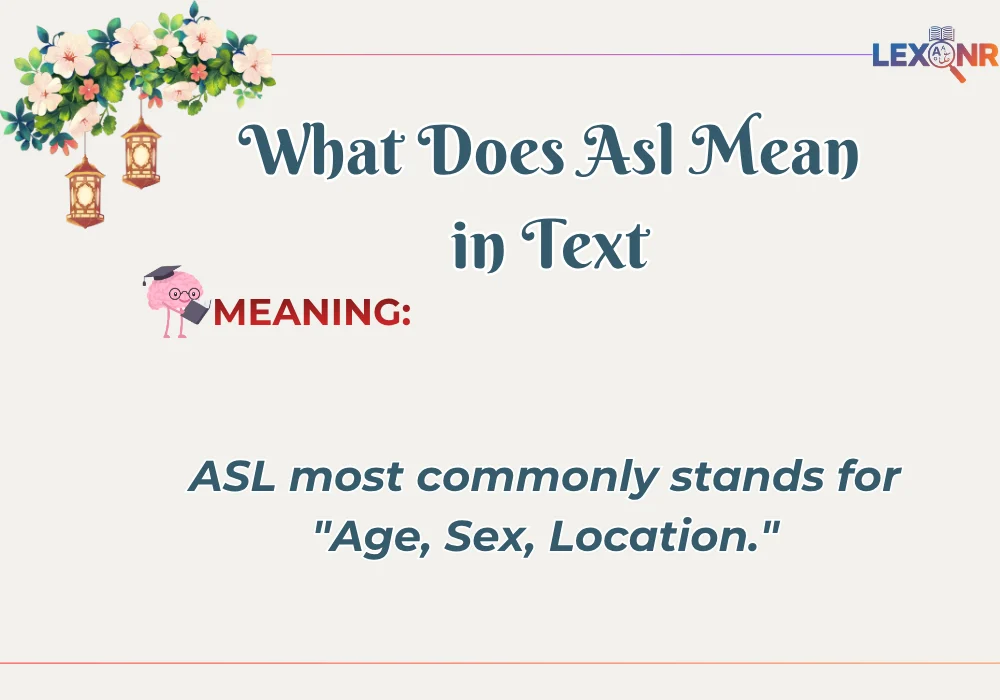
ASL most commonly stands for “Age, Sex, Location.”
It is an internet abbreviation that became popular in chat rooms and messaging platforms. People use it when they want to know someone’s age, gender, and where they live.
For example:
- “ASL?”
- “15/F/NY”
- “20/M/Texas”
The abbreviation allows people to ask for basic personal information quickly.
Is ASL Slang or an Abbreviation?
ASL is primarily an abbreviation rather than slang.
It represents three separate words:
- Age
- Sex
- Location
Although it originated as internet shorthand, it has become a recognized part of online communication.
What Does ASL Mean in Everyday Chat?
In everyday texting, ASL is often used to:
- Start conversations
- Get to know someone
- Ask for basic details
- Break the ice in online chats
However, younger users today may not use it as frequently as people did during the early internet era.
Where People Use ASL
ASL can appear across various social media platforms and messaging apps.
TikTok
On TikTok, ASL may appear in comments or live chats.
Examples:
- “ASL?”
- “What’s your ASL?”
Sometimes users may also use ASL when referring to American Sign Language content.
Snapchat
Snapchat users occasionally use ASL when meeting new people through group chats or public stories.
Example:
- “Hey, ASL?”
On Instagram, ASL can appear in direct messages and comment sections.
Examples:
- “ASL?”
- “What’s your age and location?”
ASL is less common on WhatsApp but may still appear in casual conversations.
Example:
- “Before we continue chatting, ASL?”
SMS
Traditional texting occasionally includes ASL, especially when talking to someone new.
Example:
- “Hi, ASL?”
Real Chat Examples
Example 1
A: Hey there.
B: Hi.
A: ASL?
Example 2
A: Nice to meet you.
B: You too.
A: What’s your ASL?
Example 3
A: Are you new here?
B: Yes.
A: ASL?
Example 4
A: Want to chat?
B: Sure.
A: ASL first?
Example 5
A: Hi.
B: Hello.
A: ASL?
Example 6
A: What games do you play?
B: Mostly sports games.
A: Cool, ASL?
Example 7
A: Where are you from?
B: Canada.
A: Nice. ASL?
Example 8
A: I saw your comment.
B: Thanks.
A: ASL?
Example 9
A: Are you in college?
B: Yes.
A: What’s your ASL?
Example 10
A: Nice profile.
B: Thank you.
A: ASL?
How to Reply When Someone Says “ASL”
Your response depends on your comfort level and privacy preferences.
Funny Replies
- “Ancient, mysterious, and from another galaxy.”
- “Old enough to pay bills.”
- “Nice try, detective.”
Casual Replies
- “22/M/Chicago.”
- “19/F/London.”
- “25/M/Toronto.”
Friendly Replies
- “I’m 21, male, from New York.”
- “I’m 18 and from California.”
Neutral Replies
- “I’d rather not share personal details.”
- “Can we chat first?”
- “I prefer to keep that private.”
Is ASL Rude or Offensive?
No, ASL is not inherently rude or offensive.
It was traditionally used as a quick introduction in online chat rooms and messaging platforms.
However, some people may find it intrusive because it asks for personal information.
Is It Safe to Use?
Generally, yes.
However, be cautious when sharing personal details with strangers online.
Is It Appropriate at School or Work?
ASL is usually considered informal.
It is not commonly used in professional communication or workplace conversations.
In formal settings, it’s better to ask questions individually rather than using the abbreviation.
Who Uses This Term?
ASL has been around for decades and is recognized by many internet users.
Age Groups
People who may use or recognize ASL include:
- Teenagers
- Young adults
- Millennials
- Older internet users
Gen Z Usage
Gen Z users are familiar with ASL, although many prefer newer slang and abbreviations.
The term remains recognizable because of its long history online.
Common Platforms
You may encounter ASL on:
- TikTok
- Snapchat
- Discord
- Text messages
How Often Does It Appear Online?
ASL is less common than it was during the early internet years, but it still appears regularly in online conversations.
Origin of the Term
ASL became popular during the early days of internet chat rooms in the 1990s.
Users wanted a fast way to introduce themselves and learn basic details about others. The phrase “Age, Sex, Location” became a standard opening question.
As online communication evolved, ASL spread to messaging services, forums, and social media platforms.
Internet Culture and ASL
The popularity of ASL grew because:
- It was quick to type
- It helped start conversations
- It became a common online greeting
- It fit the fast-paced nature of internet chat rooms
Today, the abbreviation remains a well-known part of internet culture.
Comparison Table
| Term | Meaning | Type | Usage | Popularity |
|---|---|---|---|---|
| ASL | Age, Sex, Location | Abbreviation | Asking basic personal details | High |
| IDK | I Don’t Know | Acronym | Expressing uncertainty | Very High |
| IDC | I Don’t Care | Acronym | Showing indifference | High |
| IMO | In My Opinion | Acronym | Sharing opinions | Very High |
| BRB | Be Right Back | Acronym | Temporarily leaving a chat | High |
Real World Usage Example
Imagine you join a public online gaming community and start chatting with another player.
After a few messages, they ask:
“ASL?”
They’re simply asking for your age, gender, and location to learn a little more about you. You can answer if you’re comfortable sharing that information or politely decline if you prefer privacy.
FAQs:
What does ASL mean in text messages?
ASL usually means “Age, Sex, Location.” It is used to ask someone for basic personal information during an online conversation.
What does ASL mean on TikTok?
On TikTok, ASL can mean “Age, Sex, Location” in comments or chats. In some contexts, it may also refer to American Sign Language.
Is ASL slang?
ASL is primarily an internet abbreviation rather than traditional slang.
Is ASL rude or offensive?
No, ASL is not rude by itself. However, some people may feel uncomfortable sharing personal information with strangers.
How should you reply to ASL?
You can provide your age, gender, and location if you’re comfortable, or politely decline if you prefer to keep your information private.
Conclusion:
ASL most commonly means “Age, Sex, Location” in text messages and online chats. It became popular during the early internet era and is still recognized across social media platforms today.
People use it to learn basic information about someone they are chatting with. While it is generally harmless, you should be careful about sharing personal details with people you do not know.
Understanding ASL can help you navigate online conversations more confidently and know when it is appropriate to respond or keep your information private.

Hi, I’m Mike Grobgaard, founder of Lexonr. I write about meanings, internet slang, biblical terms, and modern expressions in a simple yet engaging way. My goal is to help readers understand the deeper story behind every word they search for.