If you have ever come across the word aloft in a message, caption, or even a book and wondered what it really means, you are not alone. While it may not be as trendy as modern slang, understanding the aloft meaning can still help you sound more expressive, confident, and clear in both casual and formal communication.
Unlike typical internet abbreviations, aloft is a classic English word that still appears in texts, poetry, social media captions, and even motivational quotes. This guide will break down its meaning, usage, and real-life examples so you can use it naturally and correctly.
What Does Aloft Mean
Definition of Aloft
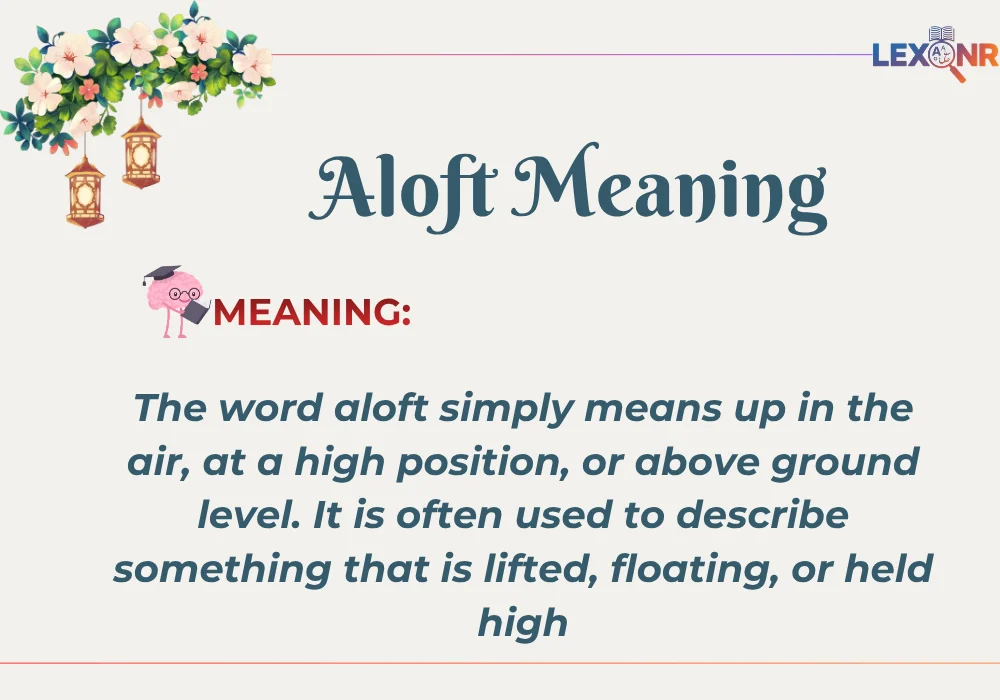
The word aloft simply means up in the air, at a high position, or above ground level. It is often used to describe something that is lifted, floating, or held high.
Simple meanings of aloft include
- High up in the air
- Elevated or raised above
- Not on the ground
Origin of the Word Aloft
Aloft comes from older forms of English and was commonly used in maritime and sailing contexts. Sailors would use it to describe something high up on a ship, like sails or masts.
Over time, the word expanded into everyday language and is now used in both literal and figurative ways.
How to Use Aloft in Texts or Chat
When Aloft Is Appropriate
Aloft is more formal than typical slang, but it can still be used in
- Social media captions
- Creative writing
- Inspirational posts
- Casual conversations with a descriptive tone
It is less common in everyday texting but can make your message sound more expressive.
Common Ways People Use Aloft
Describing something physically high
Example: The kite stayed aloft for hours
Expressing elevation or success
Example: She held her dreams aloft despite challenges
Creative or poetic tone
Example: His spirits remained aloft even during tough times
Examples of Aloft in Conversations
Casual texting example
I finally flew a drone and kept it aloft for ten minutes
Social media caption
Dreams stay aloft when you believe in yourself
Everyday conversation
The balloon remained aloft longer than we expected
Creative writing style
He raised the torch aloft as a sign of victory
These examples show how aloft can work in both simple and expressive contexts.
Common Mistakes or Misunderstandings
Confusing Aloft with Similar Words
Some people mix up aloft with words like above or afloat. While similar, aloft specifically emphasizes height or elevation.
Using Aloft in Very Casual Slang Contexts
Aloft is not modern slang, so it may sound unusual in very casual or meme-style conversations.
Overusing It in Everyday Speech
Using aloft too often can make your language sound unnatural. It works best when used occasionally for effect.
Similar Words to Aloft
| Word | Meaning | Common Usage |
|---|---|---|
| Above | Higher than something | Everyday conversation |
| Elevated | Raised to a higher level | Formal or descriptive writing |
| Airborne | In the air | Aviation, casual use |
| Raised | Lifted up | General use |
| High | At a great height | Everyday speech |
| Floating | Staying in the air or water | Casual and descriptive |
| Soaring | Flying high with energy | Creative or poetic use |
These words can sometimes replace aloft, depending on the tone and context.
FAQs:
What does aloft mean in simple words
Aloft means something is up in the air or held high above the ground.
Is aloft a common word in texting
It is not very common in casual texting, but it is often used in captions, quotes, and creative messages.
Can aloft be used in a sentence
Yes. Example: The bird stayed aloft for a long time.
Is aloft formal or informal
Aloft is slightly formal but can still be used in casual or creative contexts.
What is the difference between aloft and above
Aloft focuses on something being high in the air, while above is more general and can refer to any higher position.
Conclusion:
The aloft meaning is simple yet powerful. It refers to something being high, elevated, or lifted into the air, but it can also carry a deeper, more expressive tone when used creatively.
While not typical internet slang, aloft adds a unique touch to your language, especially in writing, captions, and thoughtful messages. Using it correctly can make your communication feel more vivid and engaging.
Have a word you keep seeing and want to understand better
Share it in the comments and let us break it down together

I am John, a dedicated writer and language enthusiast with a strong interest in words and their meanings. I focus on creating clear, accurate, and easy-to-understand content to help readers strengthen their vocabulary and language skills.
Through Lexonr, my aim is to make word meanings accessible for students, learners, and language enthusiasts from all backgrounds. I believe that understanding language plays a key role in effective communication and continuous learning.
I am committed to delivering helpful, reliable, and high-quality content while contributing to the ongoing growth and improvement of Lexonr.