If you have come across the term dysplasia in a medical report, online article, or conversation and felt confused or concerned, you are not alone. Medical terminology can feel overwhelming, especially when it involves conditions related to abnormal cell growth. Understanding the dysplasia meaning is important because it helps you better interpret health information, communicate with doctors, and make informed decisions.
This guide explains what dysplasia means in simple language, how it is used in real-life medical contexts, and what you should know if you encounter this term.
What Does Dysplasia Mean
Definition of Dysplasia
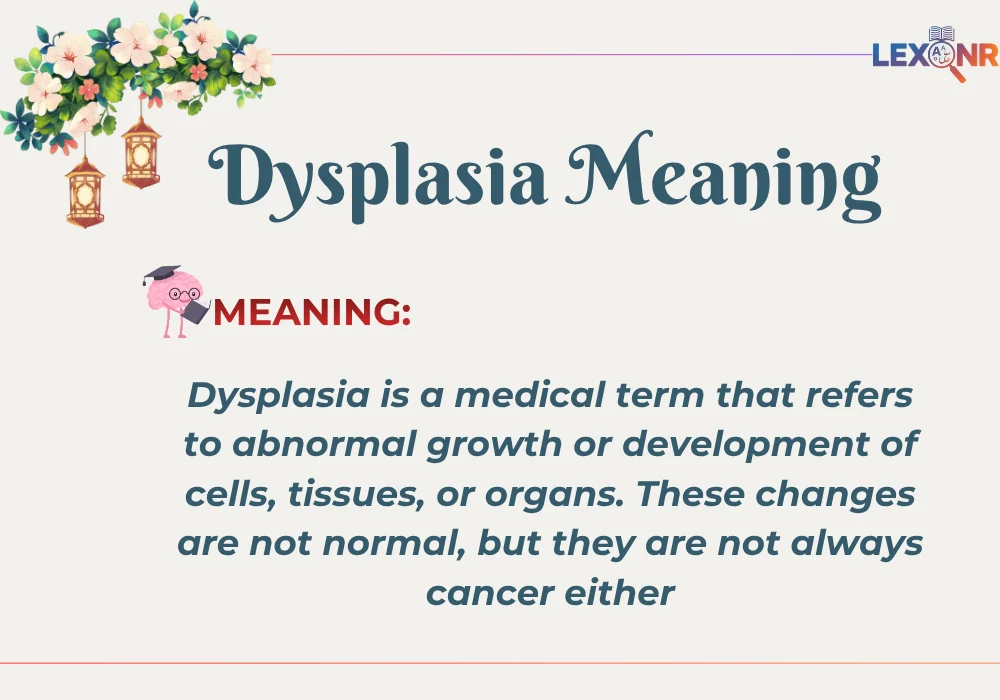
Dysplasia is a medical term that refers to abnormal growth or development of cells, tissues, or organs. These changes are not normal, but they are not always cancer either.
In simple terms, dysplasia means cells are growing in an unusual or irregular way compared to healthy cells.
Origin of the Word Dysplasia
The word dysplasia comes from Greek roots
- Dys means abnormal or bad
- Plasia means formation or growth
So, dysplasia literally means abnormal formation.
Types of Dysplasia
Dysplasia can occur in different parts of the body. The meaning stays the same, but the context changes depending on where it appears.
Cervical Dysplasia
Abnormal cell changes in the cervix. It is often detected through screening tests and can sometimes develop into cancer if not monitored.
Hip Dysplasia
A condition where the hip joint does not form properly. It is commonly seen in infants or young children and can affect movement.
Fibrous Dysplasia
A bone disorder where normal bone is replaced with fibrous tissue, making bones weaker.
Ectodermal Dysplasia
A group of conditions affecting the development of skin, hair, teeth, and nails.
How Dysplasia Is Used in Real-Life Contexts
Medical Reports
Doctors may use dysplasia to describe abnormal cell findings after tests or biopsies.
Example
The report shows mild dysplasia in the tissue sample
Doctor Consultations
You might hear the term when discussing results or treatment plans.
Example
Your doctor may say the cells show early signs of dysplasia but are not cancerous
Health Articles
Many online health resources use the term when explaining early-stage changes in the body.
Examples of Dysplasia in Simple Language
Here are easy ways to understand how the word is used
- The cells are not normal, which is called dysplasia
- This condition shows mild dysplasia, meaning slight abnormal growth
- Doctors are monitoring the dysplasia to prevent further changes
These examples show that dysplasia is about abnormal cell behavior, not always disease progression.
Common Misunderstandings About Dysplasia
Dysplasia Means Cancer
This is one of the biggest misconceptions.
Dysplasia is not cancer, but in some cases, it can develop into cancer if not treated or monitored.
Dysplasia Is Always Dangerous
Not all dysplasia cases are serious. Some are mild and may even go away on their own with proper care.
Dysplasia Requires Immediate Surgery
Treatment depends on severity. Some cases only need monitoring, while others may require medical procedures.
Similar Medical Terms Related to Dysplasia
| Term | Meaning | Difference from Dysplasia |
|---|---|---|
| Hyperplasia | Increase in number of normal cells | Cells are normal but increased |
| Metaplasia | Change from one cell type to another | Cells change type, not structure |
| Neoplasia | New, uncontrolled cell growth | Often associated with tumors |
| Atrophy | Decrease in cell size or number | Opposite of growth |
| Hypertrophy | Increase in cell size | Cells grow larger, not abnormal |
These terms are often used alongside dysplasia, but each has a distinct meaning.
FAQs:
What does dysplasia mean in simple words
Dysplasia means abnormal growth or development of cells in the body.
Is dysplasia the same as cancer
No, dysplasia is not cancer, but in some cases it can develop into cancer if left untreated.
Can dysplasia be cured
Some types of dysplasia can improve or be treated, depending on the cause and severity.
What causes dysplasia
Causes vary but may include genetic factors, infections, or long-term irritation of tissues.
Is dysplasia serious
It depends on the type and severity. Mild dysplasia may not be serious, while severe cases need medical attention.
Conclusion:
The dysplasia meaning centers around abnormal cell growth or development. While the term may sound alarming, it does not automatically mean something severe like cancer. In many cases, dysplasia is simply an early warning sign that allows doctors to monitor and manage changes before they become more serious.
Understanding this term helps you feel more confident when reading medical reports or speaking with healthcare professionals. If you ever encounter the word in your own health context, the best step is to consult a qualified doctor for accurate guidance.
Have you come across other medical terms that seem confusing
Share them and we can break them down in a simple and clear way

I am John, a dedicated writer and language enthusiast with a strong interest in words and their meanings. I focus on creating clear, accurate, and easy-to-understand content to help readers strengthen their vocabulary and language skills.
Through Lexonr, my aim is to make word meanings accessible for students, learners, and language enthusiasts from all backgrounds. I believe that understanding language plays a key role in effective communication and continuous learning.
I am committed to delivering helpful, reliable, and high-quality content while contributing to the ongoing growth and improvement of Lexonr.