If you’ve received a message saying “ASL” and weren’t sure what it meant, you’re not alone. In texting, ASL usually stands for “Age, Sex, Location,” although on some platforms it can also mean “as hell.” The intended meaning depends on the conversation and where it’s used.
You’ll commonly see ASL on TikTok, Snapchat, Instagram, WhatsApp, Discord, and in text messages. People often search for this abbreviation because it has multiple meanings, making it easy to misunderstand if you don’t know the context.
Whether you’re chatting with friends or browsing social media comments, understanding ASL helps you follow conversations without confusion.
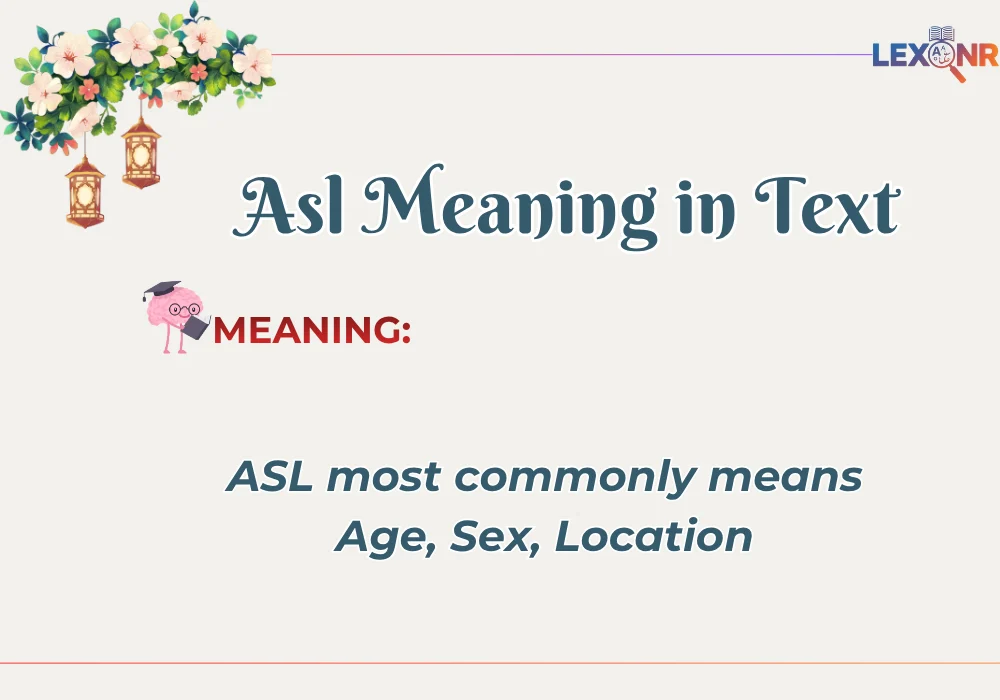
ASL Meaning in Text
ASL most commonly means Age, Sex, Location in text messages and online chats.
It is an internet acronym that people use to ask someone three basic questions:
- How old are you?
- What is your gender?
- Where are you from?
For example:
- “Hey! ASL?”
- “ASL? I’m just curious.”
This abbreviation became popular in the early days of online chat rooms and messaging platforms.
However, in modern internet slang, especially on TikTok and X, ASL can also mean “as hell.”
Examples:
- “I’m tired ASL.”
- “That movie was funny ASL.”
In these cases, ASL is used to emphasize a feeling or opinion.
Is ASL Slang or an Abbreviation?
ASL is an acronym and a form of internet slang.
Depending on the conversation, it can either:
- Ask for someone’s age, sex, and location.
- Intensify a statement by meaning “as hell.”
The context usually makes the intended meaning clear.
What Does ASL Mean in Everyday Chat?
In everyday conversations, ASL may be used to:
- Start getting to know someone online.
- Ask basic personal information.
- Add emphasis to a sentence.
For example:
- “ASL?”
- “I’m bored ASL today.”
- “That game was hard ASL.”
Where People Use ASL
TikTok
On TikTok, ASL most often means “as hell.”
Examples:
- “This song is catchy ASL.”
- “I’m hungry ASL.”
It’s commonly found in captions and comments.
Snapchat
On Snapchat, ASL can mean either “Age, Sex, Location” or “as hell,” depending on the chat.
Friends may use:
- “You tired ASL?”
- “ASL?”
The surrounding conversation helps determine the meaning.
Instagram users often use ASL in comments, captions, and direct messages.
Examples:
- “Cute ASL.”
- “ASL? Just wondering.”
In WhatsApp chats, ASL is less common but still appears, especially among younger users.
Examples:
- “I’m exhausted ASL.”
- “ASL before we join the group?”
SMS
Traditional texting uses both meanings as well.
Examples:
- “Cold ASL outside.”
- “ASL?”
Real Chat Examples
Example 1
A: Hey!
B: Hi!
A: ASL?
Example 2
A: I’m tired ASL.
B: Same. I barely slept.
A: Coffee time.
Example 3
A: That movie was scary ASL.
B: I almost turned it off.
A: Me too.
Example 4
A: ASL?
B: 21, Female, Texas.
A: Nice to meet you.
Example 5
A: This homework is hard ASL.
B: I know!
A: It’s taking forever.
Example 6
A: Why are you so quiet?
B: I’m busy ASL today.
A: Got it.
Example 7
A: ASL?
B: 19, Male, Canada.
A: Cool!
Example 8
A: It’s hot ASL outside.
B: I don’t even want to leave the house.
A: Same here.
Example 9
A: That burger was good ASL.
B: We should go again.
A: Definitely.
Example 10
A: ASL?
B: 24, Female, Australia.
A: Nice meeting you!
How to Reply When Someone Says “ASL”
Your reply depends on which meaning the sender intended.
Funny Replies
- “Old enough to text you.”
- “Planet Earth.”
- “Nice try.”
Casual Replies
If they mean Age, Sex, Location:
- “22, Male, London.”
- “19, Female, Florida.”
If they mean “as hell”:
- “I know!”
- “Seriously.”
- “Same.”
Friendly Replies
- “Sure! I’m 20, Female, California.”
- “Haha, I agree.”
- “You’re right.”
Neutral Replies
- “Could you clarify what you mean?”
- “I understand.”
- “That’s fair.”
Is ASL Rude or Offensive?
ASL is generally not rude or offensive.
However, the meaning matters.
When ASL means Age, Sex, Location, asking strangers for personal information may make some people uncomfortable. It’s best to avoid asking for these details unless it’s appropriate and both people are comfortable.
When ASL means “as hell,” it is considered casual internet slang. While it isn’t offensive, it’s informal and better suited for conversations with friends.
Is It Safe to Use?
Yes.
ASL is safe to use in casual chats, text messages, and social media conversations.
Is It Appropriate at School or Work?
Usually not.
Because ASL is informal and has multiple meanings, it’s better to avoid it in professional emails, academic writing, or workplace communication.
Who Uses This Term?
ASL is popular among internet users of different ages, but younger generations use it most often.
Age Groups
You’ll commonly see ASL used by:
- Teenagers
- College students
- Young adults
- Gen Z
- Millennials
Gen Z Usage
Gen Z frequently uses ASL to mean “as hell.”
Instead of writing the full phrase, they shorten it to ASL to save time while texting or commenting online.
Common Platforms
ASL appears on:
- TikTok
- Snapchat
- Discord
- X
- SMS
How Often Does It Appear Online?
ASL remains a widely recognized internet abbreviation.
Although its original meaning is still understood, the newer meaning “as hell” has become increasingly popular on social media.
Origin of the Term
The original meaning of ASL—Age, Sex, Location—dates back to the early internet.
It became popular in chat rooms, IRC, AOL Instant Messenger, and online forums during the 1990s. Since people were meeting strangers online, asking “ASL?” became a quick way to learn basic information about someone.
Years later, younger internet users began using ASL as a shortened version of “as hell.” This newer meaning spread through social media, memes, and texting culture.
Today, both meanings exist, and context determines which one is intended.
Comparison Table
| Term | Meaning | Type | Usage | Popularity |
|---|---|---|---|---|
| ASL | Age, Sex, Location or As Hell | Acronym | Asking personal details or adding emphasis | Very High |
| IDK | I don’t know | Acronym | Expressing uncertainty | Very High |
| IDC | I don’t care | Acronym | Showing indifference | High |
| IMO | In my opinion | Acronym | Sharing personal opinions | Very High |
| BRB | Be right back | Acronym | Leaving a chat temporarily | High |
Real World Usage Example
Imagine you’re scrolling through TikTok and see someone comment:
“I’m obsessed with this song ASL.”
Here, ASL clearly means “as hell,” emphasizing just how much they like the song.
Now imagine joining an online gaming chat where someone messages:
“ASL?”
In this case, they’re asking for your Age, Sex, and Location. Since you’re sharing personal information, only respond if you feel comfortable and trust the person you’re talking to.
FAQs:
What does ASL mean in text messages?
ASL usually means Age, Sex, Location, but in many modern conversations it can also mean as hell. The correct meaning depends on the context.
What does ASL mean on TikTok?
On TikTok, ASL most commonly means as hell and is used to emphasize a feeling or opinion.
Is ASL slang?
Yes. ASL is an internet acronym that functions as online slang. It has both an older and a newer meaning.
Is ASL rude or offensive?
No. ASL is generally not rude, although asking strangers for their age, sex, and location may feel too personal in some situations.
How should you reply to ASL?
If someone means Age, Sex, Location, reply only if you’re comfortable sharing that information. If they mean as hell, respond naturally to the conversation, such as “Same!” or “I agree.”
Conclusion:
ASL is one of the few internet abbreviations with two widely recognized meanings. Traditionally, it stands for Age, Sex, Location, while on modern social media it often means as hell.
The key to understanding ASL is paying attention to the context. In casual conversations with friends, both meanings are common. However, if someone asks for your personal information online, only share details if you trust the person and feel comfortable doing so.
Knowing both meanings will help you understand text messages, social media comments, and online conversations with confidence.

Hi, I’m Mike Grobgaard, founder of Lexonr. I write about meanings, internet slang, biblical terms, and modern expressions in a simple yet engaging way. My goal is to help readers understand the deeper story behind every word they search for.