If you have ever come across the word climate in conversations, news, or school topics and wondered what it really means, you are not alone. While it is not internet slang, understanding the climate meaning is extremely important because it affects our daily lives, environment, and even future generations.
From weather patterns to global changes, the word climate carries a lot of weight. This guide will break down the meaning of climate in simple language, explain how it is used, and help you clearly understand its real-world importance.
What Does Climate Mean
Definition of Climate
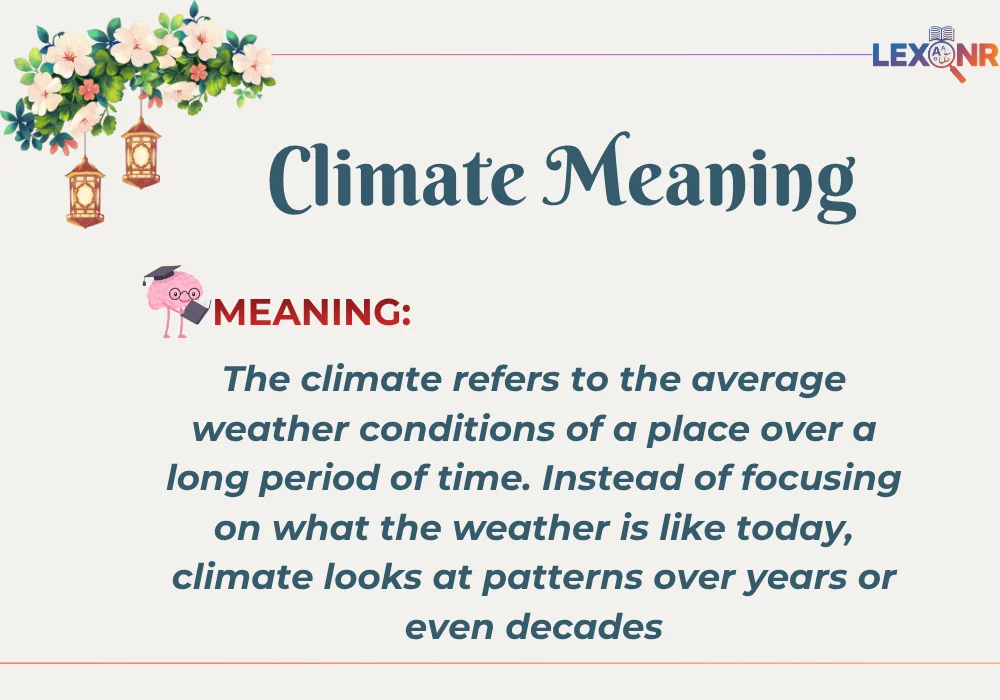
The climate refers to the average weather conditions of a place over a long period of time. Instead of focusing on what the weather is like today, climate looks at patterns over years or even decades.
In simple words
- Weather is short-term
- Climate is long-term
For example
- A rainy day is weather
- A region that gets heavy rain every year has a rainy climate
Climate vs Weather
Many people confuse weather and climate, but they are not the same.
- Weather changes daily
- Climate stays consistent over a long period
Example
- Today is hot and sunny that is weather
- Summers are usually hot in a region that is climate
Understanding this difference makes the climate meaning much clearer.
Types of Climate Around the World
Different parts of the world have different climates depending on location, geography, and natural factors.
Tropical Climate
- Hot and humid most of the year
- Heavy rainfall
- Found near the equator
Dry Climate
- Very little rainfall
- Can be hot or cold
- Includes deserts
Temperate Climate
- Moderate temperatures
- Distinct seasons
- Comfortable living conditions
Continental Climate
- Hot summers and cold winters
- Large temperature differences
Polar Climate
- Extremely cold
- Ice and snow most of the year
These categories help scientists understand and compare climates globally.
How Climate Is Used in Everyday Language
Even outside science, the word climate is used in everyday conversations.
Environmental Context
Used when talking about nature and global changes
Example: Climate change is affecting weather patterns
Social or Emotional Context
Sometimes climate describes a general atmosphere
Example: The office has a positive climate
Political or Economic Context
Used to describe conditions in a country or market
Example: The business climate is improving
This shows that climate meaning can go beyond weather depending on how it is used.
Examples of Climate in Real Life
Daily Conversation
The climate here is usually warm and dry
News Example
Scientists warn that climate patterns are shifting globally
School Context
We learned about tropical climate in geography class
Casual Usage
The team created a supportive climate at work
These examples help you see how flexible the word can be.
Common Mistakes or Misunderstandings
Confusing Climate with Weather
One of the biggest mistakes is thinking both mean the same thing. Climate is long-term, while weather is short-term.
Assuming Climate Never Changes
Climate can change over time, especially due to natural processes and human activities.
Using Climate Only for Temperature
Climate includes more than just temperature. It also involves
- Rainfall
- Humidity
- Wind patterns
- Seasonal changes
Similar Words Related to Climate
| Term | Meaning | Common Usage |
|---|---|---|
| Weather | Daily atmospheric conditions | Daily conversations |
| Environment | Surrounding natural conditions | Science, general use |
| Atmosphere | Air and conditions around Earth | Scientific context |
| Temperature | Level of heat or cold | Everyday use |
| Season | Time of year with specific weather patterns | General use |
| Forecast | Prediction of weather | News, apps |
| Climate change | Long-term shifts in climate patterns | Environmental discussions |
These related terms help expand your understanding of climate meaning.
FAQs:
What is the simple meaning of climate
The climate is the average weather of a place over a long period of time.
What is the difference between climate and weather
Weather is short-term and changes daily, while climate describes long-term patterns.
Why is climate important
Climate affects agriculture, water supply, living conditions, and overall environment.
Can climate change
Yes, climate can change due to natural factors and human activities.
What are the main types of climate
The main types include tropical, dry, temperate, continental, and polar climates.
Conclusion:
The climate meaning is simple once you understand that it focuses on long-term weather patterns rather than daily changes. It helps explain why certain regions are hot, cold, rainy, or dry throughout the year.
Climate also plays a major role in our lives, influencing everything from food production to lifestyle choices. By understanding it clearly, you can better understand the world around you and the challenges it faces.
Have a question or a topic you want explained next
Share it in the comments and keep learning with us

Hi I am Mark Alex , a dedicated writer and language enthusiast with a strong passion for words and their meanings. I focus on creating clear, accurate, and easy-to-understand content to help readers improve their vocabulary and language skills.
Through Lexonr, my goal is to make word meanings accessible for students, learners, and language lovers from all backgrounds. I believe that understanding words is the foundation of effective communication and lifelong learning.
I am committed to providing helpful and reliable content while continuously improving the quality and usefulness of Lexonr.