You may have come across the term dark empath on social media, in conversations, or even in discussions about personality and behavior. It sounds intense, almost mysterious, and that is exactly why it has gained so much attention online. But what does it really mean?
Understanding the dark empath meaning is important because it sits at the intersection of emotional intelligence and manipulative behavior. It is not just another trendy label. It describes a specific personality pattern that can impact relationships, communication, and trust.
This guide explains what a dark empath is, how the concept originated, how to recognize one, and how the term is used in modern conversations.
What Does Dark Empath Mean
Definition of Dark Empath
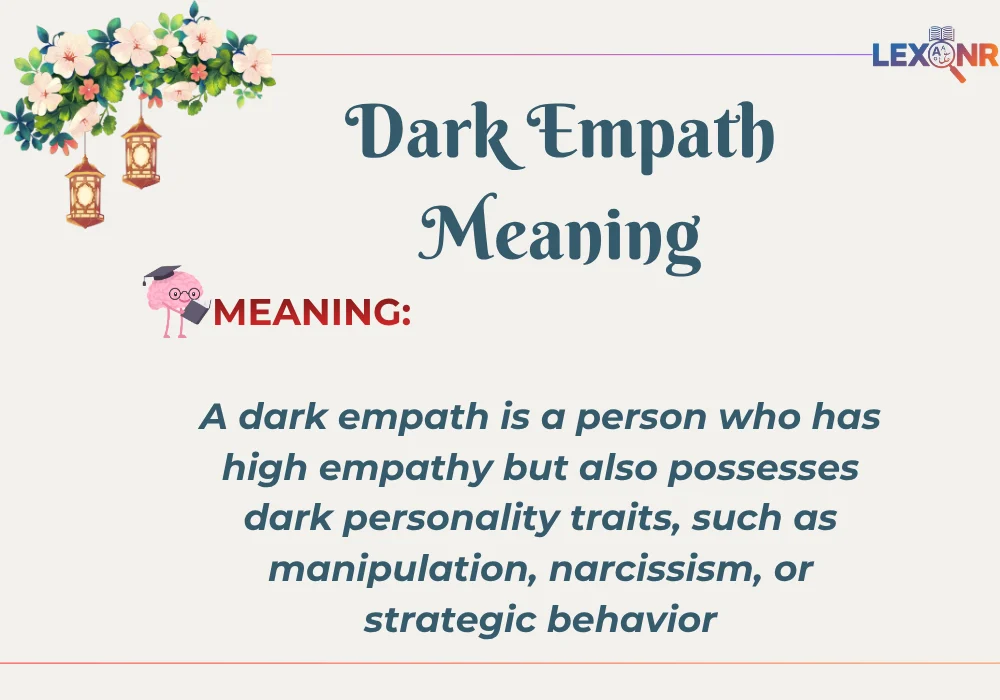
A dark empath is a person who has high empathy but also possesses dark personality traits, such as manipulation, narcissism, or strategic behavior.
In simple terms, a dark empath
- Understands how others feel
- Can read emotions very accurately
- But may use that understanding for personal gain
Unlike someone who lacks empathy, a dark empath knows exactly how you feel and may use that insight to influence or control situations.
Origin of the Term Dark Empath
The term dark empath comes from research in psychology related to the Dark Triad, which includes
- Narcissism
- Machiavellianism
- Psychopathy
Traditionally, these traits were associated with low empathy. However, newer discussions suggest that some individuals combine emotional awareness with these darker traits, creating what is now called a dark empath.
The concept became widely popular through online discussions, psychology content, and viral posts explaining personality types.
Key Traits of a Dark Empath
High Emotional Awareness
A dark empath can easily
- Read facial expressions
- Understand tone and mood
- Sense emotional shifts in conversations
This makes them socially skilled and often charming.
Strategic Manipulation
Because they understand emotions well, they may
- Say exactly what others want to hear
- Influence decisions subtly
- Use emotional situations to their advantage
Social Intelligence
Dark empaths are often
- Good at making first impressions
- Engaging in conversations
- Blending into social groups
They may come across as friendly, supportive, and understanding at first.
Hidden Self-Interest
Despite appearing caring, their actions may be driven by
- Personal gain
- Control
- Advantage in relationships or situations
How to Use Dark Empath in Conversations
Common Contexts
The term dark empath is usually used in
- Psychology discussions
- Social media posts about personality types
- Conversations about toxic behavior
- Self-awareness or relationship advice
Example Usage
Casual conversation
I feel like he understands everyone too well but uses it to his advantage, kind of a dark empath
Social media caption
When someone reads your emotions perfectly but still plays games, dark empath energy
Discussion context
A dark empath is different from a narcissist because they actually understand emotions deeply
Examples of Dark Empath Behavior
Example 1
Someone comforts a friend but later uses that personal information to gain influence in a group
Example 2
A person knows exactly how to apologize in a convincing way but repeats the same behavior
Example 3
They sense emotional weaknesses and subtly guide conversations to benefit themselves
Example 4
They appear supportive but create situations where others depend on them emotionally
Common Misunderstandings About Dark Empaths
Not the Same as Psychopath
A dark empath is not necessarily emotionless. In fact, they are emotionally aware, which makes them different from typical assumptions about psychopathy.
Not Always a Villain
Not every person with these traits is harmful all the time. Some may simply have a mix of empathy and self-interest without extreme behavior.
Not a Clinical Diagnosis
Dark empath is not an official medical diagnosis. It is a descriptive term used in psychology discussions and online culture.
Similar Terms and Related Concepts
| Term | Meaning | Key Difference |
|---|---|---|
| Narcissist | Self-centered personality focused on admiration | Lower empathy |
| Empath | Highly sensitive to others’ emotions | Lacks manipulative traits |
| Machiavellian | Strategic and manipulative thinker | Less emotional awareness |
| Psychopath | Low empathy and impulsive behavior | Less emotional connection |
| Toxic person | Harmful behavior in relationships | Broader category |
These terms help clarify where a dark empath fits within personality discussions.
FAQs:
What is a dark empath in simple terms
A dark empath is someone who understands emotions very well but may use that understanding in manipulative or self-serving ways.
Is being a dark empath bad
It depends on behavior. The traits can be used negatively, but not everyone with these tendencies acts harmfully.
How can you identify a dark empath
Look for someone who is emotionally aware but uses that awareness to influence, control, or gain advantage in situations.
Is dark empath a real psychological term
It is based on psychological concepts but is not an official clinical diagnosis.
Can a dark empath change
Yes, with self-awareness and personal growth, individuals can choose to use empathy in healthier and more positive ways.
Conclusion:
The dark empath meaning highlights a unique mix of emotional intelligence and darker personality traits. Unlike people who lack empathy, a dark empath understands emotions deeply, which can make their behavior more complex and sometimes harder to recognize.
Knowing this concept helps you better understand social dynamics, protect your boundaries, and navigate relationships more wisely. Awareness is key. When you recognize how emotional insight can be used both positively and negatively, you become more confident in how you respond to others.
Have you ever encountered someone who seemed emotionally aware but slightly manipulative
Share your thoughts and experiences in the comments and join the conversation

I am John, a dedicated writer and language enthusiast with a strong interest in words and their meanings. I focus on creating clear, accurate, and easy-to-understand content to help readers strengthen their vocabulary and language skills.
Through Lexonr, my aim is to make word meanings accessible for students, learners, and language enthusiasts from all backgrounds. I believe that understanding language plays a key role in effective communication and continuous learning.
I am committed to delivering helpful, reliable, and high-quality content while contributing to the ongoing growth and improvement of Lexonr.