If someone says “thank you for your kind words” in a text message, they are expressing appreciation for something thoughtful, supportive, or encouraging that another person said. It is a polite way to acknowledge a compliment, encouragement, or positive comment.
You may see this phrase in text messages, social media comments, emails, WhatsApp chats, and online conversations. People often search for its meaning because they want to understand the tone behind the message or learn how to respond appropriately.
While the phrase sounds formal, it is commonly used in both personal and professional communication. Understanding its meaning can help you communicate more confidently online.
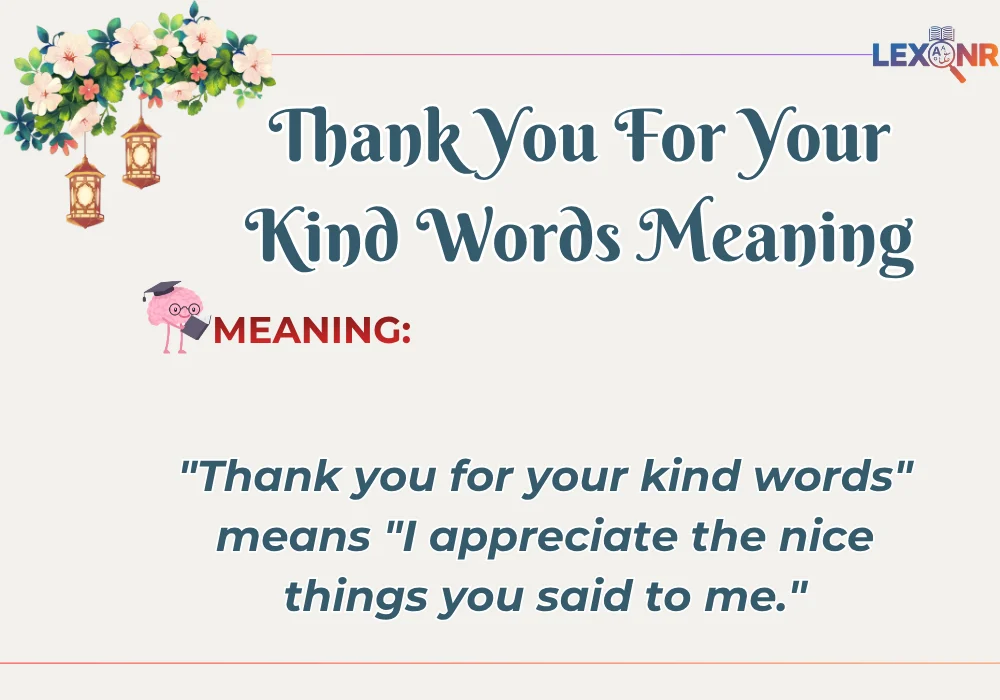
Thank You For Your Kind Words Meaning in Text
“Thank you for your kind words” means “I appreciate the nice things you said to me.”
The phrase is not slang, an acronym, or an abbreviation. Instead, it is a complete expression used to show gratitude when someone offers praise, support, encouragement, sympathy, or a compliment.
For example:
- “Thank you for your kind words. They really made my day.”
- “I appreciate your support and thank you for your kind words.”
In everyday conversations, this phrase lets people acknowledge kindness and respond respectfully.
Is It a Slang Term or Abbreviation?
No, it is neither slang nor an abbreviation.
It is a standard English expression that has been used for many years in both spoken and written communication.
Unlike internet abbreviations such as LOL or IDK, this phrase is understood by people of all ages.
What Does It Mean in Everyday Chat?
In casual conversations, the phrase usually means:
- Thanks for the compliment
- Thanks for the encouragement
- Thanks for being supportive
- Thanks for saying something thoughtful
- Thanks for your positive feedback
It helps create a warm and respectful conversation.
Where People Use Thank You For Your Kind Words
This phrase appears across many communication platforms.
TikTok
On TikTok, creators often reply to supportive comments using this phrase.
Examples:
- “Thank you for your kind words. I’m glad you enjoyed the video.”
- “Thank you for your kind words and support.”
Snapchat
On Snapchat, friends may use it when receiving compliments or encouraging messages.
Example:
- “Thank you for your kind words. That means a lot to me.”
Instagram users frequently use this phrase in comments and direct messages.
Examples:
- “Thank you for your kind words about my artwork.”
- “I truly appreciate your support.”
In WhatsApp conversations, people use it to respond to praise, congratulations, or encouragement.
Example:
- “Thank you for your kind words. I really appreciate it.”
SMS
Traditional text messages also commonly include this phrase.
Examples:
- “Thank you for your kind words after my presentation.”
- “Your message was very thoughtful. Thank you.”
Real Chat Examples
Example 1
A: You did an amazing job on the project.
B: Thank you for your kind words.
A: You earned the praise.
Example 2
A: Your speech was inspiring.
B: Thank you for your kind words.
A: It was truly memorable.
Example 3
A: You look great today.
B: Thank you for your kind words.
A: You’re welcome.
Example 4
A: I loved your presentation.
B: Thank you for your kind words.
A: It was excellent.
Example 5
A: Congratulations on your achievement.
B: Thank you for your kind words.
A: You deserve it.
Example 6
A: Your writing is fantastic.
B: Thank you for your kind words.
A: Keep creating.
Example 7
A: I know things have been difficult, but you’re doing great.
B: Thank you for your kind words.
A: Stay strong.
Example 8
A: Your advice really helped me.
B: Thank you for your kind words.
A: Happy to help.
Example 9
A: You’re one of the most helpful people I know.
B: Thank you for your kind words.
A: It’s true.
Example 10
A: Your photos are beautiful.
B: Thank you for your kind words.
A: Keep sharing them.
How to Reply When Someone Says “Thank You For Your Kind Words”
There are many ways to respond depending on the situation.
Funny Replies
- “I only speak the truth.”
- “You’re welcome. My compliment skills are unmatched.”
- “Glad my words passed inspection.”
Casual Replies
- “You’re welcome.”
- “No problem.”
- “Anytime.”
- “Of course.”
Friendly Replies
- “You deserve every word.”
- “I’m happy to support you.”
- “Glad I could help.”
- “I meant every word.”
Neutral Replies
- “You’re very welcome.”
- “Happy to hear that.”
- “Thank you as well.”
- “I appreciate that.”
Is Thank You For Your Kind Words Rude or Offensive?
No, the phrase is not rude or offensive.
It is generally viewed as respectful, polite, and appreciative. People use it to acknowledge compliments, encouragement, and support.
Is It Safe to Use?
Yes.
The phrase is safe to use in:
- Personal conversations
- School settings
- Workplaces
- Professional emails
- Social media interactions
Is It Appropriate at School or Work?
Absolutely.
Because it is polite and professional, it is commonly used in:
- Business emails
- Workplace discussions
- Academic communication
- Professional networking
It is often considered more formal than simply saying “thanks.”
Who Uses This Term?
Many different groups of people use this phrase.
Age Groups
Common users include:
- Teenagers
- Young adults
- Adults
- Professionals
- Older adults
Gen Z Usage
Gen Z may use shorter alternatives like “thanks” or “appreciate it,” but they still use “thank you for your kind words” when they want to sound sincere or respectful.
Common Platforms
The phrase often appears on:
- TikTok
- Text messages
How Often Does It Appear Online?
It appears frequently because compliments and supportive messages are common parts of online communication.
The phrase remains popular because it expresses gratitude clearly and professionally.
Origin of the Term
Unlike internet slang, “thank you for your kind words” comes from traditional English language usage.
The phrase developed naturally as a polite way to express appreciation when receiving praise, encouragement, sympathy, or positive feedback.
Its popularity increased online because people needed respectful ways to respond to comments, messages, and reviews.
Internet Culture Influence
Social media helped make the phrase more visible because creators, influencers, businesses, and everyday users often receive supportive comments from others.
As a result, it has become a common response across digital platforms.
Is the Origin Clear?
Yes.
The phrase comes from standard English courtesy and gratitude practices rather than internet slang culture.
Comparison Table
| Term | Meaning | Type | Usage | Popularity |
|---|---|---|---|---|
| Thank You For Your Kind Words | Appreciation for supportive comments | Phrase | Gratitude and acknowledgment | High |
| IDK | I don’t know | Acronym | Expressing uncertainty | Very High |
| IDC | I don’t care | Acronym | Showing indifference | High |
| IMO | In my opinion | Acronym | Sharing opinions | Very High |
| BRB | Be right back | Acronym | Temporary absence from chat | High |
Real World Usage Example
Imagine you recently completed an important presentation at work. After the meeting, a colleague sends you a message saying:
You explained everything clearly and did an excellent job.
You reply:
“Thank you for your kind words. I really appreciate your feedback.”
In this situation, the phrase shows gratitude while maintaining a professional and respectful tone.
FAQs:
What does Thank You For Your Kind Words mean in text messages?
It means the person appreciates something positive, supportive, or encouraging that was said to them.
What does Thank You For Your Kind Words mean on TikTok?
On TikTok, it is often used by creators to thank followers for compliments, encouragement, and supportive comments.
Is Thank You For Your Kind Words slang?
No. It is a standard English phrase used to express gratitude and appreciation.
Is Thank You For Your Kind Words rude or offensive?
No. The phrase is polite, respectful, and suitable for both personal and professional communication.
How should you reply to Thank You For Your Kind Words?
You can reply with phrases such as “You’re welcome,” “I meant every word,” or “Happy to help.”
Conclusion:
“Thank you for your kind words” is a polite expression used to show appreciation for compliments, encouragement, support, or thoughtful comments. It is commonly used in text messages, social media, emails, and professional communication.
The phrase is respectful, safe to use, and appropriate in nearly every setting. Whether you’re chatting with friends or communicating at work, understanding this expression can help you respond naturally and confidently.

Hi, I’m Mike Grobgaard, founder of Lexonr. I write about meanings, internet slang, biblical terms, and modern expressions in a simple yet engaging way. My goal is to help readers understand the deeper story behind every word they search for.