If you have ever come across the word unalienable in a document, speech, or online discussion and paused to think about its meaning, you are not alone. It is not a word you see every day in casual conversation, but it carries deep importance, especially in legal, historical, and philosophical contexts.
Understanding the unalienable meaning helps you better grasp key ideas about rights, freedom, and ownership. This guide explains the term in clear, simple language, along with examples and real-life usage so you can fully understand and use it correctly.
What Does Unalienable Mean
Definition of Unalienable
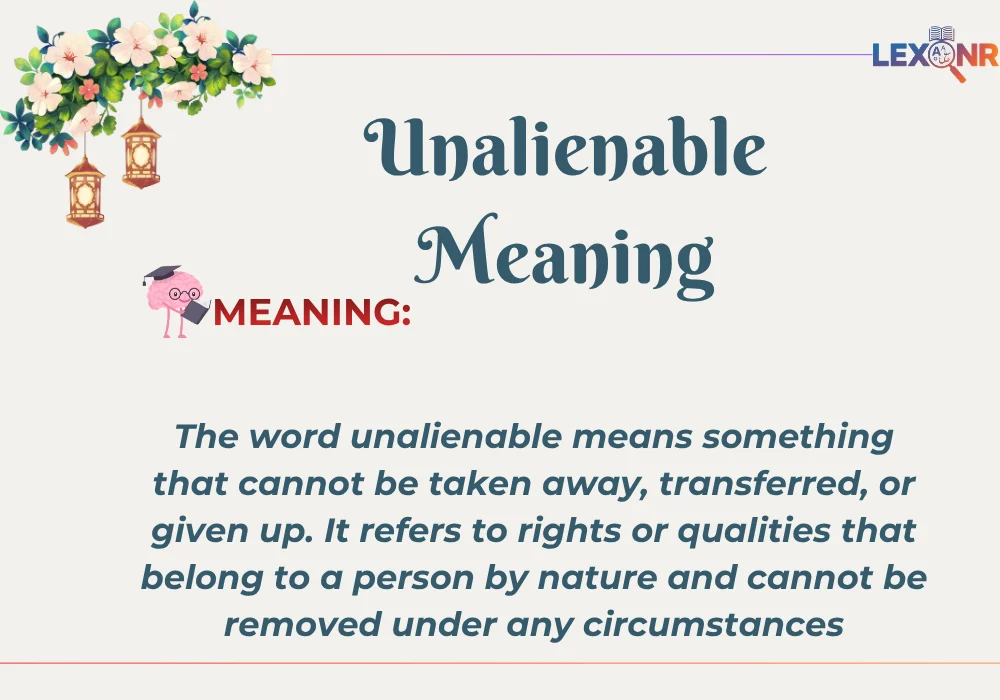
The word unalienable means something that cannot be taken away, transferred, or given up. It refers to rights or qualities that belong to a person by nature and cannot be removed under any circumstances.
In simple terms
Unalienable means permanent and non-transferable
Origin of the Word Unalienable
The word comes from
- Un meaning not
- Alienable meaning able to be transferred or given away
So when combined, unalienable literally means something that cannot be transferred or taken away.
It is often used in serious contexts like law, philosophy, and human rights.
How to Use Unalienable in Sentences
Common Contexts Where It Is Used
You will most often see unalienable used in
- Legal or constitutional discussions
- Human rights conversations
- Academic writing
- Formal speeches
Examples of Unalienable in Sentences
Here are some simple examples to help you understand its usage
- Every person is born with unalienable rights
- Freedom is considered an unalienable right
- The law protects certain unalienable freedoms
- Human dignity is often described as unalienable
Easy Way to Remember
Think of unalienable as something that
- You cannot sell
- You cannot give away
- No one can remove from you
Real Life Meaning of Unalienable Rights
The term is most commonly linked with human rights. When people talk about unalienable rights, they mean rights that every human being has simply because they are human.
These rights do not depend on
- Government approval
- Social status
- Wealth or power
Examples often include
- The right to live
- The right to freedom
- The right to personal dignity
Common Mistakes or Misunderstandings
Confusing Unalienable With Inalienable
Many people mix up unalienable and inalienable. The truth is, both words mean the same thing. They are often used interchangeably, especially in formal writing.
Using It in Casual Conversations
Unalienable is a formal word. Using it in everyday casual chats can sound unnatural.
Instead of saying
This is my unalienable right to pizza
It is better to keep it for serious contexts.
Thinking It Means Permanent Ownership Only
It is not just about owning something forever. It is more about rights or qualities that cannot be removed at all, regardless of ownership.
Similar Words to Unalienable
| Word | Meaning | Usage Context |
|---|---|---|
| Inalienable | Cannot be taken away | Legal, human rights |
| Absolute | Complete and total | General usage |
| Permanent | Lasting forever | Everyday language |
| Irrevocable | Cannot be changed or reversed | Legal, formal |
| Nontransferable | Cannot be given to someone else | Legal, business |
| Fundamental | Basic and essential | Academic, general |
These words are related but may differ slightly depending on context.
FAQs:
What does unalienable mean in simple words
Unalienable means something that cannot be taken away or given up, especially basic human rights.
What is an example of an unalienable right
An example is the right to freedom or the right to live, which every person has by nature.
Is unalienable the same as inalienable
Yes, both words have the same meaning and are often used interchangeably.
Can unalienable rights be removed
No, unalienable rights cannot be taken away, even by governments or authorities.
Where is the word unalienable commonly used
It is mostly used in legal, historical, and human rights discussions.
Conclusion:
The unalienable meaning refers to something that cannot be taken away, transferred, or removed. It is most often used when talking about rights that every person naturally has, such as freedom and dignity.
Although it is a formal term, understanding it helps you better interpret important texts, discussions, and ideas about human rights. Once you know the meaning, it becomes much easier to recognize its importance in both historical and modern contexts.
Have a word or term you want explained next
Share it and we will break it down in the simplest way possible

I am John, a dedicated writer and language enthusiast with a strong interest in words and their meanings. I focus on creating clear, accurate, and easy-to-understand content to help readers strengthen their vocabulary and language skills.
Through Lexonr, my aim is to make word meanings accessible for students, learners, and language enthusiasts from all backgrounds. I believe that understanding language plays a key role in effective communication and continuous learning.
I am committed to delivering helpful, reliable, and high-quality content while contributing to the ongoing growth and improvement of Lexonr.