If you have come across the word ofrenda in a message, social media post, or cultural discussion and wondered what it means, you are not alone. While it is not typical internet slang like many chat abbreviations, ofrenda meaning carries deep cultural and emotional significance that often appears in modern conversations online.
Understanding this word helps you connect better with cultural content, avoid misinterpretation, and appreciate the meaning behind posts, especially during important traditions and celebrations.
What Does Ofrenda Mean
Definition of Ofrenda
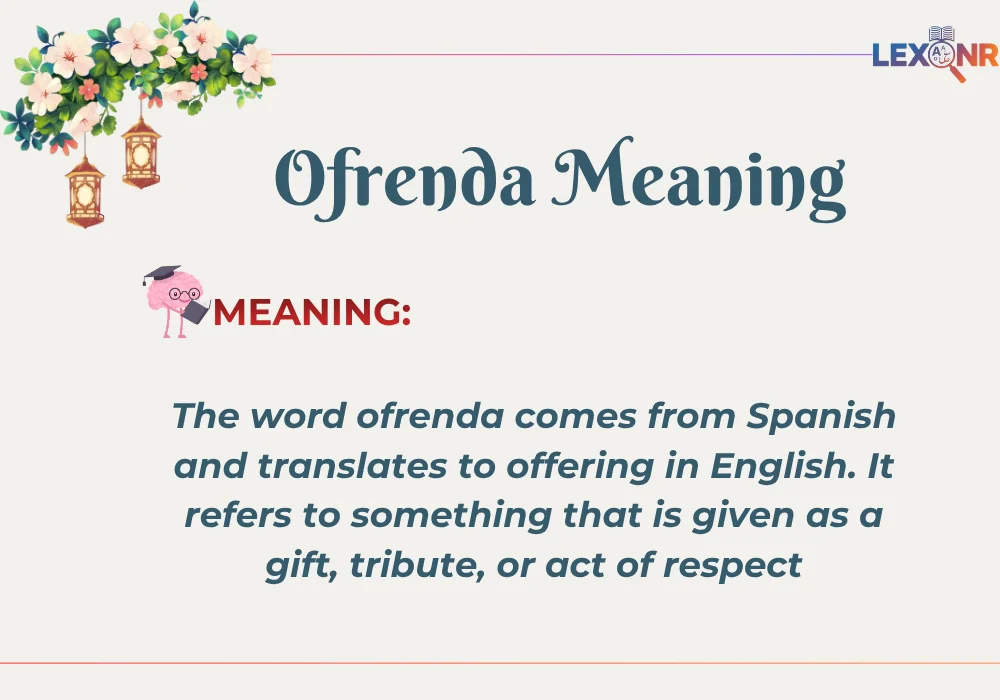
The word ofrenda comes from Spanish and translates to offering in English. It refers to something that is given as a gift, tribute, or act of respect.
In everyday use, ofrenda can mean
- A gift offered to someone
- A symbolic gesture of respect or remembrance
- A meaningful item placed in honor of someone
The term is most commonly associated with cultural and spiritual traditions rather than casual slang.
Cultural Origin of Ofrenda
Ofrenda is deeply connected to Mexican culture, especially the tradition of Day of the Dead. During this time, families create altars filled with offerings to honor loved ones who have passed away.
These offerings may include
- Photos of the deceased
- Favorite foods and drinks
- Candles and flowers
- Personal belongings
Each item placed on an ofrenda has meaning and represents love, memory, and connection.
What is the purpose of an ofrenda?
An ofrenda is a special altar created to honor and remember loved ones who have passed away. It is most closely associated with Day of the Dead (Día de los Muertos) celebrations in Mexico. Rather than mourning, an ofrenda celebrates the lives, memories, and lasting connection between the living and the deceased.
The purpose of an ofrenda includes:
- Honoring the memory of deceased family members and friends
- Welcoming their spirits during Day of the Dead
- Celebrating their lives with meaningful objects
- Preserving family traditions and cultural heritage
- Expressing love, gratitude, and remembrance
Ofrenda for pets
An ofrenda for pets is a memorial altar dedicated to beloved animals that have passed away. Many families include pets in their Day of the Dead celebrations to honor the joy, loyalty, and companionship they brought into their lives.
Items commonly placed on a pet ofrenda
- A photo of the pet
- Their favorite toy or blanket
- Treats or favorite food
- A bowl of fresh water
- Flowers, especially marigolds
- Candles and decorative keepsakes
Creating a pet ofrenda is a heartfelt way to celebrate the bond shared with a cherished companion.
Ofrenda in English Day of the Dead
In English, ofrenda translates to offering or altar, but the Spanish word is often kept because it refers to a unique cultural tradition during Day of the Dead.
What an ofrenda includes
- Photographs of loved ones
- Candles to guide returning spirits
- Marigold flowers
- Favorite foods and drinks
- Sugar skulls and traditional decorations
- Personal belongings or meaningful keepsakes
An ofrenda is not meant for worship. Instead, it serves as a symbolic space of remembrance, love, and celebration.
How to make an ofrenda?
Making an ofrenda is a meaningful way to honor someone who has passed away. You can personalize it based on the person’s life, interests, and traditions.
Steps to make an ofrenda
- Choose a table, shelf, or dedicated space.
- Cover it with a colorful cloth.
- Place a photograph of the loved one at the center.
- Add candles to symbolize light and guidance.
- Decorate with marigold flowers or other meaningful flowers.
- Include favorite foods, drinks, or snacks.
- Add personal items such as books, jewelry, or letters.
- Finish with meaningful decorations like papel picado or sugar skulls.
The most important part of an ofrenda is that it reflects love, remembrance, and respect.
Is an ofrenda Catholic?
An ofrenda is not exclusively Catholic. It originated from Indigenous Mexican traditions and later blended with Catholic customs after the arrival of Spanish missionaries.
The relationship between ofrendas and Catholicism
- Rooted in ancient Indigenous beliefs about honoring ancestors
- Influenced by Catholic observances such as All Saints’ Day and All Souls’ Day
- Used by many Catholic families during Day of the Dead
- Also embraced by people of different beliefs as a cultural tradition
Today, an ofrenda is widely recognized as a symbol of remembrance, family, and cultural heritage, regardless of a person’s religious background.
How Ofrenda Is Used in Texts or Chat
Modern Usage in Conversations
While ofrenda is not traditional slang, it still appears in modern digital conversations, especially when people talk about culture, remembrance, or meaningful gestures.
Common contexts include
- Social media posts about traditions
- Conversations about family or heritage
- Emotional or symbolic expressions
- Educational or cultural discussions
Casual and Symbolic Usage
In some cases, people use ofrenda metaphorically to describe a meaningful gesture.
Example uses
- This playlist is my ofrenda to my childhood memories
- She made that painting as an ofrenda to her grandmother
Here, the word keeps its core meaning of an offering but is used creatively.
Examples of Ofrenda in Conversations
Social media example
I made a small ofrenda for my grandparents today, feeling grateful and emotional
Text message example
This dinner is basically an ofrenda to my mom’s recipes
Creative usage example
This project is my ofrenda to everything I have learned over the years
Cultural discussion example
The ofrenda is not just decoration, it is a way to remember and honor loved ones
These examples show how the word can be both traditional and modern.
Common Mistakes or Misunderstandings
Thinking Ofrenda Is Slang
Ofrenda is not casual slang like typical internet abbreviations. It is a meaningful word with cultural roots.
Using It Without Understanding the Context
Using ofrenda without knowing its significance can come across as insensitive. It is important to respect its cultural background.
Confusing It With Decorations Only
An ofrenda is not just decoration. It carries emotional, spiritual, and symbolic meaning.
Similar Words and Related Terms
| Term | Meaning | Common Usage |
|---|---|---|
| Offering | Something given as a gift or tribute | General use |
| Tribute | Act of respect or admiration | Formal and emotional contexts |
| Altar | Sacred place for offerings | Religious and cultural settings |
| Memorial | Something created to remember someone | Public or personal remembrance |
| Dedication | Honoring someone through an act | Creative or emotional expression |
| Remembrance | Act of remembering | Emotional and reflective contexts |
| Homage | Public display of respect | Art, culture, and storytelling |
These terms are similar to ofrenda, though each has its own nuance.
FAQs:
What does ofrenda mean in English
Ofrenda means offering. It refers to something given as a tribute, gift, or sign of respect.
Is ofrenda used in texting slang
Not exactly. It is not slang, but it may appear in chats when discussing culture, memories, or symbolic gestures.
What is an ofrenda in tradition
It is an altar or arrangement of offerings created to honor loved ones, especially in Mexican cultural practices.
Can ofrenda be used metaphorically
Yes. People sometimes use it to describe something meaningful they dedicate to someone or something important.
Is it okay to use the word ofrenda casually
It is okay as long as it is used respectfully and with an understanding of its cultural meaning.
Conclusion:
The ofrenda meaning goes far beyond a simple translation. It represents offering, remembrance, and emotional connection rooted in tradition and culture. While it may appear in modern conversations, its depth and significance remain intact.
Understanding how and when to use ofrenda allows you to communicate more thoughtfully and appreciate the meaning behind the word. Whether used traditionally or symbolically, it carries a sense of respect and intention.
Have you seen this word used in a unique way or used it yourself in a meaningful context
Share your thoughts and let others learn from your experience

I am John, a dedicated writer and language enthusiast with a strong interest in words and their meanings. I focus on creating clear, accurate, and easy-to-understand content to help readers strengthen their vocabulary and language skills.
Through Lexonr, my aim is to make word meanings accessible for students, learners, and language enthusiasts from all backgrounds. I believe that understanding language plays a key role in effective communication and continuous learning.
I am committed to delivering helpful, reliable, and high-quality content while contributing to the ongoing growth and improvement of Lexonr.